Talk About Sleep focuses on clear, evidence-based strategies rather than quick fixes. The guidance below draws on trusted public resources and clinical reviews to give you tools you can test at home and a plan to bring to a clinician if problems persist.
Bedtime hygiene, also called sleep hygiene, refers to the bundle of daily behaviours and bedroom environment practices people use to support regular sleep timing and higher sleep quality. The idea is practical: small, repeatable actions and conditions help the body learn when to sleep and when to be awake, making night time rest more reliable. For a clear public-health summary of these core practices, see the CDC guidance on sleep hygiene: CDC sleep hygiene tips and our All About Sleep hub
Try a one-week checklist: pick one wind-down habit, keep a fixed wake time, and note sleep quality each morning.
Daily habits shape two key signals the brain uses to time sleep, the circadian rhythm and sleep drive. Consistent sleep and wake times reinforce the circadian rhythm so your body expects sleep at similar times, while daytime activity and sleep pressure influence how quickly you fall asleep. Public guidance highlights that timing and environment together are the signal drivers people can control most easily in daily life; for an accessible explanation of those components see the NHS advice on sleep and tiredness: NHS sleep and tiredness guidance
It is important to be clear about what bedtime hygiene can and cannot do. For the general population and for prevention, improving routine and bedroom conditions is low risk and often helpful. However, for long standing or disabling insomnia, hygiene education alone is usually not enough; clinical guidance recommends structured therapies in those cases. For the role of hygiene within clinical care see the American College of Physicians clinical practice guidance on insomnia management: ACP clinical guideline on chronic insomnia

Keeping a regular wake time and a reasonably consistent bedtime anchors your circadian rhythm and makes sleep more predictable. Public-health summaries repeatedly list regular sleep and wake times as a primary component of good sleep habits; if mornings vary widely, prioritize a stable wake time to rebuild rhythm gradually. For basic recommendations see the CDC sleep hygiene overview: CDC sleep hygiene tips
Caffeine can delay sleep onset and reduce sleep quality when consumed later in the day, so limiting caffeine after mid-afternoon is a common practical rule. Alcohol may help with sleep onset but tends to fragment sleep later in the night, so avoid drinking close to bedtime. Public guidance recommends mindful timing of stimulants and heavier meals as an easy behaviour to adjust for better rest; refer to the National Sleep Foundation for practical timing advice: National Sleep Foundation sleep hygiene
Regular daytime physical activity supports sleep drive and overall sleep quality, but timing matters: vigorous exercise very close to bedtime can be activating for some people. Short naps can be restorative, but long or late naps may reduce night time sleep pressure. Guidance suggests regular daytime activity while keeping intense exercise and long naps earlier in the day. For further context see the NHS sleep guidance: NHS sleep and tiredness guidance
Bright evening light and night time screen use can shift circadian timing and make it harder to fall asleep. Reducing exposure to bright screens in the hour or two before bed and using dim, warmer lighting in the evening are recommended practical steps. Public sources emphasise that moderating evening light exposure is a core element of bedtime hygiene for many people; see the CDC overview for more on light and sleep: CDC sleep hygiene tips
Optimising the bedroom environment is widely recommended because it is low cost and low risk. A cool, dark and quiet room supports deeper, more continuous sleep for many people. Small changes such as blackout curtains, earplugs, or a fan for airflow are practical first steps people can try immediately. For practical suggestions on bedroom conditions see the National Sleep Foundation guidance: National Sleep Foundation sleep hygiene
Small changes such as blackout curtains or white noise devices can be easy to test; see our white noise machine guide for product ideas.
A short wind-down routine that repeats nightly helps separate daytime arousal from sleep and signals to the brain that it is time to rest. Useful elements include quiet reading, light stretching, or a relaxation practice, avoiding stimulating activities in the last hour before bed. Building a brief, consistent routine is one of the behaviour changes most often recommended in public guidance: CDC sleep hygiene tips
Start with a simple three-step approach: choose a target wake time, set a fixed wind-down window before bed, and pick three specific, measurable changes to track. For example, pick a 7:00 a.m. wake time, make 10:00 to 11:00 p.m. your wind-down hour, and track caffeine after 3:00 p.m., screen use after 10:00 p.m., and bedroom temperature at night. This framework reflects the public-health emphasis on schedule, evening behaviour, and environment as foundational changes people can test: CDC sleep hygiene tips
Start with one fixed wake time, a 45 to 60 minute wind-down before bed, and one environmental change such as making the bedroom cooler and darker. Track results nightly for two to four weeks and adjust one thing at a time.
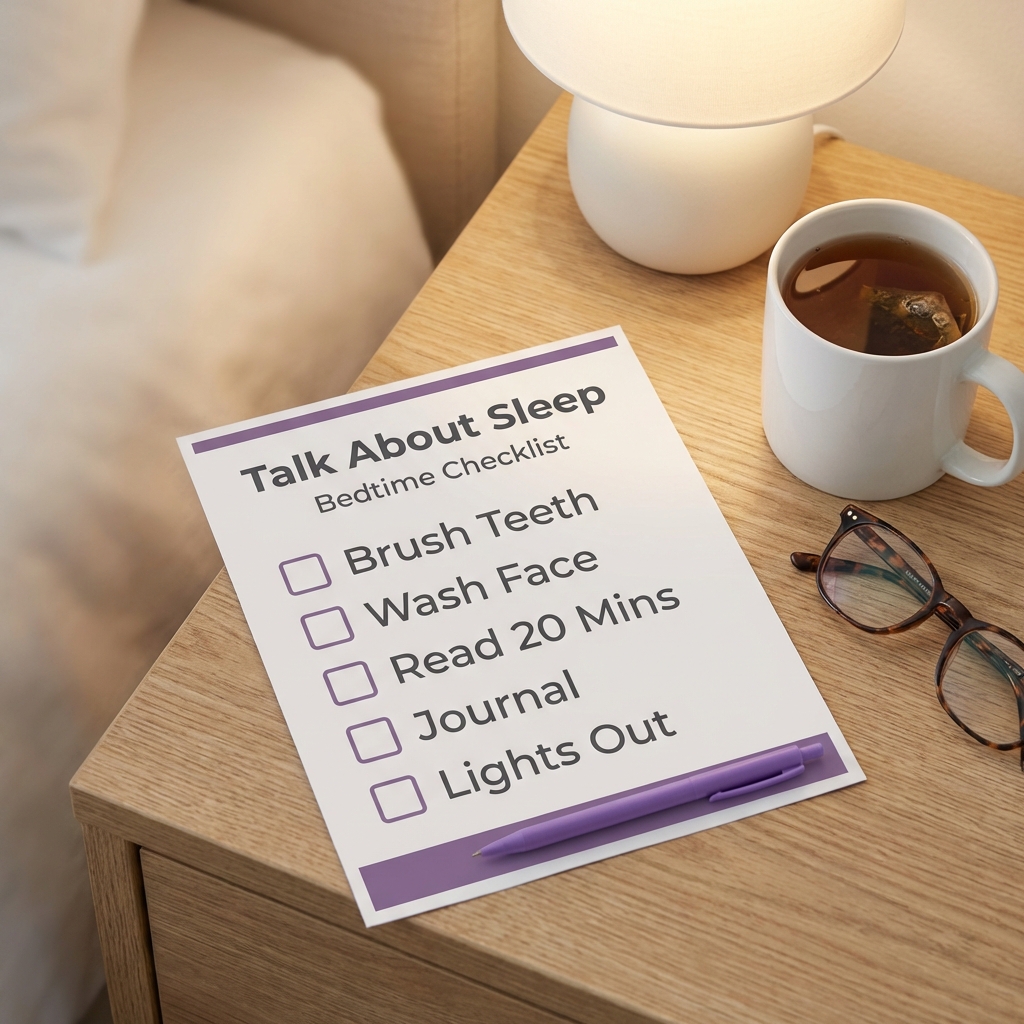
Translate the three chosen changes into a short nightly checklist. A checklist might include: set alarm for target wake time, begin wind-down 60 minutes before planned sleep time, dim lights and stop screen use, avoid caffeine and alcohol, and make the bedroom cool and dark. Keep the checklist to five or six items so it is easy to complete each night. The National Sleep Foundation outlines similar simple, practical steps that make a checklist effective: National Sleep Foundation sleep hygiene
Track results with a brief sleep diary or the checklist itself. Note bedtime, wake time, perceived sleep quality, and one daytime outcome such as alertness. Try one change at a time for a week to evaluate its effect; if something helps, keep it and consider the next small test. Trackable routines are recommended as a self-management step before considering structured therapy, and that practical sequence is reflected in public guidance: CDC sleep hygiene tips
Systematic reviews and clinical guidelines identify cognitive behavioral therapy for insomnia as the first-line, evidence-based treatment for chronic insomnia. CBT-I is a structured program that targets the behaviours, thoughts, and timing that perpetuate insomnia and has stronger evidence for lasting improvement than generic advice alone. For a clinical overview of when structured treatment is recommended see the American College of Physicians guideline: ACP clinical guideline on chronic insomnia and a practical primer on CBT-I: CBT-I primer
Sleep-hygiene education is a useful foundation but often insufficient for chronic insomnia because persistent sleep difficulty commonly involves conditioned arousal and maladaptive routines that need a structured behavioural plan. Reviews find that education by itself rarely produces large or durable changes in people with long standing insomnia. For a synthesis of the limits of hygiene education see the Sleep Medicine Reviews discussion: Sleep Medicine Reviews on sleep hygiene and a broader review of behavioural and psychological treatments: behavioral and psychological treatments review
CBT-I includes specific techniques that overlap with sleep hygiene but with clearer rules and monitoring. Stimulus control, sleep restriction, and consistent routines are examples of active behavioural components that are applied in a phased, measurable way inside CBT-I programs. Systematic reviews highlight these elements as the likely active ingredients that make structured therapy effective: Systematic review of CBT-I and further discussion of delivery formats: components and delivery formats review
Try structured self-care first, but seek professional evaluation if problems last more than three months, cause clear daytime impairment, include loud snoring or breathing pauses, or if you are worried about medication interactions or safety. Clinical guidance uses these kinds of red flags to recommend referral for CBT-I or medical assessment: ACP clinical guideline on chronic insomnia
Use a short trial period of structured hygiene and tracking for two to four weeks. If there is a clear, meaningful improvement in sleep and daytime function, continue and refine habits. If there is little or no improvement, or if daytime impairment continues, seek CBT-I referral or medical evaluation. This staged approach aligns prevention and self-management with the guideline advice that structured therapy is the next step when insomnia persists: CDC sleep hygiene tips
Bring a brief sleep diary, note how long symptoms have lasted, list medications and substances that might affect sleep, and describe daytime effects on mood, concentration, and safety. These records help clinicians decide whether to offer CBT-I, investigate breathing-related sleep disorders, or review medications that affect sleep. Public guidance suggests documenting patterns and impairment to speed assessment: NHS sleep and tiredness guidance
One common error is expecting generic tips to cure long standing insomnia. Without structure and monitoring, small tips can be inconsistent and leave conditioned arousal unchanged, which is why reviews conclude education alone often falls short for chronic problems. If you find persistent difficulty despite consistent attempts, structured CBT-I or clinical assessment is the recommended next step: Sleep Medicine Reviews on sleep hygiene
Another frequent mistake is adding too many new habits at once. Changing many variables simultaneously makes it hard to know what helped and can increase frustration. A better approach is to test one or two focused changes for a week each and keep what helps. The National Sleep Foundation recommends simple, manageable steps rather than complex regimens: National Sleep Foundation sleep hygiene
People sometimes focus only on sleep timing and overlook simple environmental fixes. Because bedroom conditions are low risk and often effective, attend to temperature, light and sound early in your plan. Small environmental adjustments often yield noticeable benefits and are typically the first changes clinicians suggest: National Sleep Foundation sleep hygiene
Example plan for a day worker: target wake time 6:30 a.m., set wind-down beginning 10:00 p.m., avoid caffeine after 3:00 p.m., no screens after 10:00 p.m., keep bedroom cool and dark. Prioritise a stable wake time even if bedtimes vary by an hour. This plan uses core hygiene elements that public sources recommend for the general population: CDC sleep hygiene tips
simple nightly tracking checklist for three habits
Use nightly for 2 to 4 weeks
Shift work creates real limits on circadian alignment, so focus on consistent routines around sleep periods, optimise the sleep environment for day sleep with blackout curtains and white noise, and time naps to reduce deficit while avoiding long late naps before your main sleep. Evidence on personalization for shift workers is still developing, and reviews highlight open questions about which single changes help most for different subgroups: Sleep Medicine Reviews on personalization
For parents, pick one environmental change and one timing rule you can keep most nights, such as a fixed wake time and a 45 to 60 minute wind-down window. Accept that sleep will vary and prioritise consistency where possible. Small, repeatable changes and tracking are practical first steps recommended for busy families: NHS sleep and tiredness guidance
Students benefit from a fixed wake time linked to class or study commitments and short wind-down rituals that do not require long preparation. When schedules vary, prioritize wake time consistency and short, portable routines that work in different living situations. The general principles of timing, light, and environment still apply and are useful starting points: CDC sleep hygiene tips
Expect modest, incremental improvements over weeks rather than overnight cures. Environmental fixes and consistent timing often produce noticeable changes within a few weeks, while longer standing insomnia may need structured therapy for larger gains. Public guidance frames these changes as gradual and trackable rather than immediate fixes: National Sleep Foundation sleep hygiene
Track bedtime and wake time, sleep quality rating each morning, number of night wakings, and daytime function such as alertness or mood. A basic sleep diary or a nightly checklist gives enough information to judge whether routine changes are helping. The CDC and other public sources recommend simple diaries as an early self-management tool: CDC sleep hygiene tips
Reassess after a defined trial window, typically two to four weeks. If there is no meaningful improvement in sleep or daytime functioning after consistent application, escalate to a clinician for possible CBT-I or medical evaluation. This staged decision aligns with clinical guideline recommendations: ACP clinical guideline on chronic insomnia
Nightly checklist: 1) Set alarm for fixed wake time. 2) Begin wind-down 45 to 60 minutes before sleep. 3) Avoid caffeine after mid-afternoon. 4) Stop screens during wind-down. 5) Keep bedroom cool, dark and quiet. These items reflect the core, low-risk changes commonly recommended by public-health guidance: CDC sleep hygiene tips
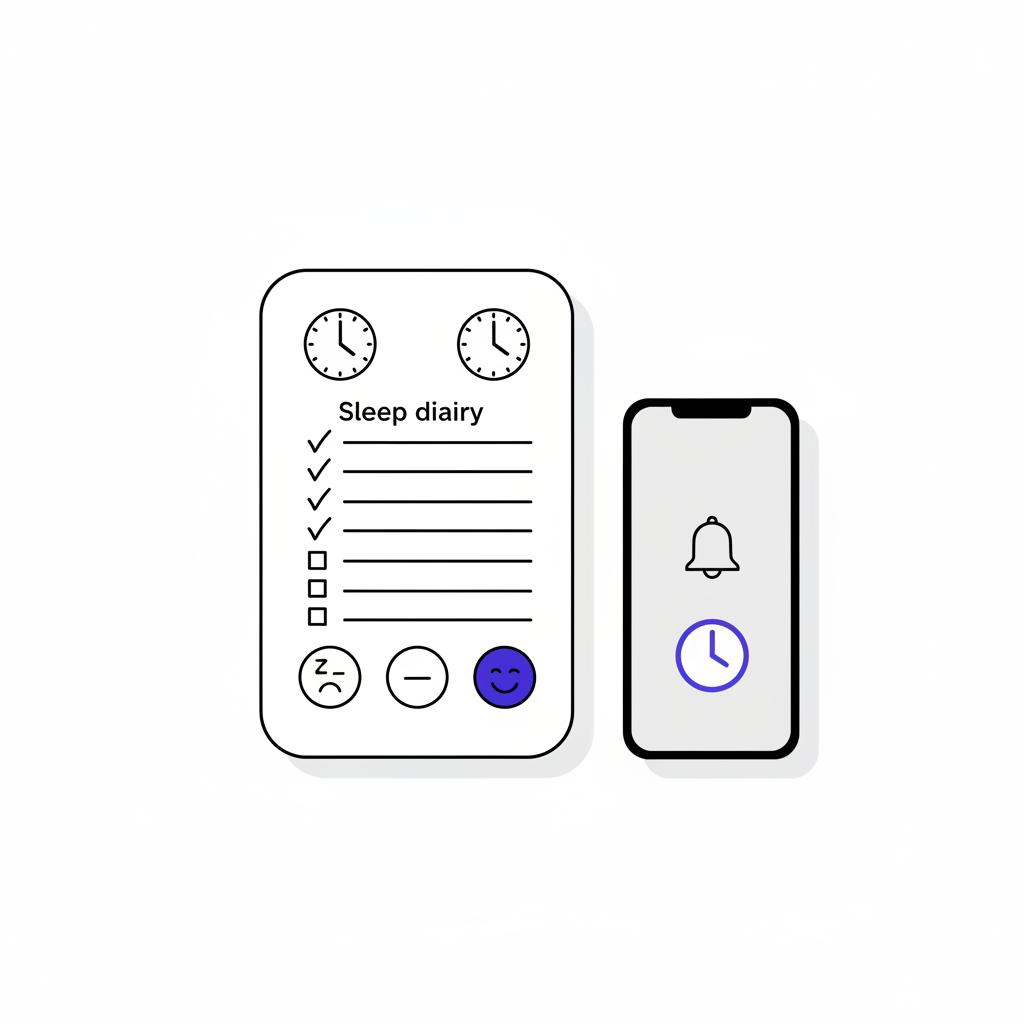
Nightly script example: “At 10:00 p.m. I dim lights and turn off screens. I spend 30 minutes doing a quiet activity, then get ready for bed and try to sleep. In the morning I wake at 6:30 a.m. even on weekends.” Keep the script short and repeat it nightly to reinforce the routine. The National Sleep Foundation recommends brief, repeatable scripts as practical wind-down tools: National Sleep Foundation sleep hygiene
Follow the checklist nightly for 2 to 4 weeks and record sleep quality and daytime alertness. If there is minimal improvement after the trial window or if daytime impairment persists, seek evaluation for structured therapy or medical causes: ACP clinical guideline on chronic insomnia. For more practical resources see our sleep-hygiene category.
Bedtime hygiene is a practical, low-risk starting point for better sleep that combines consistent timing, evening behaviour, and bedroom optimization. For more detail and guides to routines and environment, trusted public resources include the CDC, NHS, and the National Sleep Foundation: CDC sleep hygiene tips
If sleep problems persist or cause daytime impairment, seek a clinician who can assess for insomnia disorder and consider cognitive behavioral therapy for insomnia as the recommended next step. Gradual, trackable changes are preferable to trying many strategies at once.
Bedtime hygiene is the set of daily behaviours and bedroom practices intended to support regular sleep timing and improved sleep quality, such as consistent wake times, limiting late caffeine, and optimizing the sleep environment.
Modest improvements are typically seen over a few weeks when changes are applied consistently; persistent or disabling sleep problems often need structured therapy like CBT-I.
Seek medical assessment if sleep problems last more than three months, cause significant daytime impairment, include breathing-related symptoms, or do not improve after a planned self-care trial.