Talk About Sleep approaches this topic as a starting point for better rest. The goal here is to provide clear, evidence-aligned guidance you can try tonight, with suggestions for testing and adapting the routine based on your own sleep responses.
The 3-2-1 bedroom method is a short, easy-to-remember rule for the evening: stop drinking alcohol about three hours before you plan to sleep, avoid large or heavy meals within two hours of bed, and wind down bright screens and stimulating activities in the last hour before lights out. Consumer health pages and national health services present it as a behavioral heuristic for good bedtime hygiene rather than a formal medical treatment, meant to prompt sensible choices that improve sleep opportunity and routine Healthline explainer.
Framing the steps as bedtime hygiene helps separate habit-level changes from clinical treatments. The method sits with other routine-focused advice such as keeping regular sleep times and creating a calming bedroom environment; it is intended to be low-risk and easy to try, and public-facing guidance usually recommends it alongside other measures if sleep problems persist NHS sleep advice.
Major health information sites and national services describe the 3-2-1 rule as a practical prompt to structure evening behaviour rather than a tested clinical protocol, and they use it to teach simple boundaries that people can adopt quickly, for example by planning the last meal, last drink, and a deliberate hour of wind-down before bed CDC healthy sleep tips. Coverage also appears in consumer outlets such as Today and Everyday Health, which describe similar practical steps.
Each piece of the 3-2-1 heuristic maps to known physiology or behaviour: alcohol intake in the evening alters sleep architecture and fragments sleep, late bright light exposure suppresses melatonin and shifts circadian timing, and heavy late meals can interact with digestion and circadian signals in ways that affect sleep for some people. Explaining these mechanisms helps show why the rule is plausible even when the packaged routine has limited trial data NIAAA on alcohol and sleep.
Guidance reviews from established sleep-education organisations place the strongest evidence behind alcohol timing and evening light control, while noting that meal timing shows mixed results dependent on composition and individual factors. That pattern explains why the heuristic combines the three behaviours: each is low-risk and potentially additive, even if the exact benefit of the full package still needs higher-quality comparative trials Sleep Foundation overview.
Authoritative public resources treat the 3-2-1 idea as a scalable sleep-hygiene tool useful for habit change. They also caution that sleep hygiene alone often does not resolve chronic insomnia and works best when combined with structured behavioural therapies for persistent problems NHS guidance.
Alcohol consumed in the evening reliably changes sleep architecture: it tends to reduce REM sleep early in the night and fragments sleep later, and many people report poorer subjective sleep quality after drinking. These effects provide the physiological rationale for recommending a buffer of a few hours between the last drink and bedtime NIAAA on alcohol and sleep. For further practical guidance and information on alcohol and sleep, see alcohol and sleep on our site.
That said, the ‘three hours’ figure is a practical heuristic rather than a precise physiological cutoff. Individual alcohol metabolism varies, and the safe, effective window for avoiding sleep disruption depends on the amount and timing of alcohol, body composition, and sensitivity. Treat the 3-hour suggestion as a starting point to test rather than an absolute rule.
Try delaying your last alcoholic drink by one hour tonight and note any change in how you fall asleep or how you feel in the morning; small tests like this can show whether the timing makes a difference for you.
If you drink socially in the evening, practical adjustments may help you keep the routine low-friction: set an explicit ‘last drink’ time, switch to nonalcoholic or lower-alcohol options later in the evening, or plan a short walk after a drink to begin winding down. Frame these as experiments, not moral judgments, and track what feels sustainable.
For people worried about dependence or who notice persistent sleep problems despite timing changes, it’s appropriate to discuss drinking patterns with a clinician because the relationship between alcohol and sleep can be complex and sometimes requires targeted support NIAAA on alcohol and sleep.
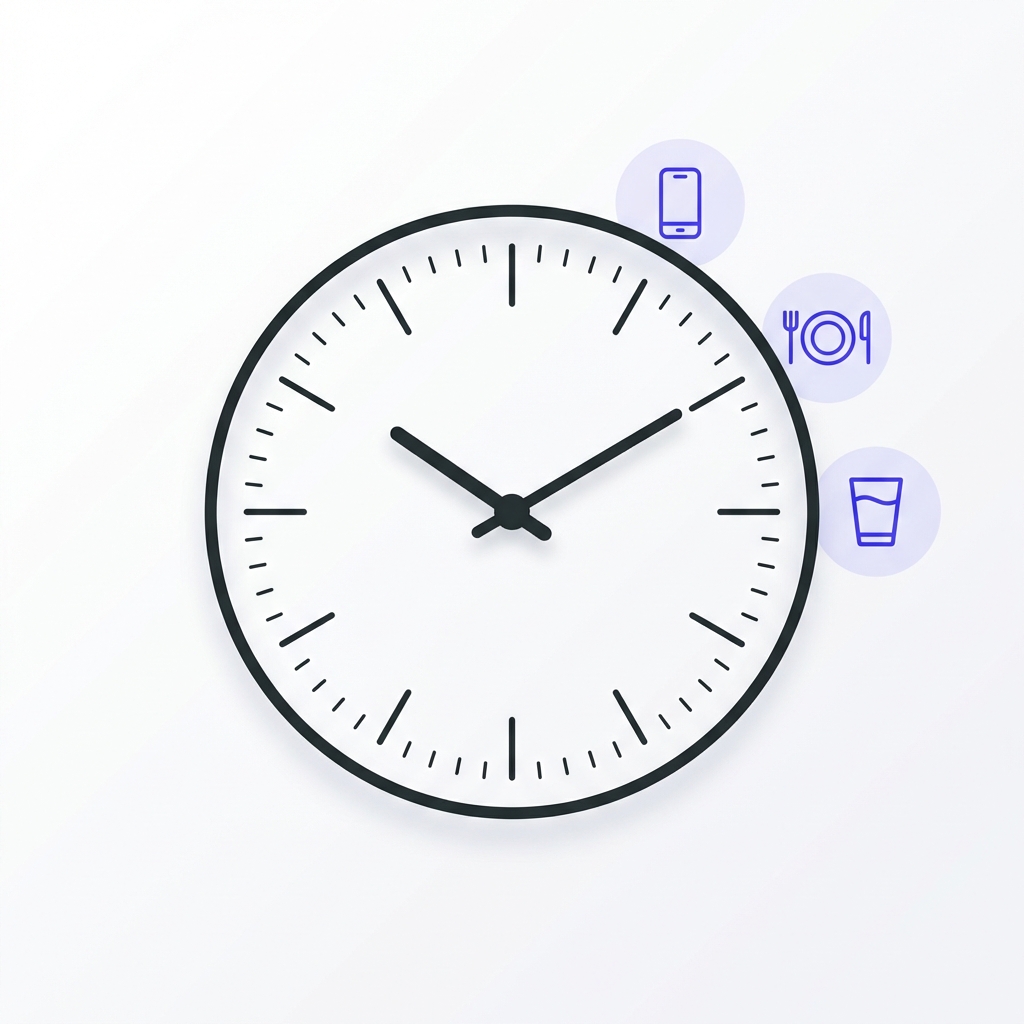
Research on late or large evening meals shows mixed results: some studies find associations with delayed sleep or poorer sleep quality, while others show smaller or conditional effects that depend on what and when people eat and on individual circadian timing. For example, see a trial and review in the medical literature. This variability explains why the two-hour guideline is presented as a reasonable compromise rather than a universal law NHS sleep hygiene.
Meal composition matters. Very heavy, spicy, or fatty meals are more likely to cause discomfort, reflux, or alerting digestive activity that can interfere with falling asleep. Lighter, balanced evening meals are less likely to cause such problems and may be better tolerated closer to bedtime for some people.
Practical adaptations include choosing smaller portions later in the evening, avoiding large quantities of stimulants or heavy fats right before bed, and observing how your body responds. For many people, shifting the bulk of calories earlier in the day and having a lighter, protein-and-vegetable-focused evening plate reduces post-meal discomfort and supports more comfortable sleep.
Because effects vary, try small, controlled changes for a week or two and track subjective sleep quality. If you notice consistent improvement when you finish larger meals earlier, that personal signal is more meaningful than a promise that the rule will work the same for everyone Sleep Foundation guidance.
Evening exposure to bright and blue-enriched light suppresses melatonin and can delay the circadian signal that promotes sleepiness, giving a clear physiological reason to reduce screen and bright-light exposure in the hour before bed. This mechanism supports the practical suggestion to create a calmer, dimmer hour before sleep Harvard Health on blue light.
Beyond light, cognitive and emotional stimulation from social media, stressful emails, or intense conversations can raise arousal and make falling asleep harder. The final hour is valuable because it is an opportunity to shift mental activity toward relaxed, low-stimulation states.
Steps to dim lights and reduce screen stimulation in the last hour before bed
Start with one change and add others gradually
Simple swaps can make the hour before bed easier: use warm-colored lamps instead of bright overhead lights, enable device night modes or blue-light filters earlier in the evening, and replace scrolling with calming activities such as reading a paper book, light stretching, or a short breathing practice. Make these swaps appealing by pairing them with ritual cues like a warm drink or a consistent wind-down playlist.
If removing screens entirely is unrealistic, focus on reducing intensity and emotional engagement for the last hour. That shift often helps more than chasing perfect compliance.
Chronotype and daily schedules influence how those time windows fit real life. Night owls, shift workers, or people on irregular schedules may need to shift the windows to match their circadian timing rather than applying clock time rigidly. Personalizing the rule increases the chance of sustainable change and aligns habits with your physiology Sleep Foundation overview.
Practical personalization can be modest: keep the same relative spacing (a few hours between alcohol and bed, a pause after large meals, and a wind-down hour) but move the absolute clock times if you routinely sleep later or earlier. The goal is consistent cues rather than exact hours.
Use a simple sleep diary or a tracker for one to two weeks to compare nights when you follow a change against nights when you do not. Note time to fall asleep, number of awakenings, and how you feel the next day. Keeping the test short and specific-change one component at a time-makes it easier to attribute any effect to the behaviour you altered.
Combine subjective reports with objective measures if available, but prioritize sustainable changes: if a strategy improves sleep quality only when it feels overwhelming to maintain, it is less useful than a smaller change you can keep up.
For many people with occasional or mild sleep disruption, improving evening routines and basic bedtime hygiene is an appropriate first step. Public guidance frames 3-2-1 as a low-risk habit-change strategy that can be tried before moving to more intensive interventions CDC healthy sleep tips.
Use the method as an initial, short-term experiment: pick one component to change for a couple of weeks and watch for consistent improvement in how quickly you fall asleep and how rested you feel. If you see positive changes, layer other supportive habits such as a regular wake time.
The 3-2-1 bedroom method is a bedtime hygiene heuristic that advises stopping alcohol three hours before bed, avoiding large meals two hours before bed, and beginning a one-hour screen-free wind-down; evidence strongly supports the logic for alcohol timing and light reduction, while meal timing effects are more mixed, so the method is a reasonable, low-risk first step but not a guaranteed cure for chronic sleep disorders.
If sleep problems are persistent, cause significant daytime impairment, or include symptoms like loud snoring with gasping, unexplained daytime sleepiness, or very long sleep latencies despite sleep-hygiene efforts, it is time to consult a clinician. Chronic insomnia and conditions such as sleep apnea often need structured assessment and treatment beyond routine changes NHS advice.
Primary care clinicians can help triage whether brief behavioural strategies are enough or whether referral to a sleep specialist or structured programs such as multicomponent behavioural therapy are appropriate Sleep Foundation guidance.
A frequent misunderstanding is treating the timings as a guarantee of good sleep. The 3-2-1 rule is a heuristic, not a cure, and results vary by person. Expect experimentation and modest, incremental improvement rather than a single-night transformation Healthline explainer.
Another common mistake is applying the clock rigidly without accounting for chronotype. Someone who naturally falls asleep much later will need the relative spacing translated into their own schedule to get the same benefits.
It is also incorrect to assume that following 3-2-1 alone will resolve longstanding insomnia. Clinical treatments such as cognitive behavioural therapy for insomnia are evidence-based approaches for chronic problems, and sleep hygiene is usually one part of a broader plan CDC on sleep treatments.
Use the mnemonic as a helpful routine starter and pay attention to how symptoms change over several weeks before concluding whether the approach is sufficient.
Here is a timed example that you can adapt: if your goal is to sleep at 11:00 pm, finish alcohol by 8:00 pm, have any sizeable meal by 9:00 pm, and begin a one-hour wind-down at 10:00 pm. The specifics can be moved earlier or later depending on your schedule, but the relative spacing preserves the behavioural intent.

Make the plan simple to follow: set an alarm for your last drink, prepare lighter dinners earlier in the evening when possible, and create a fixed wind-down ritual that starts at the same clock time most nights. Small environmental cues-lowering lights, changing into comfortable clothes, or playing a consistent playlist-help signpost the transition to rest Sleep Foundation tips.
Use implementation intentions (for example, I will stop drinking at 8:00 pm) and habit stacking (attach the new behaviour to an existing cue like washing dishes). Start with one change and add others gradually to avoid overwhelm. Reward steady progress rather than perfect compliance, and track outcomes to keep motivation aligned with results.
If you have a partner or household, share the plan so the environment supports your routine; coordination makes it easier to maintain consistent cues and reduces friction when small changes are needed.
Different lives require different adaptations. A night-shift worker may need to translate the timings into the context of a daytime sleep opportunity, prioritizing light reduction in the hour before their main sleep period and avoiding heavy meals right before their sleep window. The principle of spacing remains useful when applied to the timing of the main sleep episode NHS guidance.
University students often face late social schedules. Practical swaps include smaller, earlier dinners on study nights and reserving late-night social drinking for occasions while using smaller, testable changes for regular nights.
Parents with young children may find strict windows hard to follow. Focus on the most feasible component for your context: perhaps prioritise the wind-down hour when possible, use dim lighting during late feeds, or employ portable eye masks and consistent bedtime signals for your child to protect your own sleep window.
In all scenarios the emphasis is on low-burden, high-yield changes rather than all-or-nothing compliance. Small, consistent improvements usually outperform intermittent perfection.
Sleep hygiene is usually one element in a multicomponent approach to sleep problems. For chronic insomnia, structured therapies such as cognitive behavioural therapy for insomnia are evidence-based, and hygiene rules like 3-2-1 are part of the supportive package rather than the sole treatment CDC healthy sleep info.
Other complementary strategies include stimulus control (linking bed with sleep), consistent sleep-wake schedules, relaxation practices, and attention to daytime behaviours like exercise and caffeine timing. Coordinating these strategies increases the chance of meaningful, lasting improvement Sleep Foundation overview.
High-quality randomized trials that test the fully packaged 3-2-1 routine against control conditions or other multicomponent programs are limited. That means the additive benefit of the combined mnemonic compared with general sleep-hygiene education is an open research question, and recommendations should be presented with that uncertainty in mind Sleep Foundation discussion.
Other research gaps include how best to tailor the windows to people with different chronotypes, and whether strict clock-based windows outperform flexible, individually adjusted timing. Those are reasonable targets for future study.
If a change makes sleep worse, consider whether the adjustment increased sleep-related anxiety or disrupted other supportive habits. Quick fixes include lengthening or shortening a window, changing meal composition, or shifting the start of the wind-down hour earlier or later. Small, reversible changes keep the experiment humane and informative NHS sleep tips.
Abruptly imposing strict rules can backfire by increasing worry about falling asleep. If anxiety rises, step back to gentler changes and focus on consistent bedtime cues rather than strict timing.
Reverse or adapt changes if daytime functioning worsens, if you notice increased anxiety around sleep, or if objective tracking shows no improvement after a sustained and well-executed trial. At that point, seek professional input for tailored assessment and options Sleep Foundation guidance.
Behavioural change is iterative: use data from short trials to guide the next step rather than assuming one approach will solve every problem.

The 3-2-1 bedroom method is a pragmatic bedtime hygiene mnemonic: avoid alcohol about three hours before bed, steer clear of large meals two hours before bed, and begin a one-hour wind-down that limits bright screens and intense stimulation. The strongest evidence supports avoiding late alcohol and reducing evening light exposure; meal timing effects are more conditional and individual NIAAA on alcohol and sleep.
Treat the rule as a low-risk starting point. Try one component at a time, track how you sleep for one to two weeks, and combine the routine with other evidence-based strategies if problems persist Sleep Foundation tips.
No. The 3-2-1 method is a low-risk sleep-hygiene heuristic that can help many people improve routine and sleep opportunity, but chronic insomnia usually needs structured clinical approaches in addition to hygiene measures.
Yes. Reducing screen brightness, enabling night mode, and limiting emotionally engaging content in the last hour before bed can reduce melatonin suppression and lower arousal without requiring total device abstinence.
Try one clear change at a time for one to two weeks while tracking sleep timing and how you feel in the morning. This timeframe usually shows whether a small behavioural shift is helpful.
Learning to sleep better is often about small, repeated improvements rather than single fixes. The 3-2-1 method is a low-risk place to begin those experiments.



