
The journal
Is it better to sleep with higher or lower pillows? A practical guide to pillow loft
how to choose pillow loft with clear steps to match height to sleep position, mattress, and body for better neck alignment.

How to choose pillow loft: quick definition and why it matters
Quick answer: pillow loft means the height or thickness of a pillow, and choosing the right loft helps keep your head and neck aligned with your spine for more comfortable sleep.
In plain language, pillow loft is the vertical distance from the mattress to the top of your head when you lie down. It is not the same as firmness or the material inside the pillow. Firmness describes how the pillow feels under pressure, and fill type names what is inside. Loft is the effective height those features produce when your head rests on the surface.
Pillow loft primarily affects neck alignment, because the right height keeps your head neutral so the neck is neither flexed forward nor tilted back excessively. When your head sits too high the neck can bend, and when it sits too low the neck may drop. The goal is to support the head so the spine stays in a straight line from the lower back through the neck.
Think of loft like the wedge under a picture frame: a thin wedge keeps the frame flat relative to the wall, while a thicker wedge tilts it. Pillow loft tilts your head only slightly when it is the wrong height; the difference can feel small but matter for overnight comfort and morning stiffness. Loft interacts with mattress surface and sleeping posture, so it should be considered alongside firmness and fill type when you shop.
When loft matters most: you should pay close attention to pillow height if you have persistent neck discomfort, sleep consistently in one position, or recently changed your mattress. If you change mattress firmness, your previous pillow loft may no longer align you the same way. Conversely, if your sleep problems are clearly temperature, allergy or firmness related, then fill material and pillow firmness may be more important than raw height. If you recently changed your mattress, check related pages on our site for more context: our mattress firmness scale.
How to choose pillow loft for each sleep position
Start with a short check in bed: lie in your usual position, then notice whether your neck feels neutral or if you sense a small bend forward or backward. The simplest way to think about position needs is that side sleepers generally need higher loft to fill the shoulder-to-head gap, back sleepers need moderate loft to support the curve of the neck, and stomach sleepers usually need low loft so the head does not tilt back.
Side sleepers, typical loft needs: Side sleepers often need a higher pillow to keep the head level with the spine and to fill the gap created by the shoulder. Look for a pillow that keeps the ear roughly in line with the outer edge of the shoulder when you lie on your side. If the head tilts down toward the mattress or up away from it, adjust loft up or down accordingly. Also consider shoulder width, because broader shoulders usually require more height to reach neutral alignment. The Sleep Foundation has guidance on sleeping positions that may help you evaluate your alignment.
Back sleepers, typical loft needs: Back sleepers usually do well with a medium loft that supports the natural curve of the neck. The pillow should cradle the base of the skull and lift the head just enough so the chin does not tilt toward the chest. If you feel your head is pushed forward, reduce loft; if it drops backward, add height or a firmer support.
Stomach sleepers, typical loft needs: Stomach sleepers function best with low lofts or very thin pillows, since higher heights can extend the neck backward and increase strain. Many stomach sleepers prefer a flat pillow or no pillow at all under the head, possibly using a small, soft pillow under the pelvis to reduce lower back strain. If you sleep sometimes on your stomach and sometimes on your side, aim for a lower-to-moderate loft to make transitions easier.
Mixed position sleepers and transitional lofts: If you change positions through the night, choose a loft that balances the most common positions you use. A flexible or adjustable pillow with removable layers can help because it lets you change height without swapping pillows. The right compromise keeps you reasonably aligned in the position you use longest, then tolerable when you move.
A simple decision framework: measure, match, test
Step 1 Measure your shoulder and neck posture
Measure in a simple way: stand relaxed and measure the width of the widest part of one shoulder, or use a tape measure while sitting up straight. Wider shoulders generally need more pillow height when sleeping on the side because the shoulder lifts the torso away from the mattress more. Also notice how your neck sits when you lie on your back and side; the distance between collarbone and base of skull gives a qualitative sense of how much tuck your neck needs. See ergonomic research for study details: ergonomic research.
Is it better to sleep with higher or lower pillows for neck and spine alignment?
It depends on sleep position and body proportions; higher pillows often suit side sleepers, medium lofts suit back sleepers, and lower pillows suit stomach sleepers, with mattress firmness and shoulder width influencing the ideal height.
Step 2 Match loft to mattress firmness and pillow thickness
Mattress firmness changes how much a shoulder sinks in and thus the effective gap a pillow must fill. Firmer mattresses allow shoulders to sit higher above the surface, so they often require a higher pillow loft for side sleepers. Softer mattresses let shoulders sink more, which can reduce required pillow height. Match pillow loft and mattress firmness so that the head stays in line with the spine rather than aiming for a one-size-fits-all height.
Step 3 Test and adjust at home

Try this home testing routine: sleep on a candidate pillow for several nights, at least three to seven, because your body can take a few nights to adapt. Use short tests each night: note morning neck stiffness, how often you wake up with discomfort, and how easily you roll into your preferred position. If the pillow feels like it forces your head upward, lower the loft. If your head drops or the chin tilts to the chest, raise the loft or use a firmer fill. Small changes matter, so adjust with thin layers or a folded towel for interim trials.
Choosing loft by pillow materials and firmness
How fill type changes perceived loft
Simple at-home checks to estimate shoulder width and neck gap
Different fills compress differently and so change the effective loft you feel. Memory foam tends to feel denser and can compress under the head, reducing perceived height while keeping support, whereas down alternative or feather fills may flatten more under weight and require more raw height to achieve similar alignment. Latex usually offers a springier support that keeps loft more consistent under load. Because of these differences, the same measured height can feel different depending on fill and firmness.
Adjustable loft pillows and layered designs
Adjustable pillows with removable layers or inserts let you fine tune height without guessing. These designs let you add or remove thin layers until your head sits in neutral alignment. A common approach is to remove one layer at a time and sleep a night or two while assessing comfort. If you frequently change sleep position, an adjustable design helps you change loft without buying multiple pillows.

Care and long term loft changes
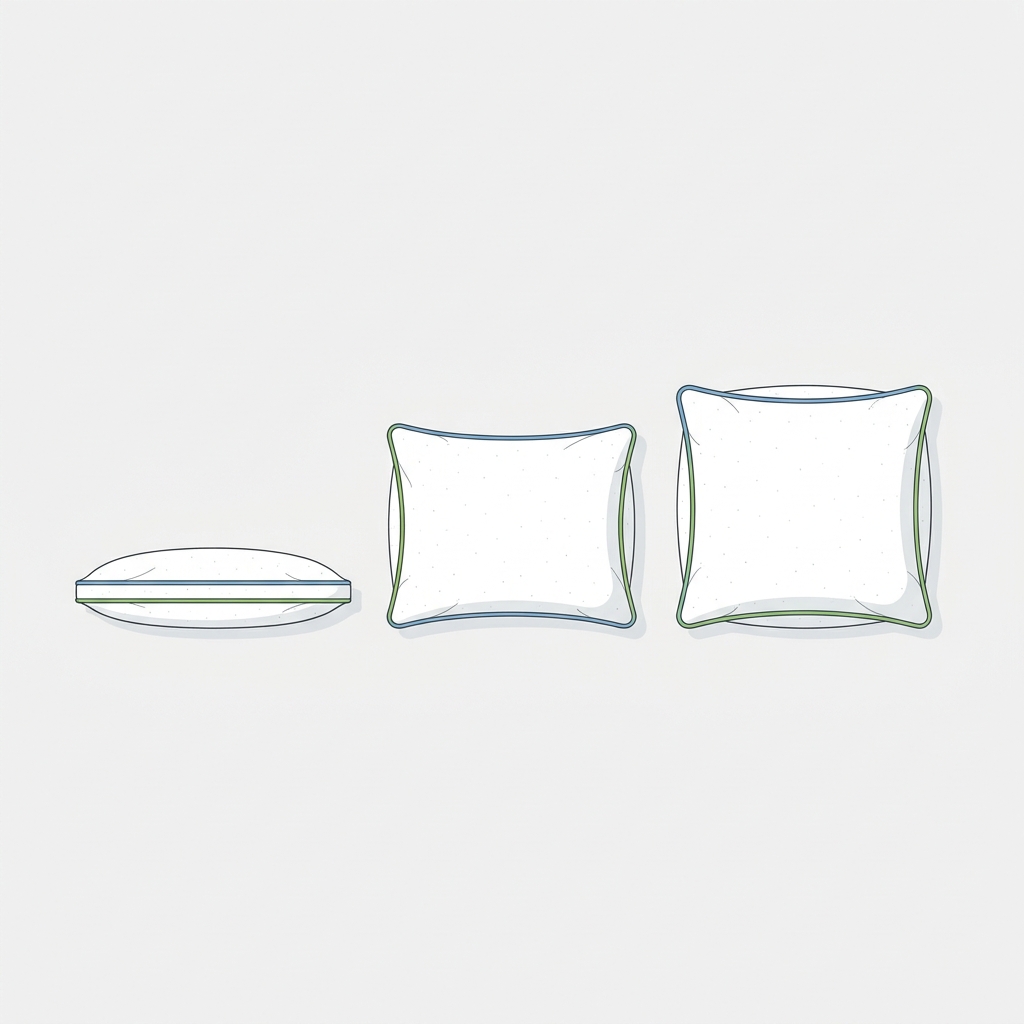
Pillows lose loft with use. Fill materials compress, and that decreases height over months to years. Rotate and fluff pillows if the design allows it, and follow care instructions for washing or airing to slow compression. When a pillow no longer returns toward its original shape or you notice persistent sagging that affects alignment, that is a sign to consider replacement.
Common mistakes, troubleshooting and when to swap pillows
Typical errors people make choosing loft
One common mistake is choosing a pillow only from a numeric loft label or marketing phrase without testing how it interacts with a mattress and body shape. Another is to equate loft with comfort alone, ignoring firmness and fill which jointly determine how the pillow supports the head. People also forget to consider mattress firmness and shoulder width when selecting height, which can cause a mismatch even with a well-made pillow. See also our guide to pillow sizes.
How to tell loft is the problem versus other issues
If you wake with neck pain or stiffness, do a quick self-diagnosis: try a thin folded towel under the neck or a second thin pillow and see whether your comfort improves within a night or two. If raising or lowering effective height changes morning symptoms, loft was likely a factor. If the problem persists regardless of small loft changes, other issues such as pillow firmness, allergens, sleep position, or underlying medical conditions may be responsible.
When to replace a pillow
Replace a pillow when loft loss is noticeable and affects alignment, or when you see visible sagging that does not rebound after fluffing. Frequent morning stiffness despite trying adjustments, or a pillow older than the manufacturer recommended life span and showing compression, are practical triggers to swap out a pillow. Keep track of how a pillow performs after cleaning cycles and over months; decline in support rather than surface wear is the key indicator.
Real examples and step-by-step adjustment scenarios
Example 1: Broad-shouldered side sleeper moving from low to ideal loft
Problem: A side sleeper with broad shoulders feels their head tilting toward the mattress each morning. Quick check: measure shoulder width and note that the shoulder lifts the torso considerably from the mattress. Adjustment: try a higher loft or add a removable layer to the existing pillow. Outcome: when the ear aligns roughly over the shoulder edge, morning stiffness drops and the sleeper reports fewer position corrections overnight.
Example 2: Back sleeper with a soft mattress finding the right loft
Problem: A back sleeper on a soft mattress wakes with a feeling that the head is pushed too far forward. Quick check: the mattress allows the shoulders to sink and the pillow felt too tall when lying back. Adjustment: switch to a medium loft or remove a layer so the neck rests slightly lower. Outcome: chin posture becomes more neutral and reports of morning tension decline over several nights.
Quick checklist and final recommendations
Checklist: measure shoulder width, match loft to mattress firmness, test a candidate pillow for at least three nights, adjust in small steps using removable layers or a folded towel, replace the pillow when loft loss affects alignment. Encourage iteration: it is normal to try a couple of adjustments before finding a comfortable height; give each change a few nights to evaluate. See our editorial section for more articles: all our pillow articles.
Final reminder: how to choose pillow loft well is a practical process more than a one-time decision. Use measurements and short at-home tests, consider mattress interaction, and favor adjustable or layered solutions if you want flexibility.
Frequently asked questions
How long should I try a new pillow loft before deciding it works?
Try a new pillow for at least three to seven nights to allow your body to adapt and to see whether morning stiffness or sleep quality improves.
Can I use towels or folded sheets to test pillow height?
Yes. Small, temporary changes using a folded towel or thin layer let you test higher or lower loft without buying a new pillow.
Is loft more important than firmness?
Loft and firmness interact. Loft determines height and alignment while firmness affects how much the pillow compresses under your head; both matter.
Choosing the right pillow loft is a manageable, hands-on process. Use measurements, match loft to your mattress and body, and give each change a few nights before you decide. If you find the right combination, you can reduce morning stiffness and sleep with more consistent comfort. Keep iterating and replace pillows when loft loss stops allowing neutral alignment.