
The journal
Jet lag: shift your sleep before you fly
How to beat jet lag: shift your sleep before the trip, sleep or stay awake on the plane by destination time, and use daylight after you land.

Quick answer: how to beat jet lag
Start living on destination time as early as you can. Set your watch to the destination when you board, sleep on the plane if it is night where you are going, and once you land, eat, sleep and go outside on the local schedule. Daylight at the right time of day does most of the work. For short trips of one or two days, it can make more sense to stay on home time instead.
Why jet lag happens
Your body runs on a roughly 24-hour clock that sets when you feel sleepy and alert. Flying across several time zones moves you faster than that clock can follow, so for a few days you feel sleepy at midday and wide awake at night. The CDC's travel guidance notes that light exposure can shift the body clock earlier or later, depending on when you get it (CDC Yellow Book: jet lag).
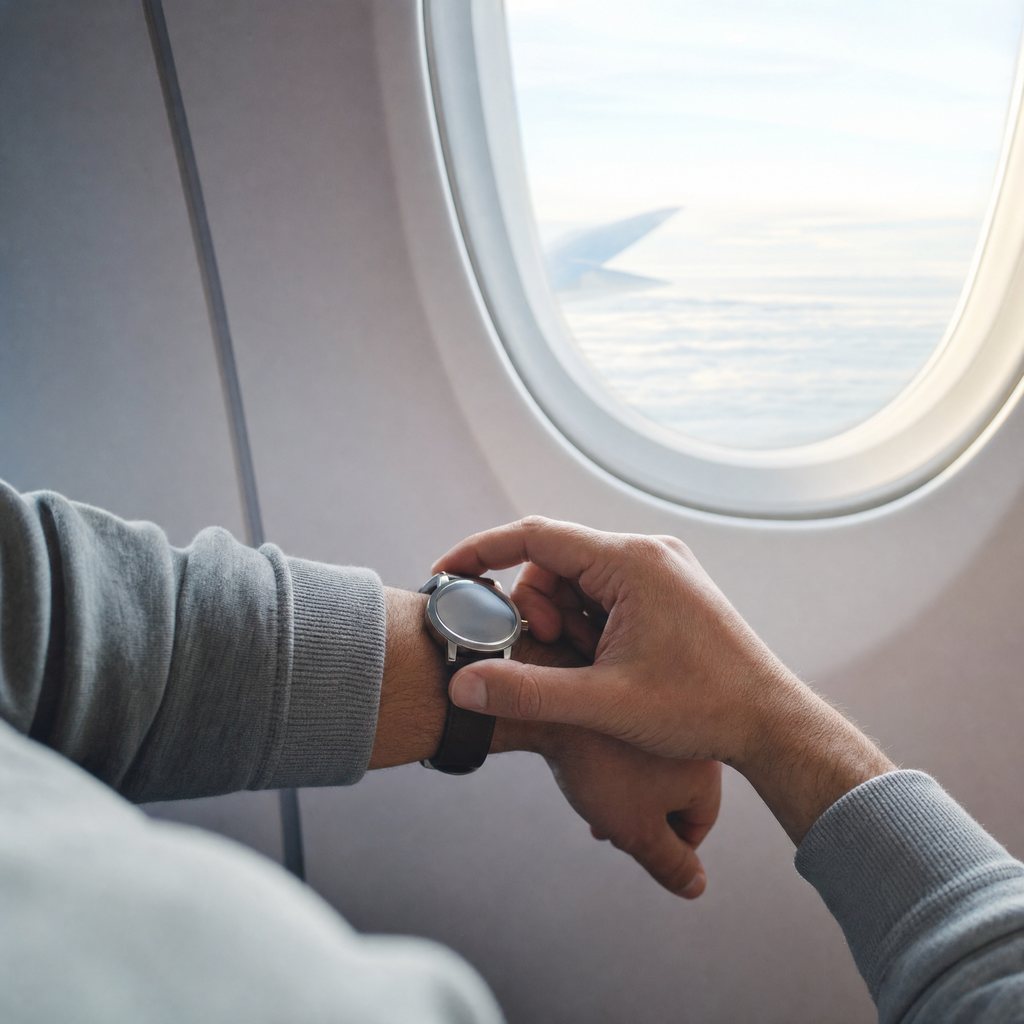
Before you fly
- Shift a little in advance. For a big eastward trip, going to bed and getting up somewhat earlier for a few days beforehand gives you a head start; for westward trips, shift later.
- Arrive rested. Starting a long trip already short on sleep makes the first days harder.
- Pack for sleep on board. A mask, earplugs and a warm layer make a real difference on an overnight flight. Cabin & Carry's overnight flight sleep kit covers what to pack and where to keep it.
On the plane
If it is night at your destination, try to sleep; if it is daytime there, try to stay awake. Keep drinking water, move around the cabin when you can, and skip the nightcap: the CDC notes that alcohol disrupts sleep. Sleeping pills on a flight deserve caution too, because sitting still for hours while sedated raises the risk of blood clots, so discuss them with your doctor before the trip.
After you land
- Get daylight at the right time. After flying east, daylight from late morning helps; after flying west, afternoon and early evening light helps. After very long trips east, very early light can push your clock the wrong way for the first day or two.
- Eat and sleep on local time from the first day, even if you are not hungry or tired yet.
- Nap carefully. A short nap early in the day can help; a long late nap pushes the problem to the next night.
- Make the room work for you. Hotel rooms bring their own problems, from light to noise; see our guide to sleeping well in a hotel.
| Flying | Usually harder? | Light that helps after landing |
|---|---|---|
| East | Yes, your day starts earlier than your body expects | Late morning and midday daylight |
| West | Usually easier, you stay up later | Afternoon and early evening daylight |
Frequently asked questions
How long does jet lag last?
It depends on how many time zones you crossed and the direction. Adjusting to local time from the first day shortens it for most people.
Should I sleep on the plane?
If it is night at your destination, yes. If it is daytime there, try to stay awake until local bedtime.
Does coffee help with jet lag?
It can help you stay alert in the local daytime, but keep it away from the hours before your new bedtime. See when to stop drinking coffee before bed.