
The journal
How to Measure for Blackout Curtains and Cover Light Gaps
Measure the wall span and hanging drop, verify whether the listed width is flat or finished, and plan for the spots where light sneaks through.
 Talk About Sleep
At a glance
Write down the trim width, room for overlap on both sides and the drop from the real hanging point. Check what the seller means by the width before ordering.
In this guide
To size blackout curtains, measure the outside of the window trim, decide how far the covering needs to extend beyond each edge, then measure from the actual hanging point to the intended hem. Check how your seller describes curtain width. A ready-made panel measured flat and a pleated drape measured at its finished width can require different orders.
Find the gap you want to cover
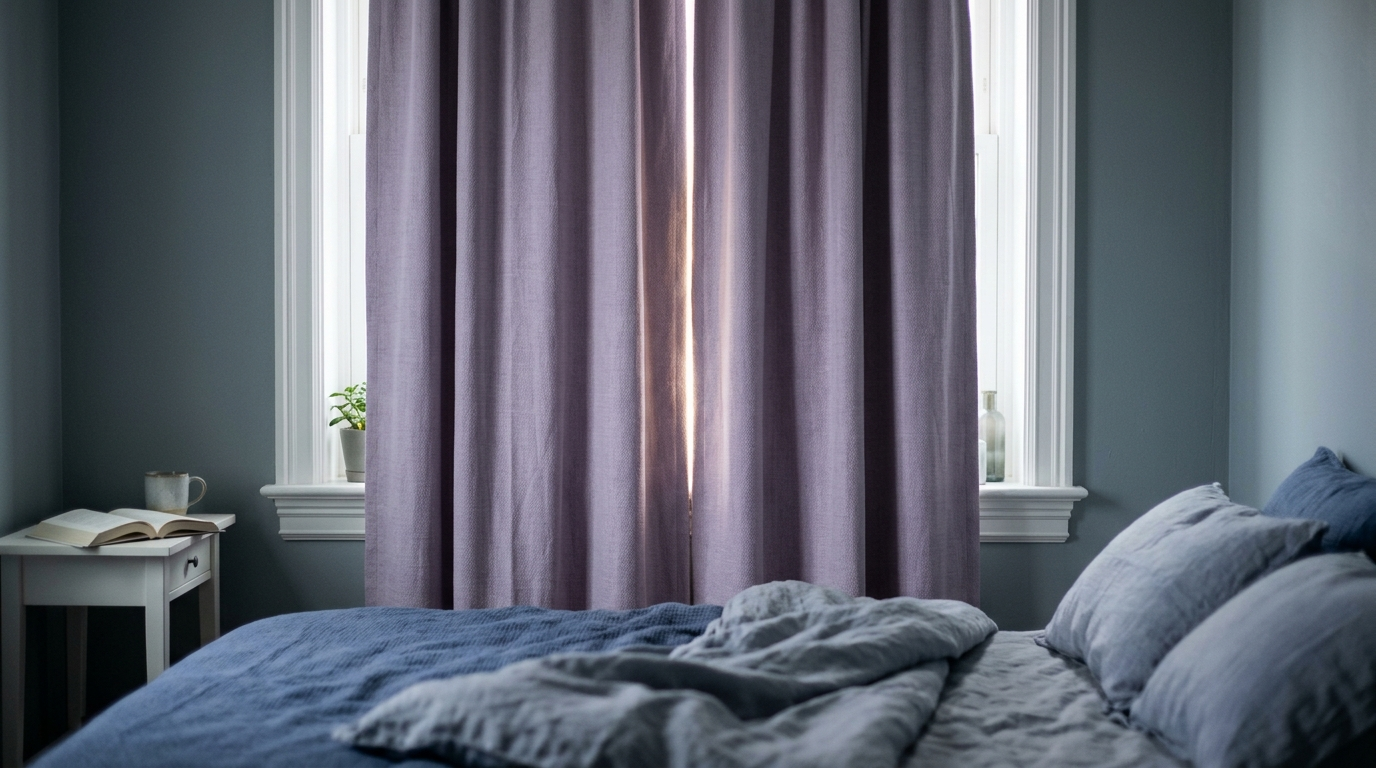
Stand at the bed or wherever stray light bothers you. Look for light at the top, the sides, the center or underneath the curtain. A panel that is darker through the cloth may still leave a bright line around the frame. Mark the outer trim and the strip of wall on each side that the panels must cover when closed.
Also consider how the window opens and where the curtain stack will sit when open. Check for a radiator, a sill, a projecting handle or furniture before picking the height and position. Allow for the heater manufacturer’s clearances and leave any required exit usable.
Sources: IKEA · Blinds.com
Turn the window span into a covering span
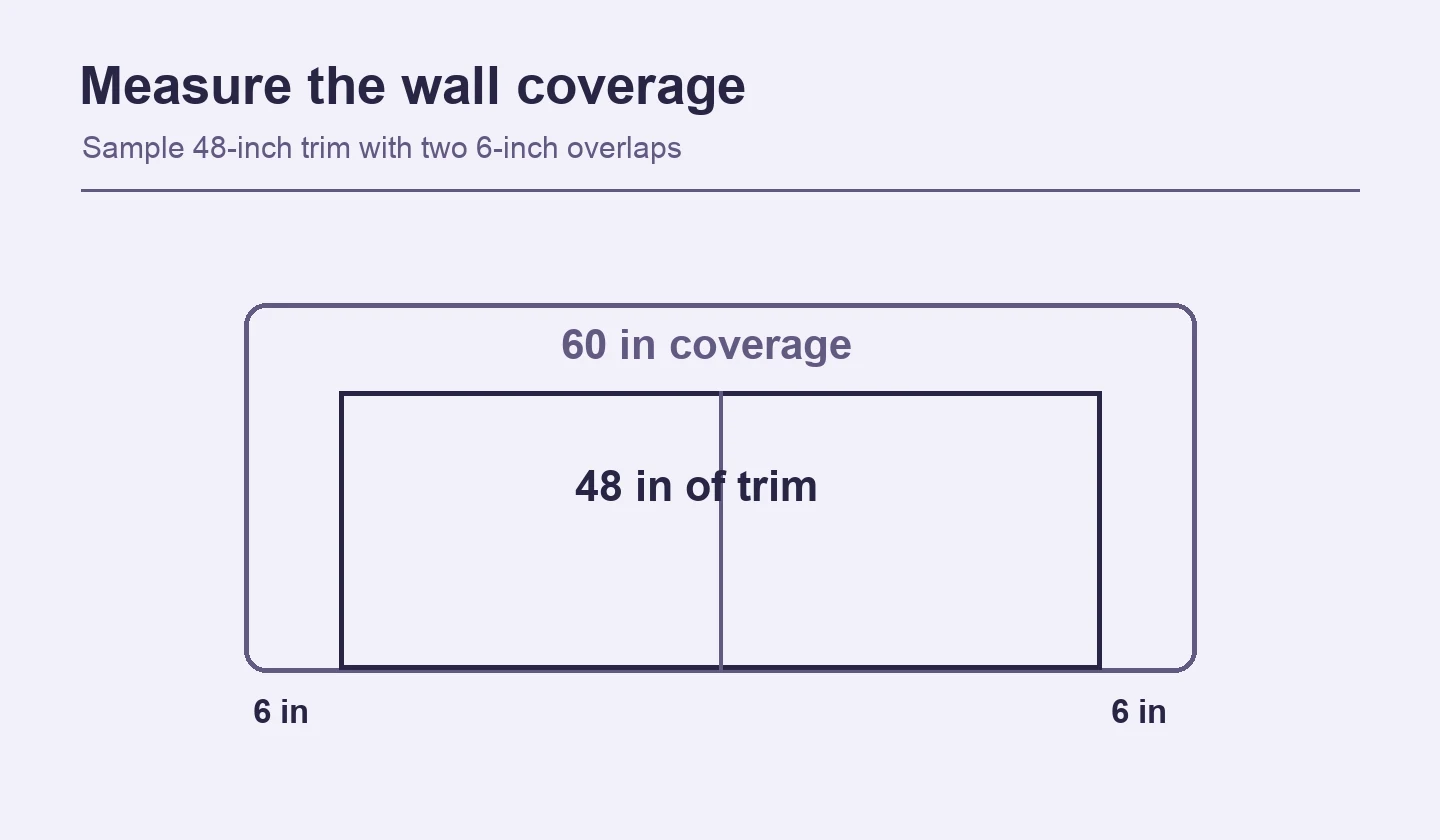
Write down the width across the trim, plus the intended overlaps at the left and right. For a sample 48-inch window span with 6 inches available on each side, the target wall coverage is 60 inches. Check that the brackets, tracks or rod can actually put the fabric across that span. Finials are decorative ends. Their length doesn’t add covered wall.
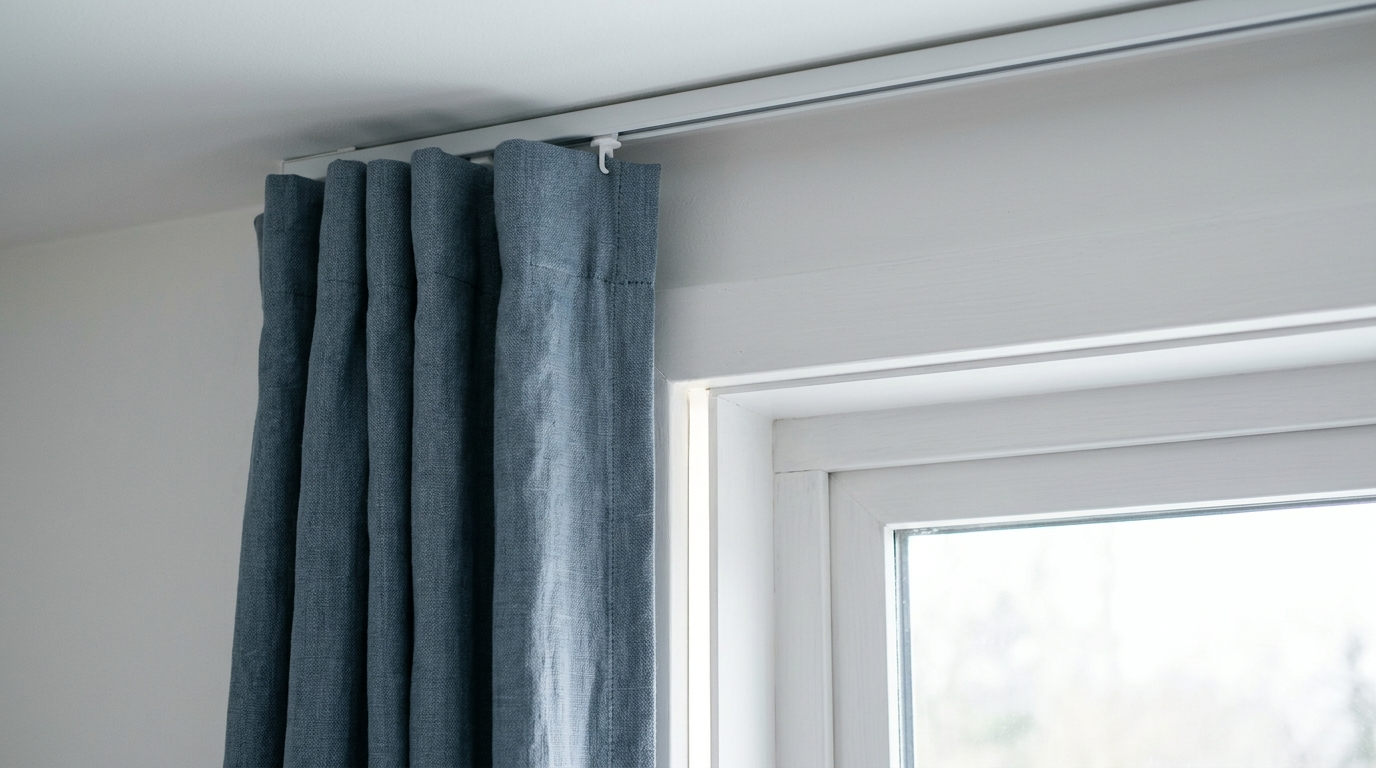
A flush-looking installation can still have light behind the outer edge. The gap depends on how far the track or rod stands out from the wall and whether the system has a side return, which brings the fabric back toward the wall. Plan an overlap at the center if your hardware and heading allow it.
Compare example track widths in the VIDGA buying guide: How to measure your windows.
Sources: IKEA · How to measure for curtains and draperies · Drapery installation instructions
Read whether the number is flat or finished
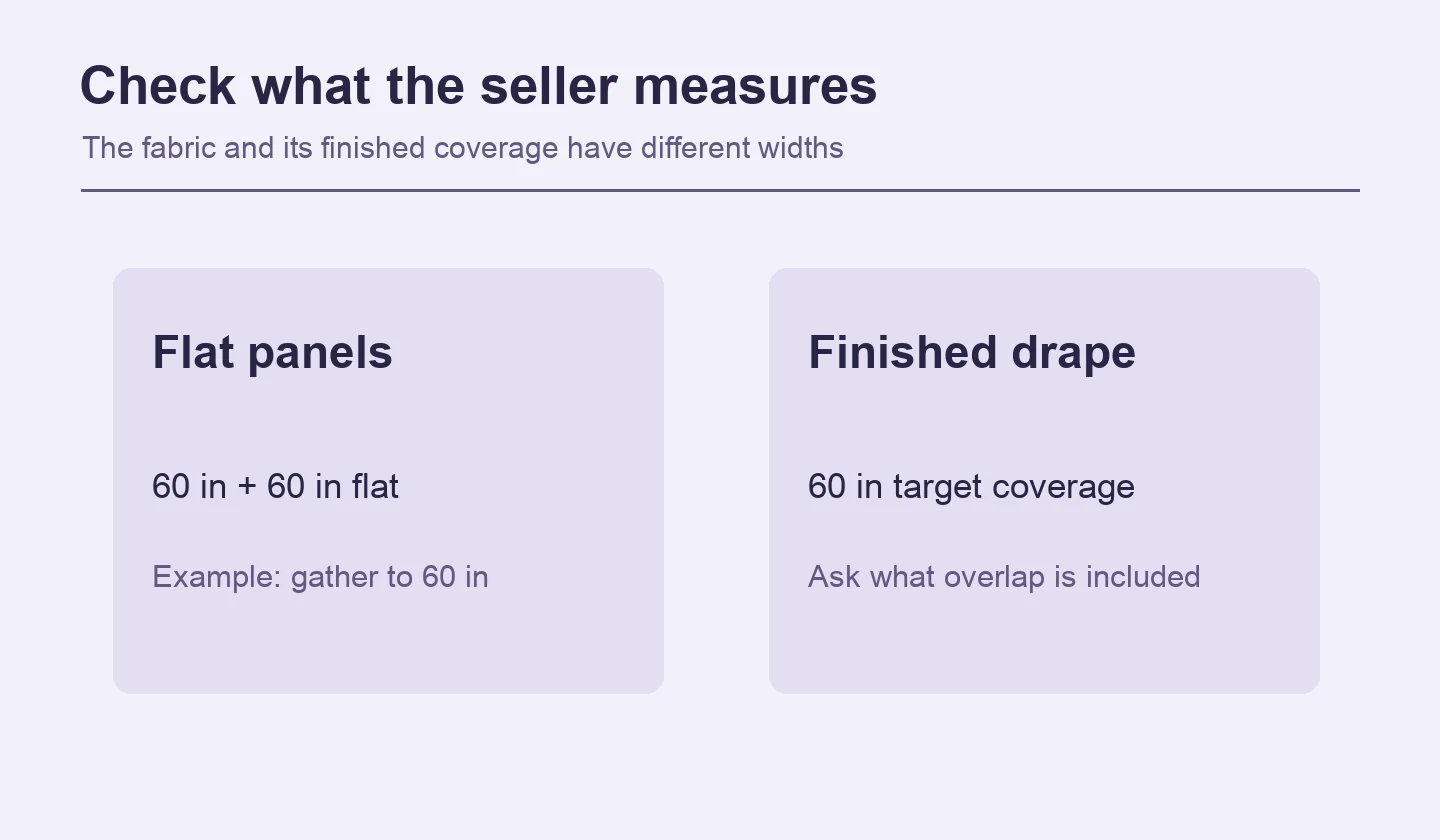
Suppose a ready-made curtain seller calls for a flat fabric width of about twice the span for your heading style. Two 60-inch flat panels provide a combined 120 inches before gathering, for the 60-inch example. Check the finished coverage on the exact hardware. The ratio is an example based on a seller’s rule and varies by heading, fabric and desired folds.
For a custom drape, the seller may ask for the target covered width and build in the folds. In that case, multiplying the order by the same factor could make it too wide. Ask whether an advertised dimension applies to one panel or the pair, and how the seller accounts for the center overlap and side returns.
Which width do you order?
Ready-made panel listed flat
Check the seller’s recommended fullness, the width per panel and how many panels come in the pack.
Custom curtain sold by covering width
Ask whether the quoted finished width includes the center overlap or side return.
Check the seller’s sizing method in How to measure for curtains and draperies.
Sources: How to measure for curtains and draperies · IKEA · Drapery installation instructions
Measure the drop from the actual hardware
Take a vertical reading from the point specified for your chosen heading. A hook hanging below a track and a grommet sitting around a pole have different starting points. For floor-length curtains, check the drop at both ends and in the middle. If the floor is uneven, use the shortest reading when you want a consistent clearance from the floor and confirm the adjustment your system allows.
Sources: IKEA · Blinds.com
Close the curtains and check again during daylight
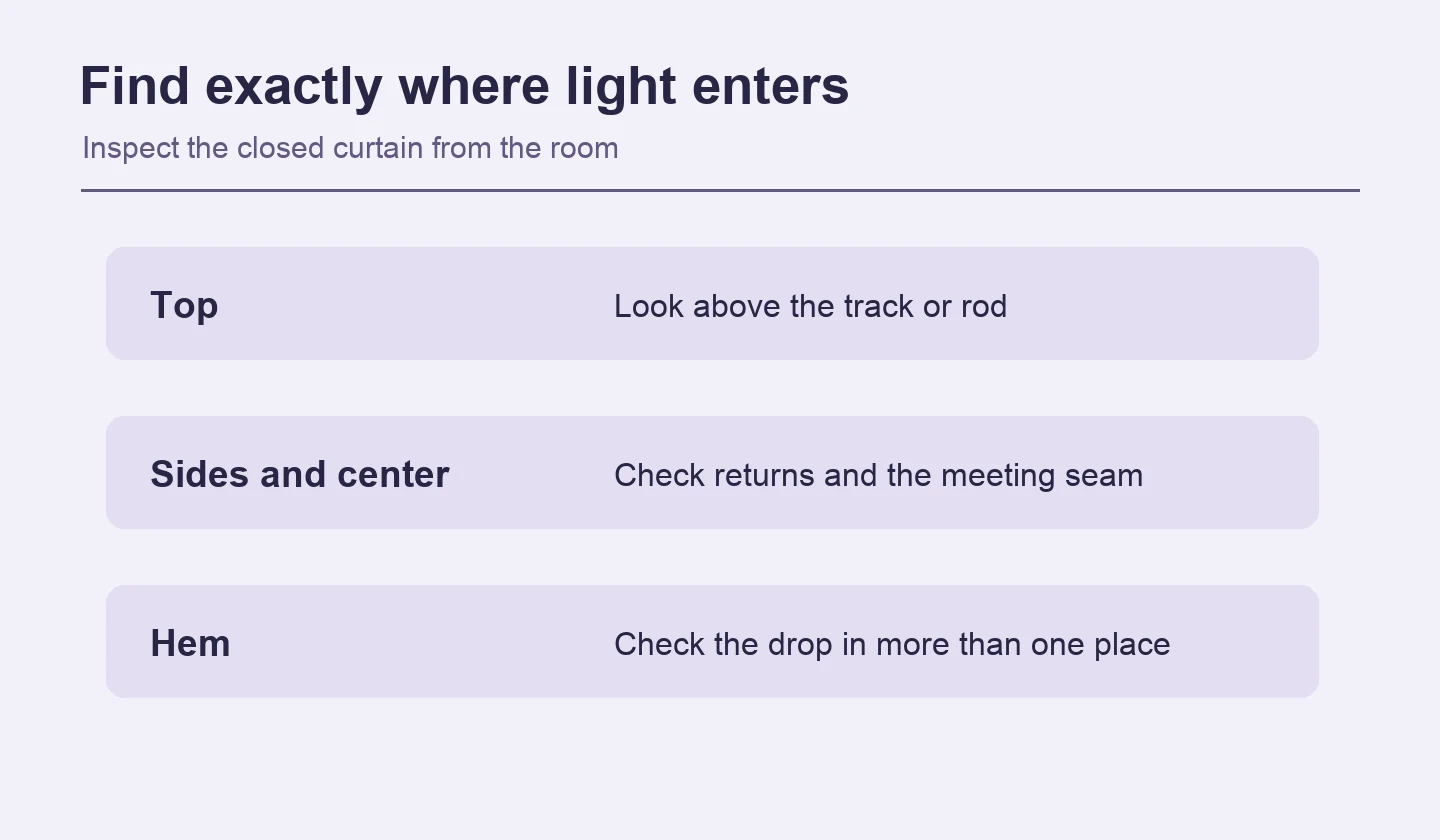
Check the outer edges, center seam, top of the track and hem from where you’ll see the window. If there is still a line of light, note exactly where. A center opening needs a different fix from light above the track or below the hem. Write the trim width, covering span, seller’s width convention and finished drop together so you can check all four before placing an order.
| Light gap | Measurement to revisit | What to inspect |
|---|---|---|
| Outer edges | Side extension and return depth | Curtain clearance from wall and trim |
| Center seam | Center overlap when closed | Track, hooks and panel position |
| Along the floor | Drop from the hanging point | Heading style and uneven floor |
Keep a four-number order check
- Write the trim width.
- Measure the desired covering span.
- Confirm the seller’s panel width and count.
- Measure the drop from the hanging point.
For the related task, see Read the sleep-hygiene guide.
Sources: Blinds.com
Frequently asked questions
How wide should curtains be for a 48-inch window?
A 48-inch span with 6 inches on both sides gives 60 inches of target coverage. Convert that to the dimensions the curtain maker asks for.
Can a blackout curtain still let in light?
Yes. Light can still enter around the top, sides, seam or hem. The fabric and the gap are separate parts of the problem.
Should I measure the finials on the rod?
Use the working span specified by your seller. The decorative ends don’t cover more wall.
Does rod height affect the ordered length?
Yes. Measure from the actual hanging point for your heading style to the intended hem position.
Talk About SleepMeasure a bed-skirt drop
Use consistent reference points when measuring fabric around the bed.
Review fitting measurements in the bedroomContinue with a related guide
- Measure a bed-skirt drop
Use consistent reference points when measuring fabric around the bed.
- Read the sleep-hygiene guide
Consider room conditions and your regular sleep routines together.
- Review bedroom temperature
Consider the room’s thermal comfort alongside daylight control.