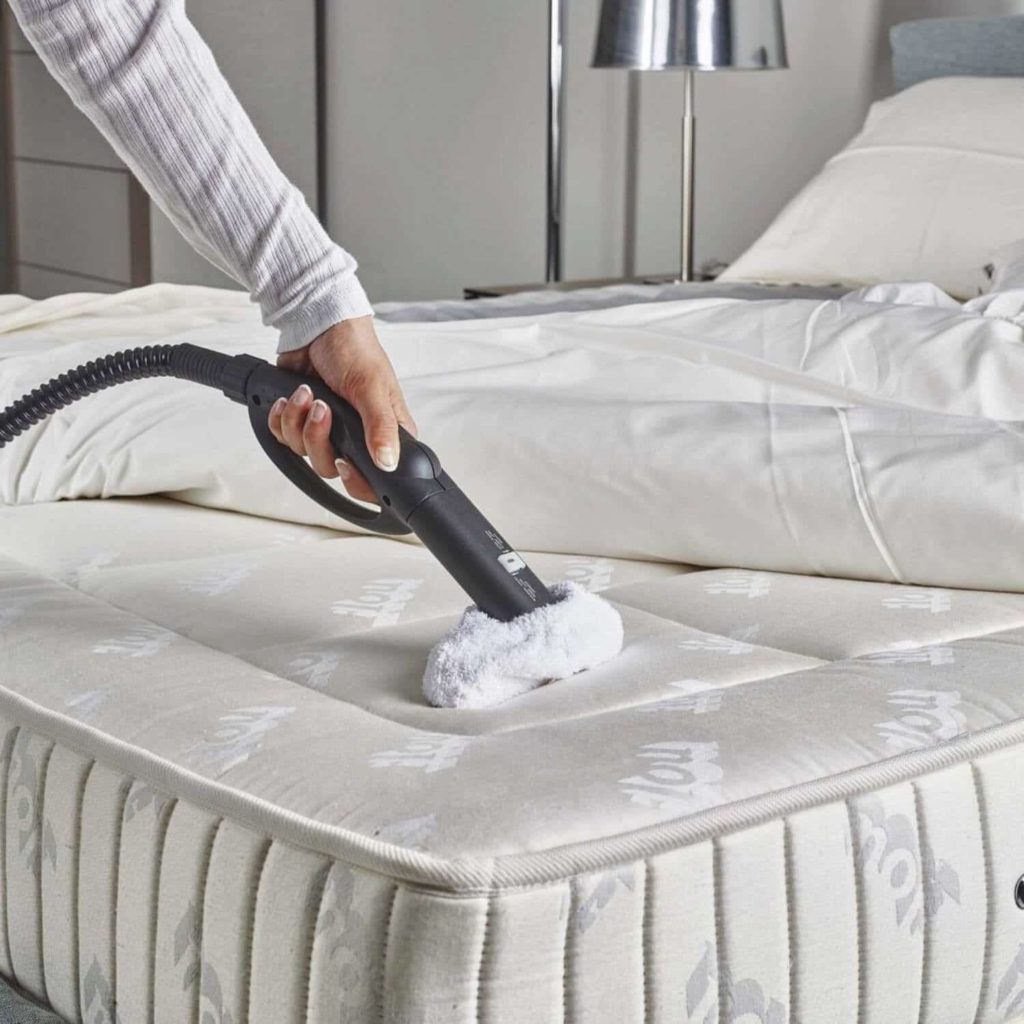


You can exercise, eat well, and read self-improvement books, but if you don’t get the right amount of sleep, all of your good routines and habits will fail to have the most beneficial effects. Sleep is almost magical; a lack of sleep impacts energy levels, mood, your skin, and even your overall health. Unfortunately, it can be difficult to tell whether or not you’re getting high-quality sleep every night, which is why many people look to sleep trackers. With so many options on the market, choosing a device can be a little tricky, so we’ve compiled a special guide to help you with purchasing of the best sleep tracker.
In our best sleep trackers review, we’ve looked at the key features that make an excellent device. We’ve reviewed the different types of sleep trackers and functionality issues such as battery life, pricing, apps, and other features that make a device ideal for use in a busy lifestyle. Choosing a device requires more than watching what your friends are using, as your lifestyle and habits may be completely different. So, we have aimed to highlight the features that you may find useful to help you develop healthier habits, and improve your overall wellness.
Our research team has created a list of some of the best fitness and sleep trackers on the market, looking not only at the features of each device, but also manufacturer information and user feedback. We’ve used this data to compile a comparison table, in-depth reviews for each product and a sleep tracker Buying Guide to help you to make an informed purchase decision.
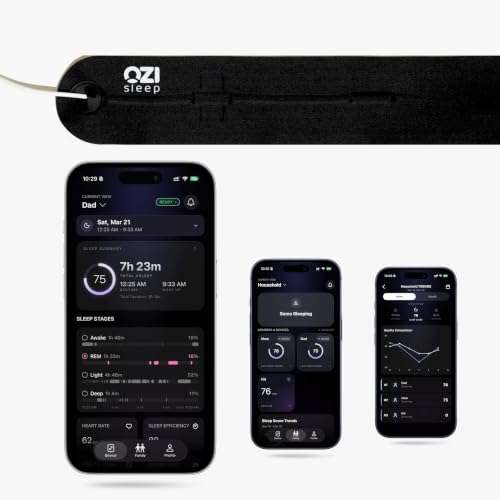
More features: nightly Sleep Score, real-time bed exit and heart rate alerts, no monthly subscription, suitable for adults and kids 5+
The OZI Sleep slides under your sheet, so there is no watch, ring or camera involved and nothing to charge before bed. It reports sleep stages, heart rate, breathing rate, movement, awake moments, sleep duration and how long you took to fall asleep, then rolls all of that into a nightly Sleep Score in the OZI app.
It can also send real-time alerts for bed exits or unusual changes in movement, heart rate and breathing, which makes it a sensible choice if you are keeping an eye on a child or an older parent. Setup takes a few minutes and there is no monthly fee, so the purchase price is what you pay.
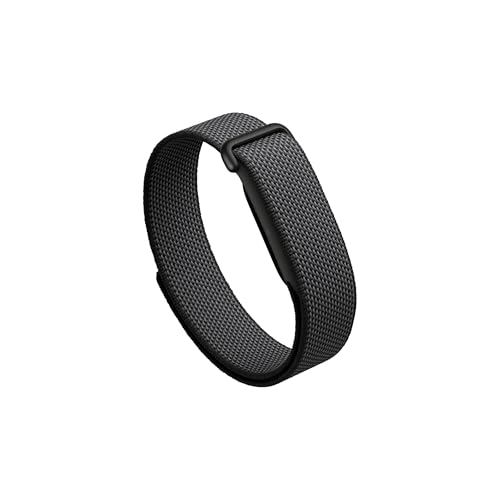
More features: swappable bracelet, workout and sleep bands, optional Google Health Premium coaching
The Fitbit Air leaves the screen out altogether, so there is nothing to light up or pull your attention when you are winding down for the night.
The tracker itself is a small pebble that presses in and out of its band in seconds, moving from a bracelet to a workout band to a sleep band, and the one size band adjusts from 130 to 210 mm so you can wear it loosely enough to forget about it overnight. Its sensors run around the clock and feed the Google Health app, which adds personalized coaching if you take up a Premium membership.
Battery is where this one earns its place on the list: a full charge lasts up to a week, and five minutes on the charger is enough for another full day.
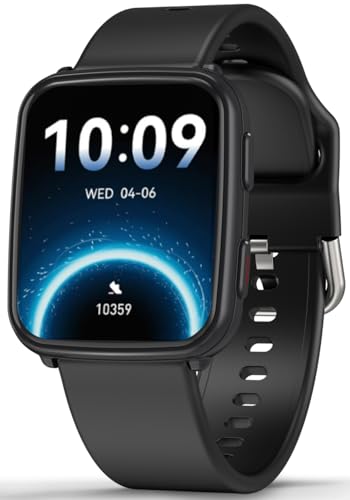
More features: on-demand blood oxygen checks, 120+ sport modes, step and calorie counter, cycle tracking, call and message alerts
The MorePro records your sleep on its own, splitting the night into deep sleep, light sleep and wake-ups so you can see how things are trending in the companion app. Through the day it keeps heart rate and blood pressure under review around the clock, and you can take a blood oxygen reading on demand whenever you want one.
There is a full activity side to it as well, with a step and calorie counter and 120+ sport modes covering running, walking and gym work. The IP68 rating handles sweat, rain and hand-washing, and call, SMS and app notifications, sedentary and water reminders, cycle tracking and over 200 watch faces round out what you get at this price.
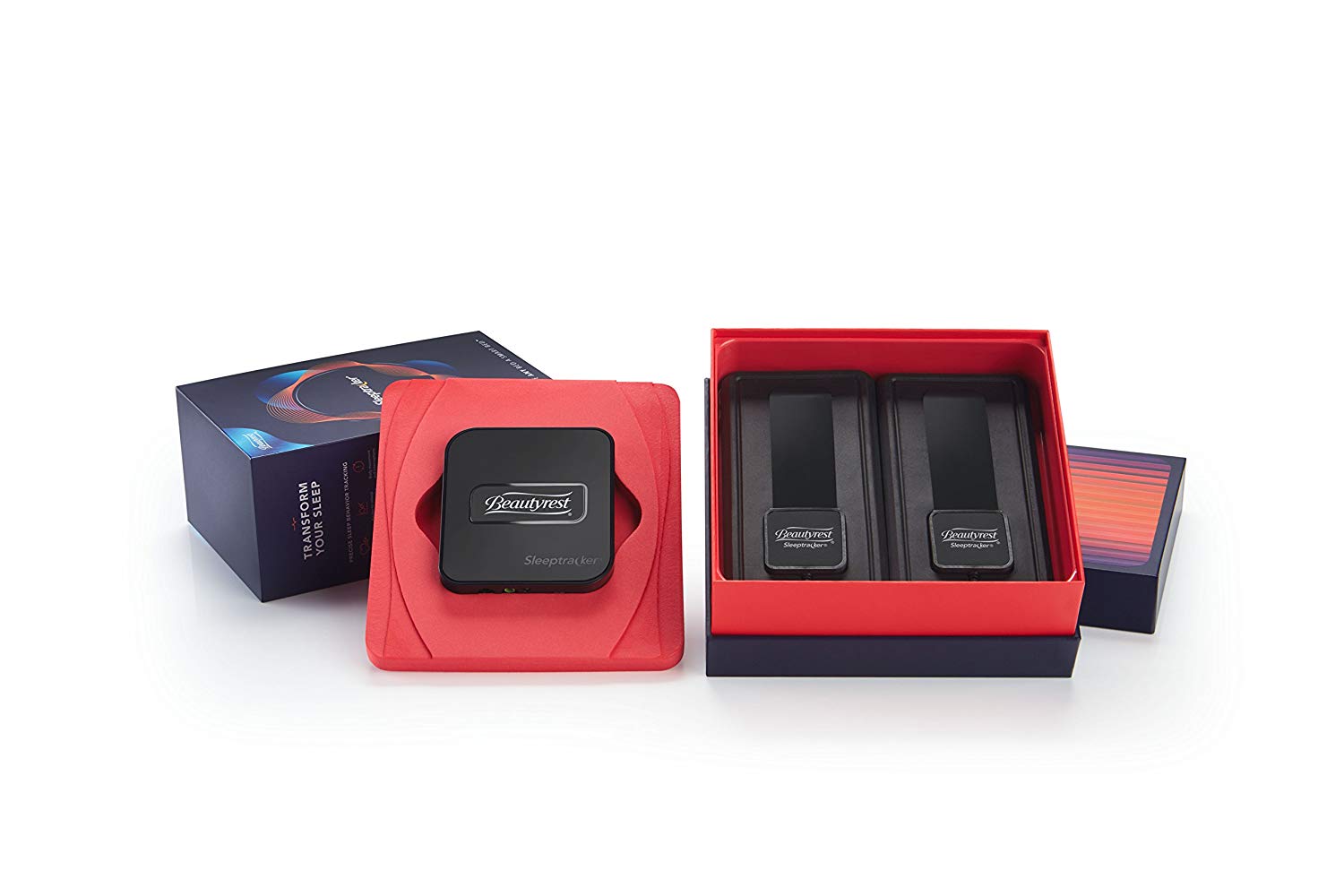
The Beautyrest Sleeptracker is the best non-wearable device, sitting under your mattress. This provides a contactless tracker that you don’t need to wear. The sleep data is sent via a small data processor to the smartphone app that’s simple to set up. There are even app videos to take you through the setup. Once your Beautyrest is configured, it can be switched on, and it will automatically track your sleep when you’re in bed, providing accurate and consistent measurements.
The Beautyrest is designed to provide interpretations of sleep data and helpful advice to improve your sleep habits. This means that there are no complicated graphs or tables to try and interpret. One of the most impressive features of the Beautyrest is that it doesn’t mistake resting in bed for sleep. It can also identify significant periods of waking during the night.
The Beautyrest also excels other models in sleep coaching. While many trackers provide generic coaching tips, the Beautyrest provides recommendations based on your sleep data and results. In fact, the more information you provide, the higher the standard of coaching. So, it is well worth taking a few minutes to answer the questionnaires, as you will get more helpful advice based on how you sleep after less active or stressful days.
In essence, the Beautyrest makes your bed into a smart bed. The pad interacts with Alexa and features highly accurate sensors that monitor and analyze heart rate, respiration, and your unique sleep behaviors, including body movements.
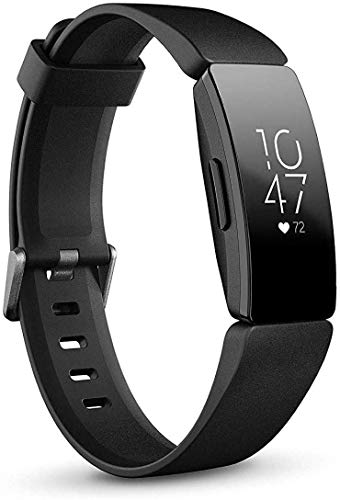
More features: 24/7 heart rate tracking, automatic sleep stage tracking, SmartTrack auto exercise recognition, all-day tracking of steps, distance, active minutes and calories
The Fitbit Inspire HR starts recording as soon as you drift off, so there is no button to press at bedtime and no risk of forgetting to start a session. Because it reads your heart rate around the clock rather than watching movement alone, it can split the night into light and deep sleep stages instead of simply logging how long you lay still. The band is a flexible elastomer that fastens with a peg and loop, and both a small and a large strap come in the box, so it is easy to find a fit that stays comfortable overnight. A charge lasts up to five days and takes roughly two hours to fill, short enough to top up in the morning without losing a night of data
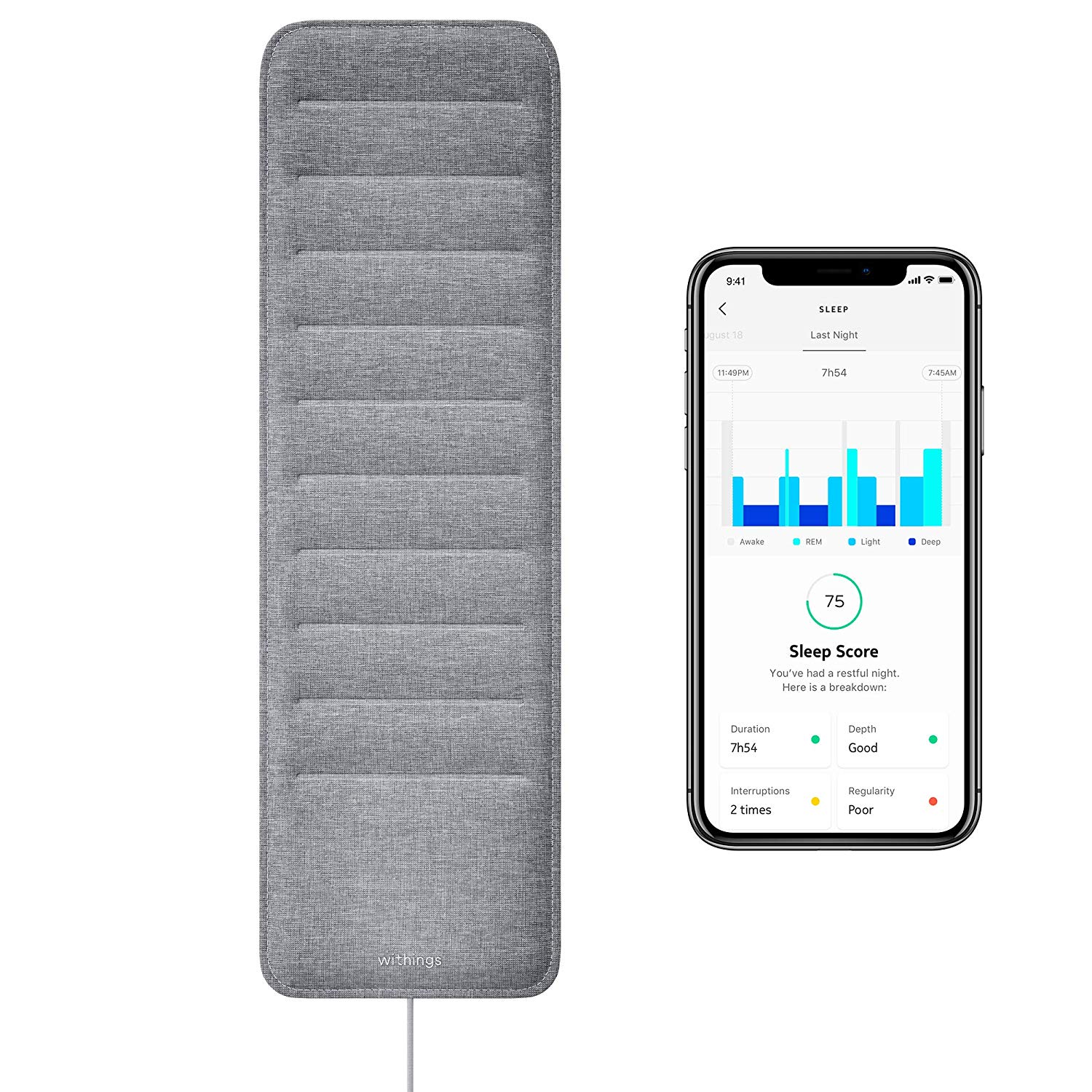
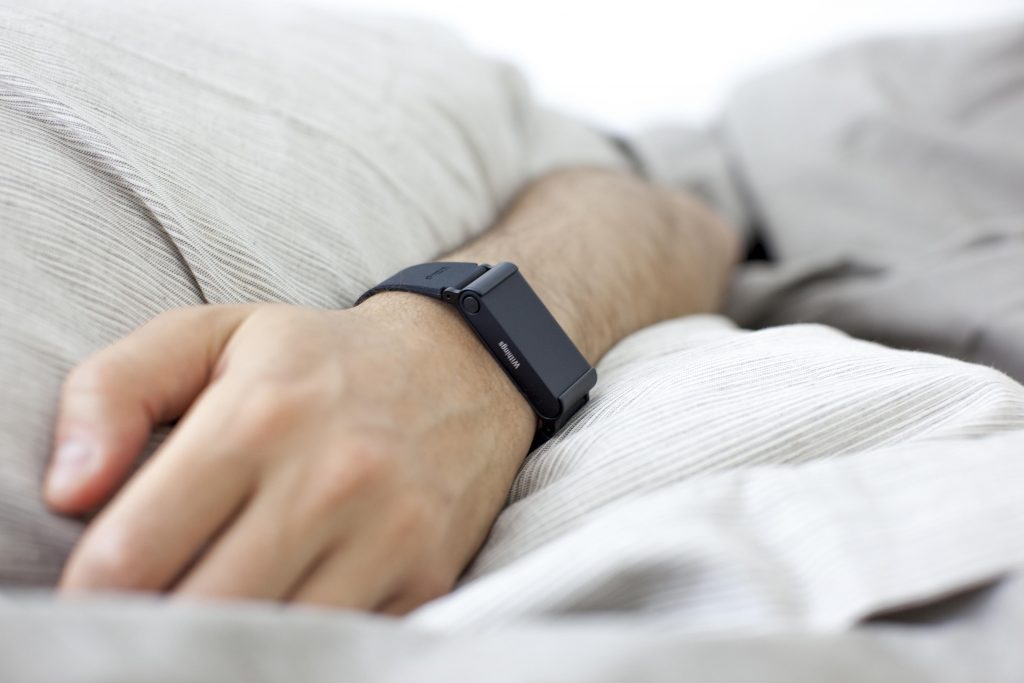
The Withings Sleep Tracking Pad is an interesting evolution in this segment. Unlike other mat trackers, the Withings is a contactless mat that is placed under the mattress. This pad then transmits sleep data to a smartphone.
The company has a focus on improving sleep patterns. After registering the sleep tracking pad, the app will prompt you to join other programs to help you to improve the consistency of your sleep routine. There is also an option to integrate your pad with your smart home devices IFTTT. This allows you to automatically adjust your thermostat or turn lights on and off when you get into bed.
The Withings Sleep Tracking Pad is the best sleep tracker device, attempting to track the stages of your sleep and collates this into a graph the following morning on the app. Unfortunately, if you like to lie in bed reading, you may find that your figures may not be completely accurate, as the device can find it harder to track sleep and rest, the more time you spend reading in bed.
The Tracking Pad can monitor your sleep, detecting snoring, and breathing disturbances that may be compromising the quality of your sleep. Although some pauses are normal during sleep, frequent breathing disturbances can be a potential sign of chronic conditions including, sleep apnea. The App will produce a daily Sleep Score, so you can see at a glance the quality of your sleep and how you can make improvements. You can also receive personalized coaching to help you to increase your sleeping time efficiency.
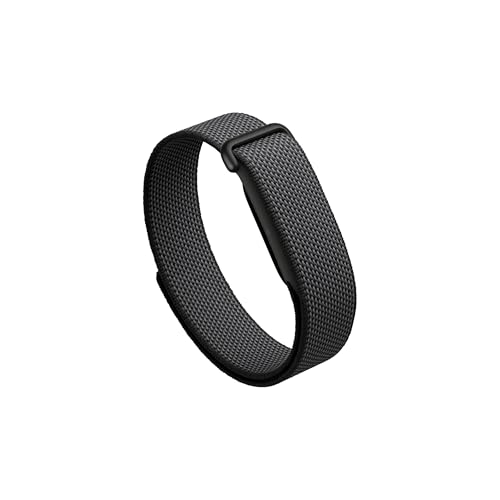
More features: 24/7 tracking, interchangeable bracelet, workout and sleep bands, adaptive coaching with Google Health Premium (sold separately)
The Fitbit Google Air takes the opposite approach to most trackers: there is no screen at all, so nothing lights up or pulls your attention while you are trying to settle down for the night. The tracker itself is a small pebble that presses in and out of its band in seconds, which lets you move it from a daytime bracelet to a softer sleep band without any tools.
It is built to stay on through work, exercise and sleep, running its sensors around the clock and sending everything through to the Google Health app rather than to a display on your wrist. Battery life runs to about a week, and a five-minute top-up is enough for another full day, so it rarely has to come off at bedtime.
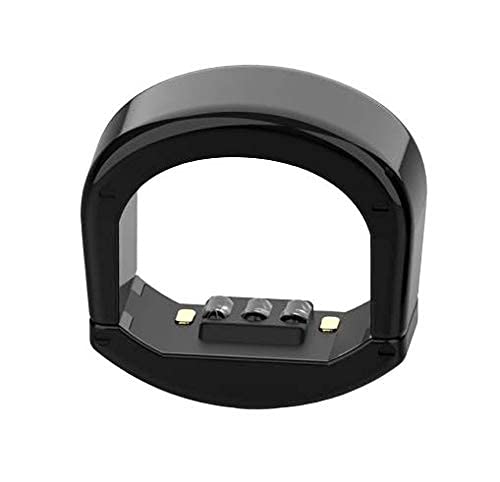
The BodiMetrics CIRCUL Sleep and Fitness Ring made it to our list because of its versatility. It can track your heart rate, distance, steps, calories burned, and it monitors blood oxygen saturation levels during the night and day. The ring also tracks and records your sleep in all four stages; awake, light, deep, and REM. It will help you get valuable information about your sleeping patterns and how well you sleep, making it easier for you to track the results of the new healthy habits you just picked up.
The ring is super comfortable and easy to wear day and night. It comes in two sizes that are both adjustable to fit your finger. Unlike most sleep and fitness ring brands, you wouldn’t have to waste time with a sizing kit.
The BodiMetrics CIRCUL Sleep and Fitness Ring is compatible with both Android and iOS. You can track and share your sleep and workout records with your trainer or physician via the CIRCUL mobile app. The app is user-friendly, and anyone, including your caregiver or family friend, can understand your health records when you show them.
Best of all, the BodiMetrics CIRCUL Sleep and Fitness Ring has a decent battery life of 15 hours and charges quickly. It comes with two USB chargers that will have it fully charged in less than 90 minutes.
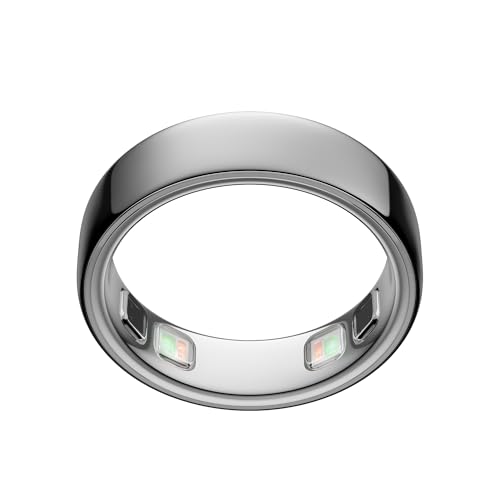
Extra features: tracks over 50 health metrics, including sleep, activity, stress, heart health and metabolic health
The Oura Ring 5 puts a full night of tracking on your finger instead of your wrist, which is the main reason people who cannot sleep in a watch get on with it. The all titanium body is 40 percent smaller than the previous generation and is built to resist scratches, so it holds up to being worn around the clock.
In the app you can follow more than 50 health metrics, including sleep, activity, stress, heart health and metabolic health, and that data can be passed on to over 40 other apps such as Strava. Sizing works on its own system rather than standard jewelry sizes, so order the sizing kit and confirm your fit before you buy the ring itself.
Sleep tracking devices have become popular recently, particularly for those who have difficulties falling or staying asleep. These devices can measure and monitor sleep patterns, heart rate, and movement, but may also monitor snoring and other sleep disturbances. With so many different types of device, features, and systems, it can be a little overwhelming to choose the best one for you. Fortunately, we’ve compiled a buying guide to help you make your purchase decision.
 Many sleep tracking systems on the market today are very highly advanced, recording sleep data and providing analytics to help you adjust your routine for better sleep. However, it is important to look for features that will fit with your lifestyle and habits. Some of the best features for most users are an alarm, heart monitor, and sleep coaching tips.
Sleep trackers generally fall into two categories; wearable and non-wearable. Wearable sleep trackers typically provide more than just sleep data; they record your physical activities throughout the day and night.
Advanced wearable trackers also go a step further, evaluating your sleep quality based on the stages of different sleep cycles. This is often displayed as a graph so that you can see the times when you were most fitful or slept well.
Non-wearable sleep trackers tend to be a good option for those who don’t like wearing a device but want to monitor sleep activity. These non-contact devices tend to record sleep data using movement sensors or infrared technology. The sensors connect to a smartphone app, but some can also work with home automation systems. For example, the Withings sleep pad can integrate with your smart home systems using IFTTT. Most non-wearable sleep trackers monitor heart rate, with non-invasive measures since there is no contact with your skin.
Unlike wearable models, non-wearable trackers are designed exclusively to monitor your sleep data and will not track your daytime activities.
Wearable and non-wearable sleep trackers all tend to require an app. The data from the device is typically compiled by the app to display graphs or other visuals to help you to analyze your sleep patterns. Therefore, it is important to choose a device that has an App compatible with your smartphone. Fortunately, most sleep trackers are compatible with Android and iOS, but be sure to check whether the tracker app is compatible with your specific smartphone OS.
It is also worth bearing in mind that some sleep trackers can also display data on your PC. Although many users will appreciate the flexibility of using a smartphone, some may prefer to analyze their sleep data on their PC.
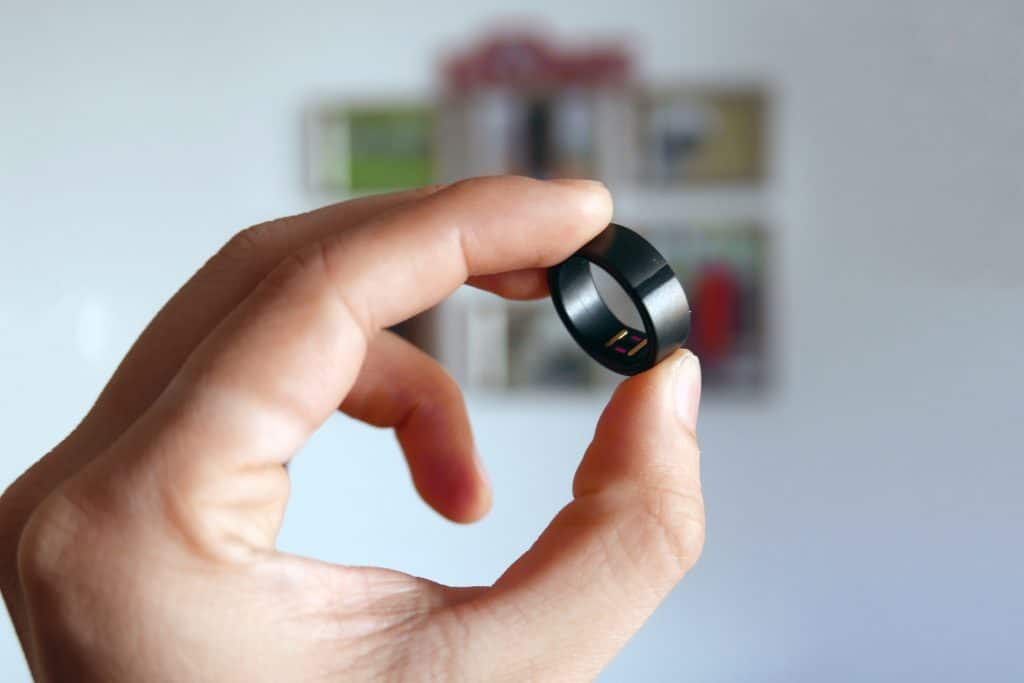
When choosing a sleep tracker, it is also important to assess comfort. Wearable trackers can often be worn throughout the day and night, so it is crucial that the device is comfortable. In fact, some manufacturers even specify that devices should be removed periodically to avoid skin irritation. Since many devices are waterproof, it can be very tempting to wear a device 24/7. When assessing sleep trackers, you need to be realistic about what you find comfortable. If you don’t tend to wear a watch, you may find a wrist design wearable uncomfortable, or it may take a little time to get used to it. Likewise, a ring wearable may be only appropriate if you are comfortable wearing rings. If you don’t like the feeling of wearing jewelry, a non-wearable sleep tracker may be more appropriate.
Most sleep trackers use actigraphy to measure your sleep patterns. Both wearable and non-wearable devices track your movement as you sleep, which is translated into periods of sleeping and wakefulness by the software. This provides a convenient way to study your sleep pattern without needing to visit a sleep clinic.
Wearable devices can be worn 24/7, which also allows you to track periods of inactivity and sleepiness during the day. Your movement rate may suggest times when your energy lulls that could provide insight into your sleep, rest, and dietary patterns to promote a healthier lifestyle.
Studies suggest that generally, actigraphy devices such as Fitbit are considered accurate to track sleep in a healthy adult with a “normal” sleep pattern. If you have a sleep disorder, the device may not be as accurate during periods of very disrupted sleep.
Since sleep trackers often measure movement, some less sophisticated devices may struggle to distinguish between rest and sleep stages. However, many of the devices we’ve featured here, such as the Fitbit Inspire HR, use heart rate along with movement to tell the difference between when you are sleeping and resting.
The price of sleep trackers can vary greatly. Generally, wearable devices tend to be more costly than non-contact trackers, but there are some reasonably priced wearable sleep trackers. For example, the MorePro Fitness Tracker is our best budget pick. This device automatically monitors heart rate and blood pressure in real time, in addition to recording your calorie consumption, steps, distance, and sleep data. The accompanying app allows you to review your stats easily, and there are reminder functions.
While the budget is an important factor, it should not be your only consideration when you make your purchase decision. It is important to look at the overall features and functions offered as you may prefer to pay a little more and get a device that has additional functionality to suit your lifestyle and habits.
To further help you to make your purchase decision, we’ve compiled some frequently asked questions.
If you want to track your sleep, are into fitness, and like the idea of wearing a smart device, then the Fitbit Air is an excellent choice. When many people think about fitness, and sleep trackers, they immediately think about a Fitbit. The Google Health app is excellent, and you can follow your fitness, activity, and rest in one place, with goals and motivation. There is no screen to light up your bedroom, and the tracker presses out of its band in seconds so it can move from a bracelet to a workout band to a sleep band. While the Air gives you nothing to check at a glance, a single charge lasts up to a week, and five minutes on the charger is good for another full day.
Another wearable that we rank highly is the MorePro Fitness Tracker. This is a more budget-friendly option that still offers excellent functionality. There are over 200 watch faces to pick from, and the IP68 rating means the band copes with sweat, rain and hand-washing, though it is not rated for swimming or showers. You can even receive notifications, alarm alerts, and periodic reminders.
Overall, the OZI Sleep monitor is our pick as one of the best sleep trackers. The sensor slides under your sheet, so there is nothing to wear and nothing to charge, and you still get a clear picture of how the night went. The OZI Sleep tracks sleep stages, heart rate, breathing rate, movement, awake moments, sleep duration, and how long you take to fall asleep. It can also send real-time alerts for bed exits or unusual changes in heart rate and breathing, which helps if you are keeping an eye on a child or an older parent. All of it lands in the OZI app as a nightly Sleep Score, with no monthly subscription to keep it running.
Find TalkAboutSleep first in Google Search.