
The journal
Cotton Sateen vs. Percale Sheets: Compare Two Swatches in the Same Light
Find the weave and fibre on the label, then compare finish, feel and care in two matching-color cotton swatches.
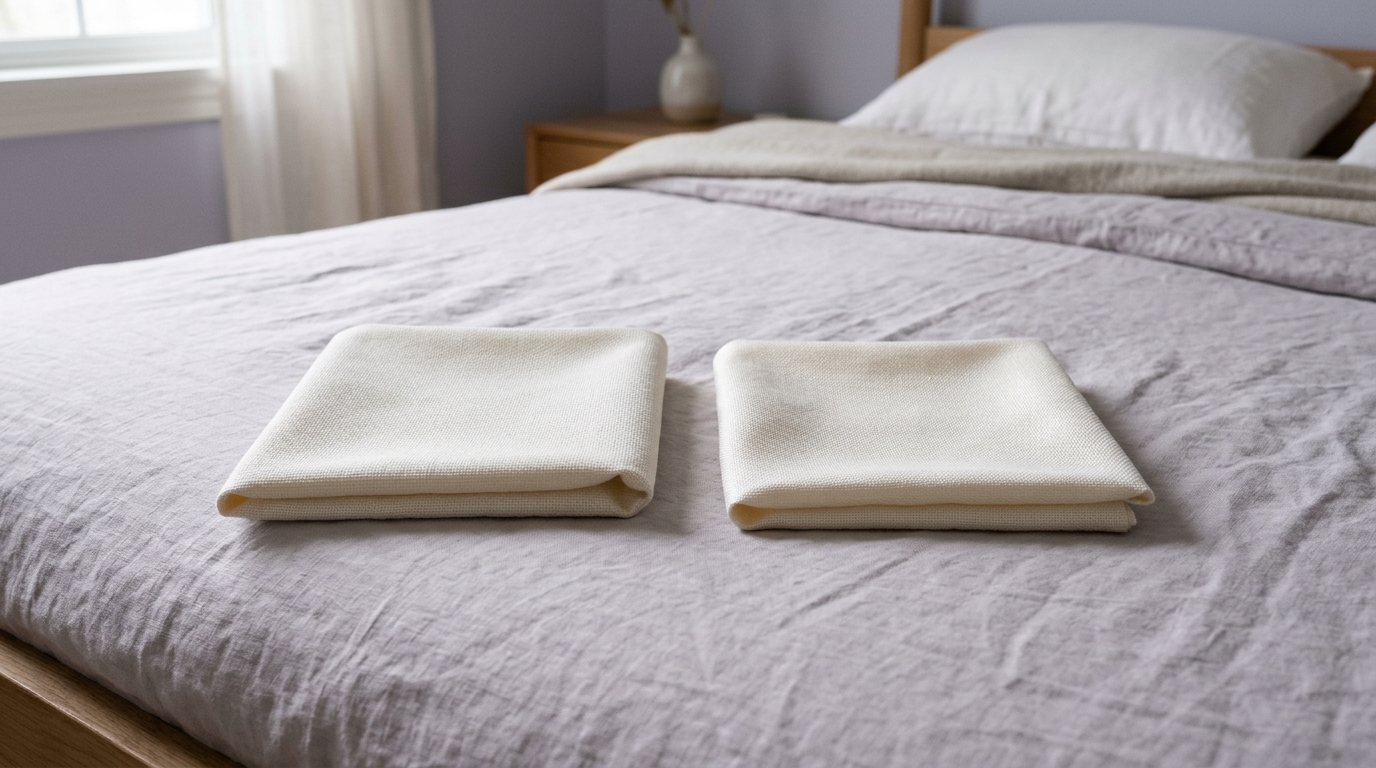
 Talk About Sleep
At a glance
Cotton sateen can feel smooth and look more lustrous. Percale uses a plain weave often associated with a crisper, more matte feel. The yarn, density and finishing can also change what you notice.
In this guide
Cotton sateen often has a smoother surface and more sheen. Cotton percale often feels crisper and looks matte. If you have two samples, hold them in the same light and look up the fiber and weave on each label. The comparison is useful even when two sheets with the same weave feel different.
Read weave and fiber as separate fields
Cotton describes the fiber. Percale describes a plain weave, with regular crossings. Cotton sateen uses a different pattern with longer stretches of yarn showing on the surface. Those floats help account for the sheen. Yarn, construction and finishing can also shape the way a sheet looks and feels.
Write the labeled fiber and weave down before touching either sample. Then note the fabric weight or other stated construction information if it is available. A percale and a sateen can both be all cotton, so a cotton label alone does not answer the weave question.
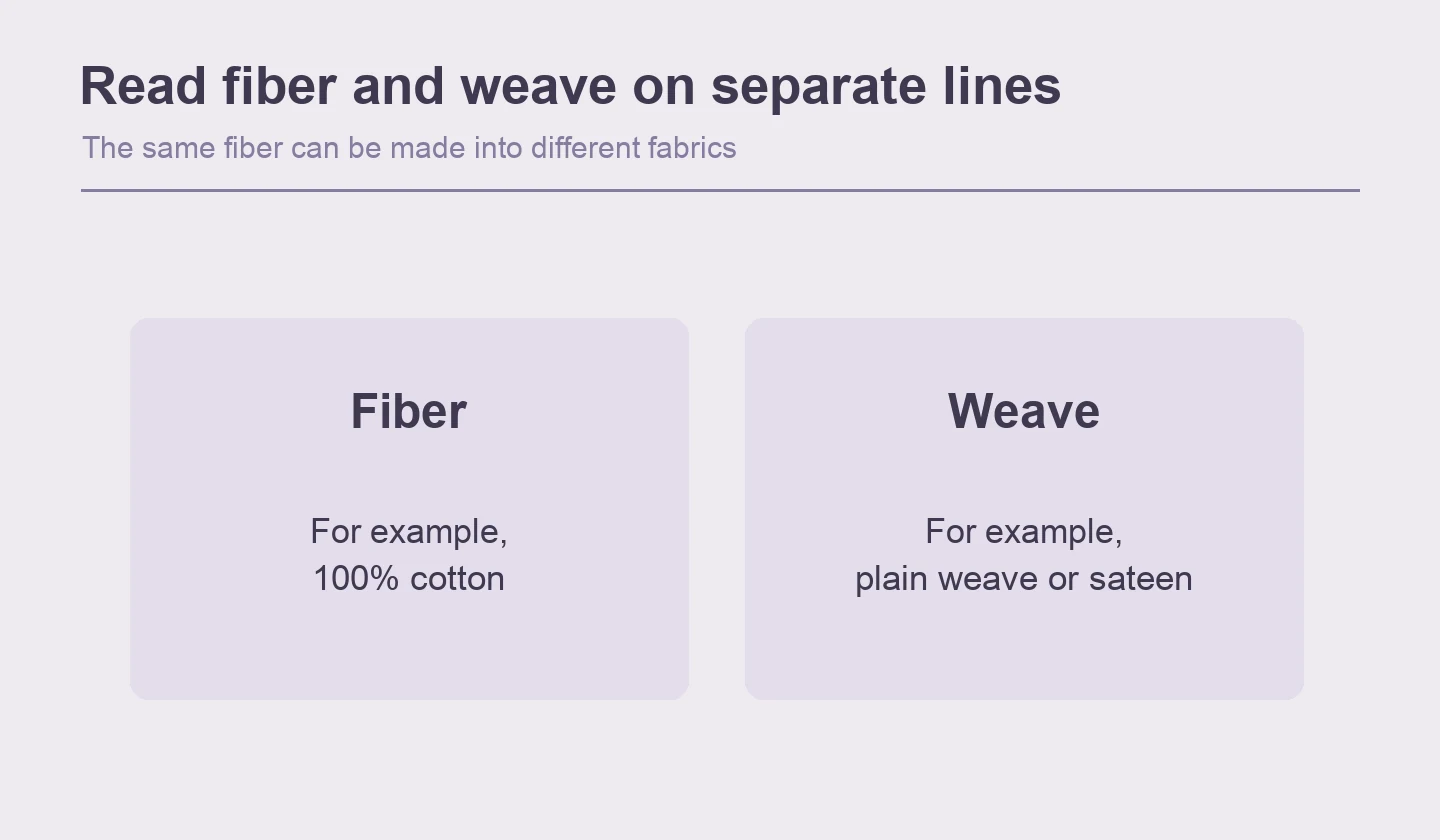
For the separate fibre and weave fields in cotton sheeting, see Cotton sheets buying guide.
Sources: Cotton sheets buying guide · Weaving 101
Hold both swatches in the same light
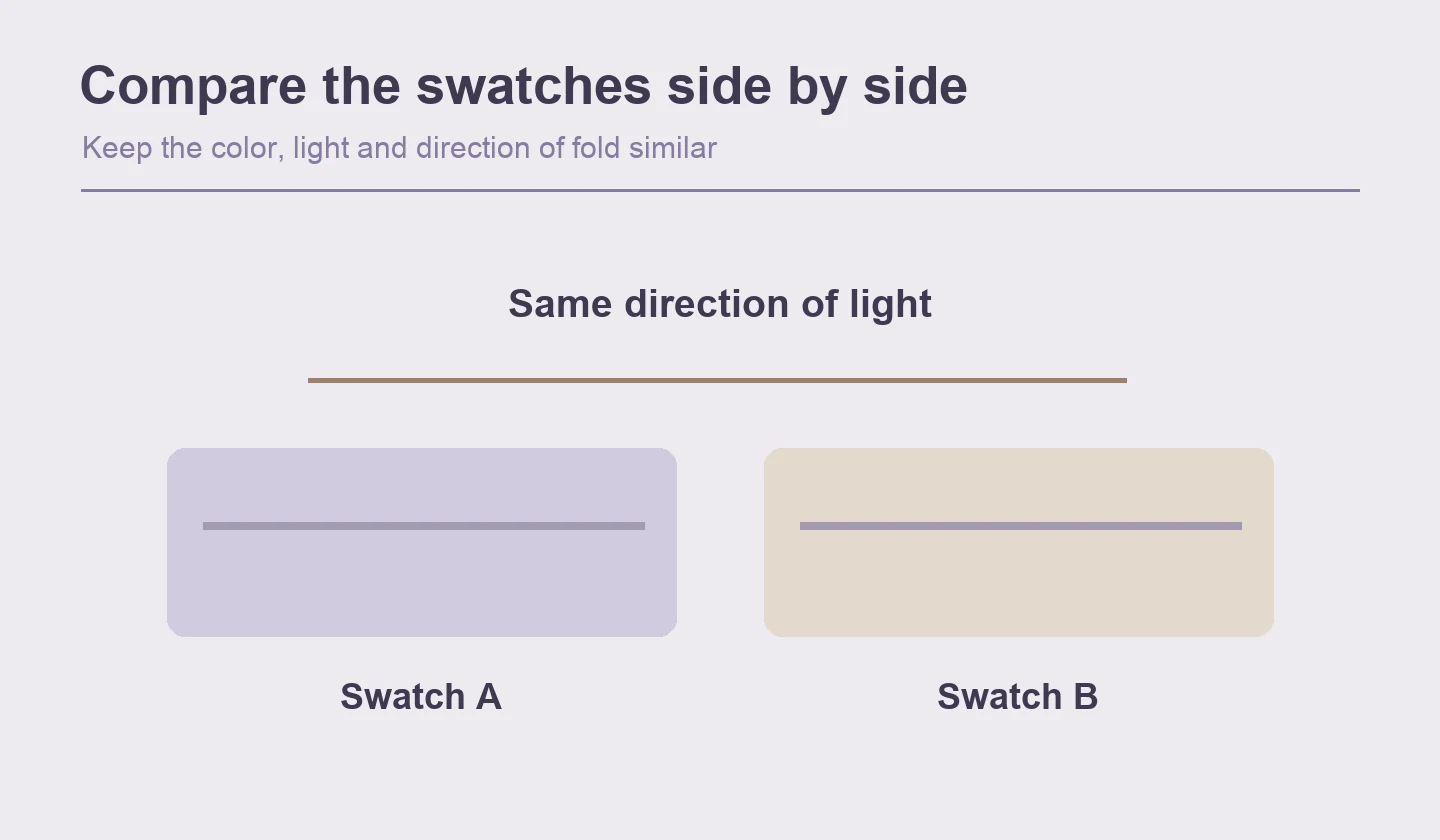
Use two samples of similar color and fold them in the same direction. Put them beside each other near a window. Keep them at the same angle, then tilt both. Check whether one surface catches a broader highlight. Look at both the flat part and the fold before deciding how shiny either seems.
Run the same light touch across the samples and note which feels smoother or crisper to you. If one has been washed and the other is new, make a note of that condition. Differences between the samples are useful to record even when you cannot attribute them all to just the weave.
Look at the surface before you pick
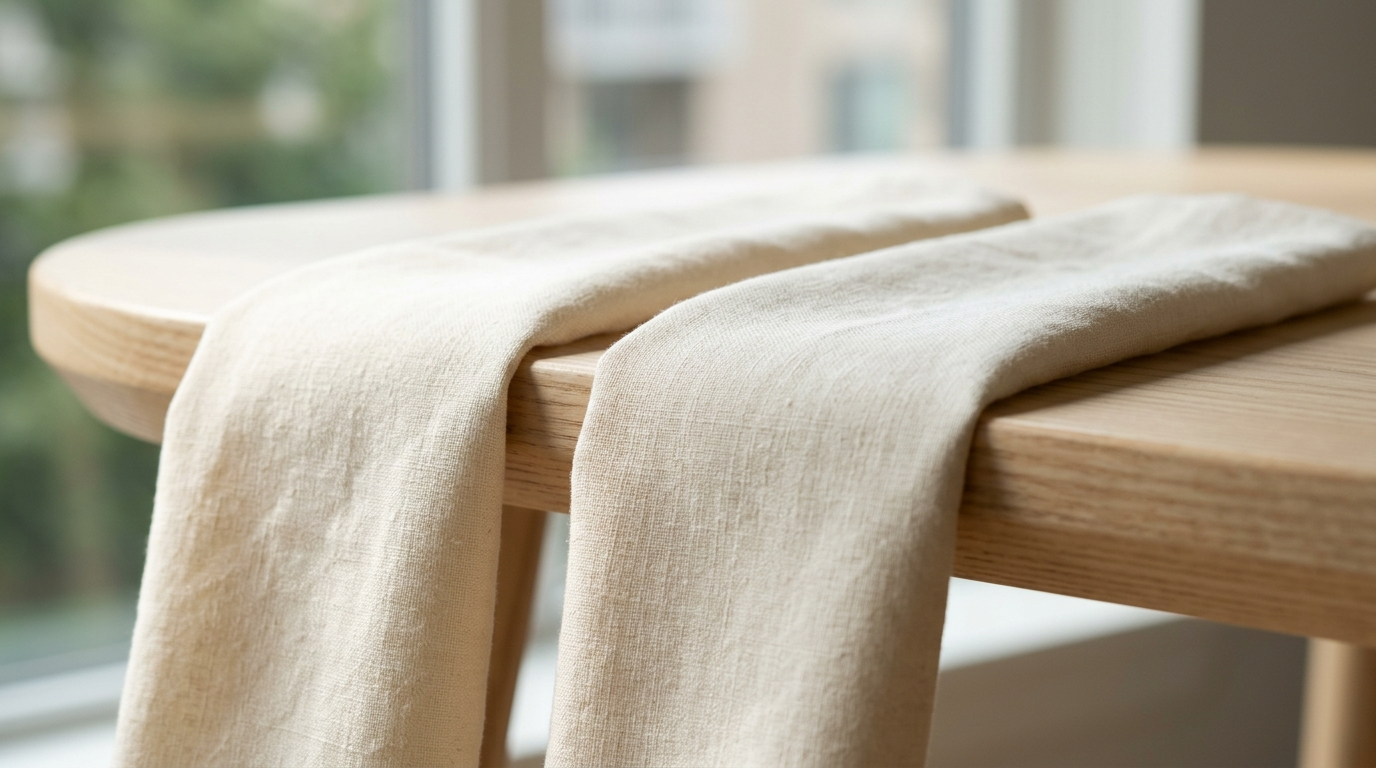
Cotton sateen
Longer surface floats can give a smoother, more lustrous appearance.
Cotton percale
Plain weave crosses regularly and often reads as crisper and matte.
For longer floats and surface appearance, see Weaving 101.
Sources: Cotton sheets buying guide · Weaving 101
Pick the trade-off you want to live with
Sateen is a sensible choice when you want a smoother and slightly lustrous surface and you like how the actual sample feels. If you prefer the crisper appearance and touch of the other sample, percale may suit you better. Check the bed setup and laundry label before treating either feel as a lasting result.
Keep a short note with the weave, fiber, observed feel and allowed care. If you are replacing only one piece of a set, read that piece’s own label. Two similarly named pieces may differ in finish or treatment. In practice, the sample and care note can settle this decision more reliably than a weave name alone.
| Observation | Keep constant | Note |
|---|---|---|
| Sheen | Color and angle to the window | Which surface changes more as you tilt it? |
| Handfeel | Approximate weight and wash condition | Smooth glide, crispness or something in between |
| Care | Compare the actual labels | How will each fit the way you wash and dry sheets? |
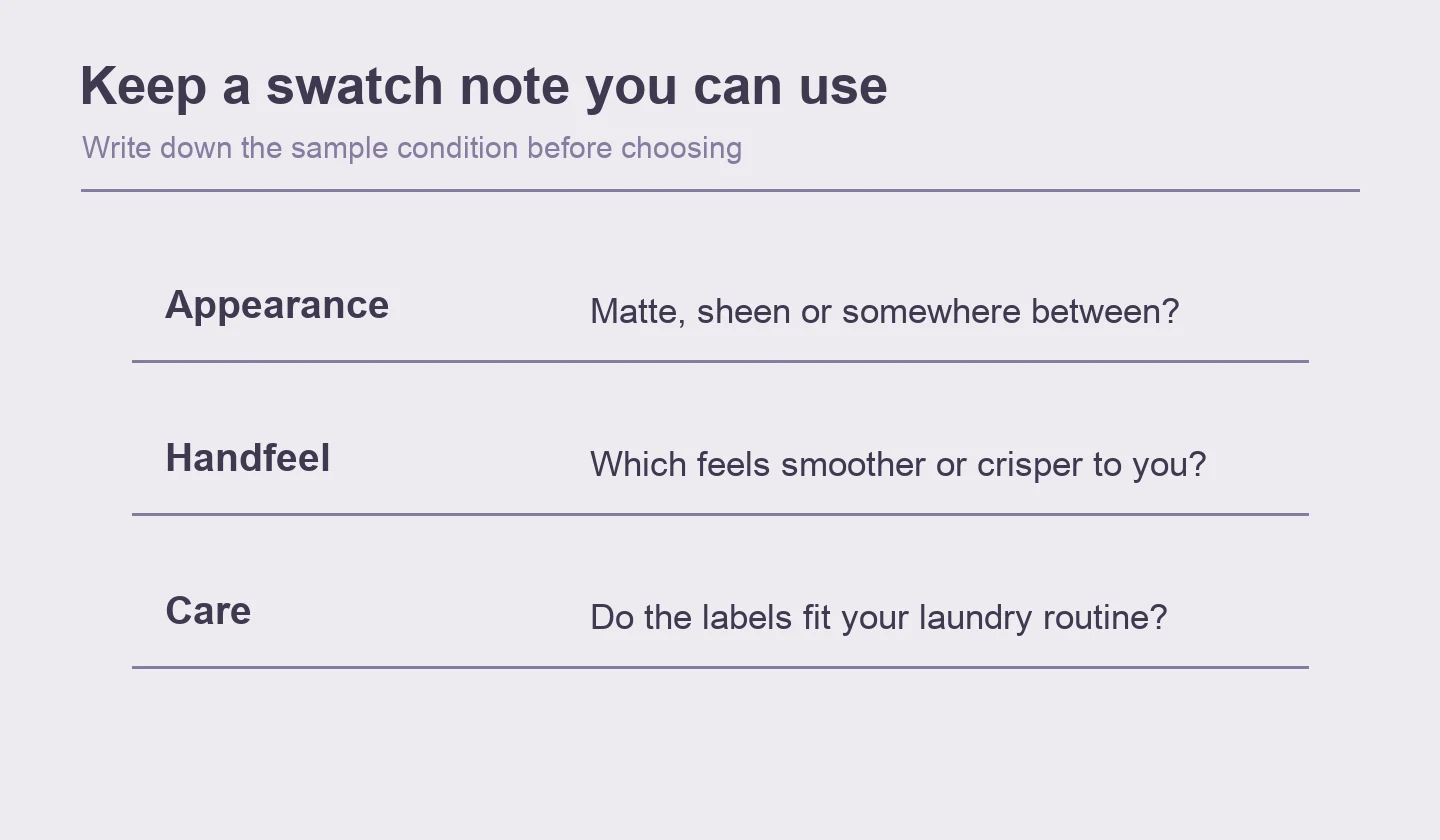
Make a small sheet sample note
- Write down fiber and weave from the label.
- Fold both samples under the same light.
- Compare how much the finish and feel matter to you.
- Keep the care instructions available for the sheets you buy.
For the related task, see Check whether a pattern is woven or printed.
Sources: Cotton Incorporated
Frequently asked questions
Does cotton sateen mean the sheet is silk?
No. A labeled cotton sateen sheet uses cotton and a sateen construction.
Will two cotton sateens always feel alike?
Yarn, density and the finishing process can make them different.
Can I infer how warm I will sleep from the weave alone?
No. Compare the individual sheets and the rest of your bedding before drawing a comfort conclusion.
Should I use the same wash settings for both samples?
Only when the actual labels allow it. Otherwise note the different treatment when comparing them.
Talk About SleepRead what staple length tells you
Keep yarn and weave labels separate.
Check the sheet’s material and weave label side by sideContinue with a related guide
- Read what staple length tells you
Keep yarn and weave labels separate.
- Check whether a pattern is woven or printed
Use a second label clue to understand the fabric.
- Read fabric weight separately
Avoid assuming the same thickness based on the weave name.
References
- Cotton sheets buying guide Cotton Incorporated
- Weaving 101 Cotton Incorporated