
The journal
Should a mattress be stored flat or upright? Practical guidance from Talk About Sleep
how to store a mattress: Keep it flat on a supportive, breathable surface, control humidity, and use a breathable cover to reduce mold and damage risk.

Short answer: store a mattress flat, not upright
One-sentence verdict: For long-term storage, keep the mattress flat on a supportive, breathable surface rather than standing it on edge; brief upright positioning is allowable only for short transport, and compressed factory shipping is not a model for DIY long-term storage.
Should a mattress be stored flat or upright?
For long-term storage, store a mattress flat on a supportive, breathable surface; brief upright positioning is acceptable only for short transport, and foam or latex mattresses are especially vulnerable to deformation if left on their sides.
Why this matters in plain terms: when a mattress stands on edge for weeks or months, gravity concentrates load on narrow areas and layers can deform or settle, so storing flat helps preserve the internal structure and sleeping surface. This guidance on long-term storage and upright risks is consistent with current mattress care recommendations from independent guidance and manufacturer care pages, which recommend flat storage to avoid sagging and internal damage Sleep Foundation mattress care.
When upright is acceptable: short moves or carrying a mattress through a tight stairwell may require standing it briefly. For foam and latex cores in particular, avoid leaving them on their sides for extended periods because those materials can lose shape more readily than innerspring designs, so treat upright positioning as a transport-only approach and plan to place the mattress flat as soon as practicable Latex mattress care. See our posts archive post sitemap.
Quick reasons in plain language: flat reduces permanent sag; it avoids bending that can stress adhesives and layers; it helps preserve warranty coverage offered by some manufacturers; and it makes it easier to allow airflow and keep humidity in check.

Why flat works: how mattress construction reacts to storage
How springs, coils and foam behave when upright: an innerspring mattress distributes load across a broad surface when flat, but on edge the same load concentrates along a narrow band and at contact points, which over time can cause localized compression or a change in coil alignment; storing flat reduces that point loading and helps the structure relax evenly.
To ground that idea, consider that gravity acting on layered materials causes slow, cumulative deformation when layers are unsupported or held in a bent position. Mattress guidance that explains why flat is preferred points to this kind of structural deformation as a common risk when mattresses are stored on edge Tempur-Pedic mattress care.
Why latex and memory foam are sensitive: foam and latex rely on cell structure and material memory to return to shape. When a foam layer is stored on its side or folded, cells can become compressed in ways that slow or prevent full recovery, producing a soft spot or permanent impression. For that reason, long-term upright storage is discouraged for foam and latex mattresses; brief transport is acceptable but not extended side storage Latex mattress care.
What bending, folding or standing on edge does to adhesives and layers: many modern mattresses use glues and layered constructions to fix covers and comfort layers. Repeated or prolonged bending can stress those bonds, cause gaps between layers, or crack adhesives. Some manufacturer care pages explicitly warn that improper storage, including bending or folding, can damage layered components and possibly affect warranty coverage Tempur-Pedic mattress care.
A quick pre-storage inspection checklist to spot deformation or damage
How to prepare a mattress for storage: cleaning, drying and covers
Cleaning steps before storage: remove bedding, vacuum the surface to remove dust and allergens, spot-clean stains following manufacturer care instructions, and allow any cleaning solutions to dry completely before covering or storing. Cleaning and drying first reduces the chance that trapped moisture will encourage mold growth while the mattress is stored Sleep Foundation mattress care.
Thorough drying and why it matters: even small amounts of residual moisture can create conditions favorable to mold and mildew over weeks or months, so make sure the mattress is fully dry in ambient air before you place it in a cover or storage space; if you used a wet cleaning method, allow extended drying time and verify there is no lingering dampness.
Choosing a protective cover: breathable vs plastic: use a breathable protective bag or cotton cover rather than impermeable plastic sheeting. Breathable covers keep dust and pests out while allowing moisture to escape, lowering the risk of trapped dampness and mold. Public health guidance on mold and moisture emphasizes controlling humidity and avoiding sealed, damp environments, so a breathable barrier plus a controlled microclimate offers better protection than tight plastic wrap EPA guidance on mold and moisture.
Reminder on manufacturer care: before applying strong cleaners or any covering, consult the mattress manufacturer's care page because some cleaning approaches or impermeable covers may conflict with warranty terms or recommended maintenance steps Tempur-Pedic mattress care.
Storage environment: humidity, temperature, placement and airflow
Target humidity and why it matters: aim to keep storage relative humidity below 60 percent and ideally in the 30 to 50 percent range to reduce the risk of mold and mildew growth. This humidity guidance comes from U.S. public health recommendations on mold and moisture control and applies whether you store at home or in a climate-controlled unit CDC facts about mold and dampness. Additional retailer guidance discusses similar humidity targets Smartbox humidity guide.
Best indoor locations and climate-controlled units: pick a cool, dry indoor spot such as a climate-controlled garage space, a spare room with stable temperature, or a professional storage unit that advertises humidity control. Avoid unheated attics and damp basements where temperature swings and high humidity are common, since those conditions raise mold risk and can accelerate material breakdown. See a storage-unit guide storage unit guide and our pages index page sitemap.
Placement and airflow: store the mattress on a supportive, breathable base such as a slatted platform, pallet or flat, ventilated surface that keeps it off damp floors and allows air to circulate around the sides. Do not rest a mattress on a cold concrete floor without a breathable barrier to prevent moisture transfer, and leave space for airflow rather than tucking it tightly against walls.
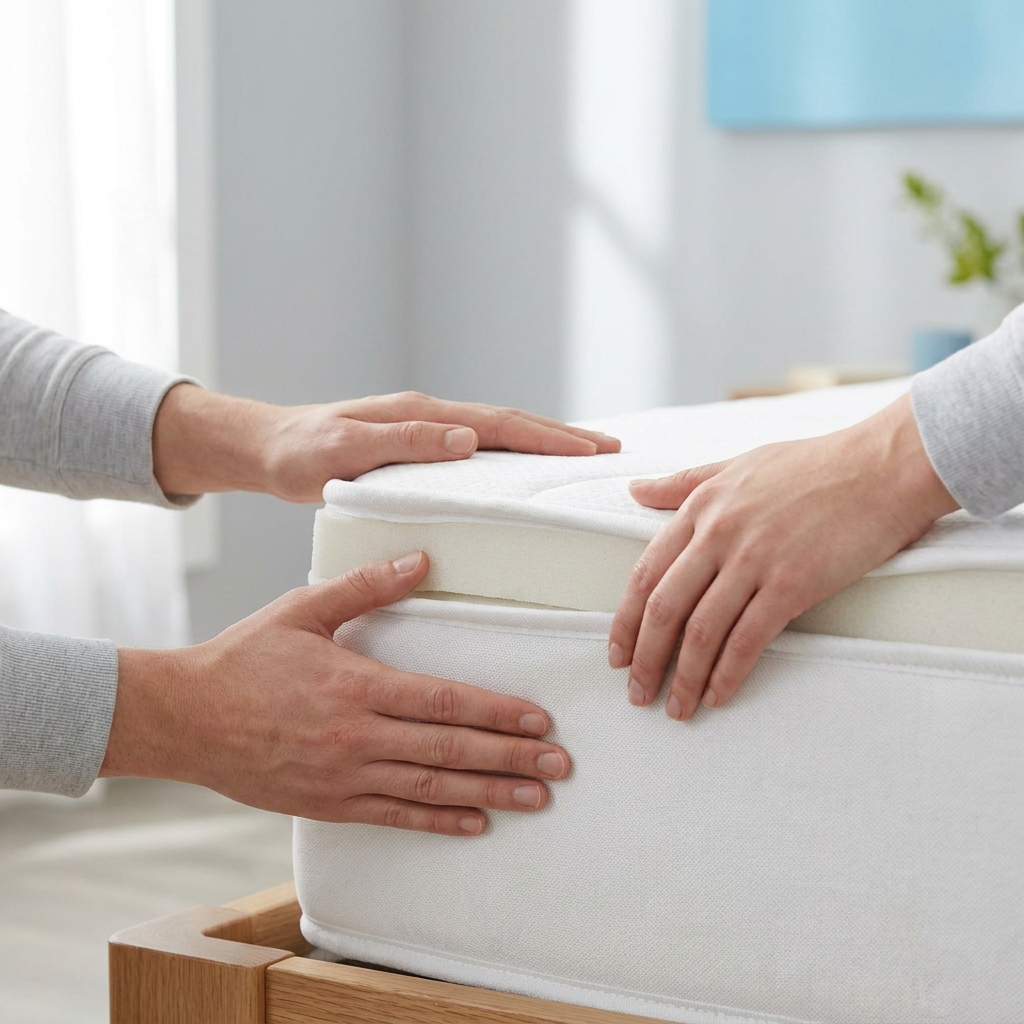
Stacking, heavy objects and sunlight: do not stack heavy items on top of a stored mattress and avoid prolonged direct sunlight or close heat sources, which can degrade fabrics and adhesives. Give the mattress a flat, unobstructed position where weight is distributed evenly and sunlight exposure is minimized.
Common mistakes, warranty risks and what to avoid
Top storage mistakes that cause damage: common errors include leaving a mattress upright for months, folding or bending it to save space, covering it with non-breathable plastic, storing it in a humid or poorly ventilated area, and stacking heavy items on top. Each of these choices raises the risk of permanent deformation or mold.
How storage choices can affect warranty coverage: several manufacturer care pages and warranty statements caution that improper storage actions, such as folding or sustained upright storage, can damage components and may affect warranty coverage. Check your mattress maker's care guidance before long-term storage so you understand any conditions that could void protections Tempur-Pedic mattress care.
Quick do and don't checklist: Do clean and dry the mattress first; do use a breathable cover; do store flat on a supportive, ventilated base; do monitor humidity and inspect periodically. Do not fold or bend the mattress; do not use impermeable plastic that traps moisture; do not stack heavy items; and do not rely on compressed shipping methods as a DIY storage approach Bed Advice mattress care.
Practical scenarios and timelines: short moves, long-term storage and compressed shipping
How to store for a move of hours to days: if you need to stand a mattress upright briefly during transport or to carry it through a tight area, that short upright positioning is acceptable. Once moved, put the mattress flat as soon as possible and inspect for any immediate deformations or stains; short transport does not carry the same risks as months of upright storage Sleep Foundation mattress care. See our category archive category sitemap.

What to do for months or years: for storage that will last weeks to years, follow flat storage guidance, keep humidity in recommended ranges, use a breathable protective cover, and schedule periodic inspections every few months to confirm there is no moisture accumulation, pest activity, or new odors. For foam and latex cores, avoid side storage entirely for long timelines because those materials are more likely to develop permanent impressions. Additional mold prevention guidance is available VayaSleep mold guide.
Why factory compressed shipping differs from DIY storage: manufacturers that ship mattresses compressed use controlled vacuum and packaging methods along with specified rest periods and material treatments that are part of the product workflow. Those factory processes are engineered and time limited; they are not a substitute for DIY long-term storage methods and do not mean that compressing or folding your mattress at home is safe for storage.
Periodic checks and simple maintenance while stored: when a mattress will sit in storage for months, label the date placed in storage, check it at intervals for humidity, pest signs, or odors, and if possible flip or rotate only after consulting the manufacturer, since some modern mattresses are designed for one-sided use.
Frequently asked questions
Can I store a mattress upright for a few months?
Brief upright positioning during transport is acceptable, but leaving a mattress upright for months increases the risk of deformation, especially for foam and latex, so long-term storage should be flat.
Will a plastic cover protect my mattress in storage?
Impermeable plastic can trap moisture and raise mold risk; choose a breathable protective cover and ensure the mattress is fully dry before covering.
What humidity level is safe for mattress storage?
Aim for relative humidity below 60 percent and ideally between 30 and 50 percent to reduce mold risk.
Storing a mattress correctly protects both the sleep surface and your investment. By keeping the mattress flat, cleaning and drying before storage, using a breathable cover, and controlling humidity, you reduce the chance of permanent damage and mold growth. If you have manufacturer-specific care instructions or warranty questions, check those pages before long-term storage and inspect the mattress periodically while it is stored.
References
- https://www.sleepfoundation.org/mattress-care/how-to-store-a-mattress
- https://www.epa.gov/mold/brief-guide-mold-moisture-and-your-home
- https://www.cdc.gov/mold/dampness_facts.htm
- https://www.talkaboutsleep.com/all-about-sleep/
- https://www.talkaboutsleep.com/articles/
- https://www.smartbox.com.au/store-mattress/
- https://www.thestorageadvantage.com/how-to-store-a-mattress-in-a-storage-unit-a-complete-in-depth-guide-for-long-term-protection
- https://vayasleep.com/blog/mold-on-mattress/
- https://bedadvice.co.uk/advice/caring-for-your-mattress/
From another publication
If the storage room is damp, these home ventilation and condensation checks are a useful starting point. Does condensation on windows mean the house is too cold? Practical steps to stop it (Home by Doing)