
The journal
How long can you leave a mattress in storage? Practical guidance from Talk About Sleep
how to store a mattress with practical steps to reduce mold, pest and material damage; covers prep, storage environments and post-storage inspection.
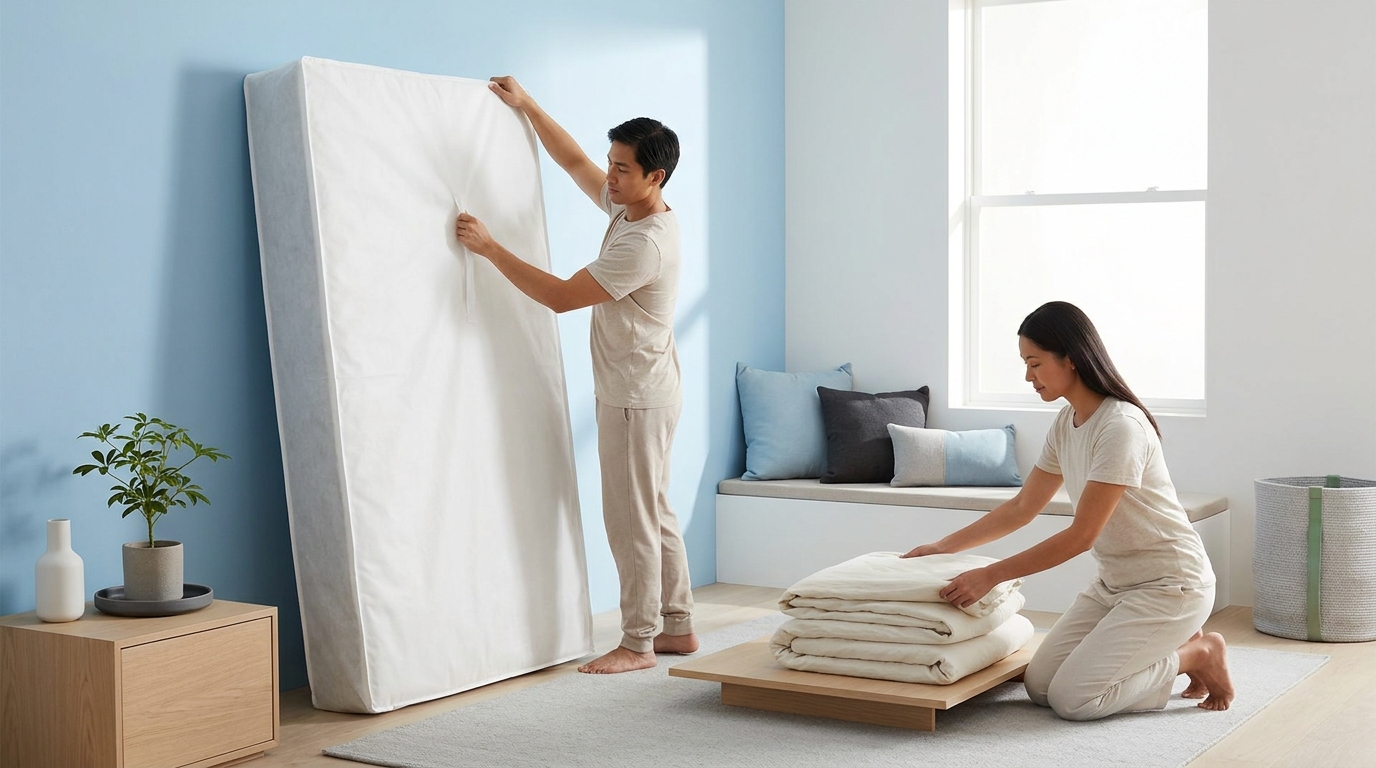
Quick answer: how long you can safely store a mattress and what controls that time
Short summary answer: how to store a mattress
There is no single universal maximum that applies to every mattress; how long a mattress remains safe and usable in storage depends on the conditions you provide and the mattress construction. Key controls include leaving the mattress fully dry before packing, keeping indoor relative humidity low during storage, protecting the mattress from pests, and avoiding heat, light and mechanical deformation.
In practical terms, a mattress stored in a cool, climate-controlled unit with stable humidity and protected from pests can remain usable for months or even years, while one stored in a damp garage or attic may become unsafe in a matter of weeks. For humidity guidance and reasons to avoid trapped moisture, see the EPA guide on mold and moisture risks.
Key factors that determine safe storage duration
Four primary variables control safe mattress storage time: moisture and humidity control, pest protection, correct positioning and support, and the mattress materials. Moisture and humidity are the most immediate risk for mold and persistent odors; aim to keep relative humidity below 60 percent and ideally in the 30 to 50 percent band to reduce mold risk.
Pest prevention and bed bug control are also central. Use a properly fitted, zippered encasement for packing and avoid applying pesticides directly to bedding, which is not recommended for mattresses in storage EPA bed bug guidance.
Manufacturer guidance and warranty terms matter especially for compressed or boxed mattresses; some warranties or product instructions limit how long a mattress can remain compressed. When in doubt, check the mattress warranty before long-term storage.
Before storage: cleaning, drying and pest prevention
Why drying matters
Start by removing all bedding and ensuring every layer is completely dry. Moisture trapped in fabric, padding or seams is the leading cause of mold growth during storage, so do not store a mattress that feels at all damp. The EPA guidance on mold emphasizes thorough drying before storing household items as a practical step to lower mold risk.
If you cleaned stains with liquid cleaners, allow extra time for full drying in a well-ventilated space before moving the mattress into storage. Use fans or dehumidifiers until the padding and fabric are completely dry to the touch.
How long can you leave a mattress in storage before it becomes unsafe or unusable?
There is no single time limit; the safe storage period depends on dryness, humidity control, pest protection, correct support and mattress construction. If stored dry in a cool, climate-controlled space with low humidity and proper encasement, a mattress can remain usable for months or longer, but visible mold, persistent musty odor, bed bugs or structural damage are reasons to dispose rather than reuse.
Bed bug checks and encasements
Before sealing a mattress for storage, inspect seams, tufts and the underside for signs of bed bugs such as tiny dark spots or shed skins, and do not pack a mattress that shows evidence of infestation. For prevention, a fitted, zippered encasement provides a barrier to keep bugs out while the mattress is stored, and the EPA recommends using encasements rather than treating bedding with pesticides EPA bed bug guidance.
Label the mattress condition and note any cleaning steps you took. A simple written record or photos help you evaluate the mattress after storage and provide useful documentation if you later need to arrange disposal or seek warranty help.
What to avoid before packing

Avoid nonbreathable, sealed plastic that traps moisture against the mattress surface. If you must cover a mattress during transit, choose breathable covers designed for storage rather than heavy construction sheeting. Also avoid storing a mattress if you find an existing mold stain, a persistent musty odor, or clear pest evidence; these are signals that the mattress should not be saved for reuse and require disposal or professional remediation guidance Mattress Recycling Council guidance.
Finally, do not apply household pesticides or sprays directly to a mattress surface as a storage preparation. Those treatments can be ineffective against pests hidden in seams and may leave residues that make reuse unsafe.
How to store different mattress types: foam, latex, innerspring and boxed mattresses
Memory foam and latex
Foam and latex materials are sensitive to heat, light and ozone exposure, which accelerate material breakdown and loss of support, so choose cool, dark and ventilated storage to help preserve these materials ISO storage guidance for elastomeric materials.
Do not fold or bend foam or latex mattresses unless the product is explicitly designed for folding or compression, because folding can create permanent creases and reduce long-term support. If the mattress must be moved, handle it gently and support it across its surface rather than forcing tight bends.
Innerspring and hybrid mattresses
Innerspring cores and hybrids that include metal can be vulnerable to rust and frame deformation when stored in high-humidity environments or spaces with large temperature swings. For these types, climate-controlled storage reduces the combined risk of corrosion and microbial growth.
Support innerspring mattresses on a flat, level surface while in storage to limit sagging and to keep the spring system aligned. Avoid leaning the mattress on an edge for long periods unless the manufacturer explicitly permits upright storage for short durations.
Compressed or boxed mattresses and manufacturer limits
Boxed, compressed mattresses are manufactured to be shipped that way, but brands sometimes set limits on how long a mattress can remain compressed without impacting performance or warranty coverage. Check your brand's care and warranty documentation before planning long-term compressed storage.
If the warranty allows compressed storage, follow any stated maximum durations; if no clear limit is given, treat compressed mattresses conservatively and unbox and allow full recovery within a reasonable timeframe when feasible.
Choosing the right storage location and conditions
Climate-controlled units versus garages and attics
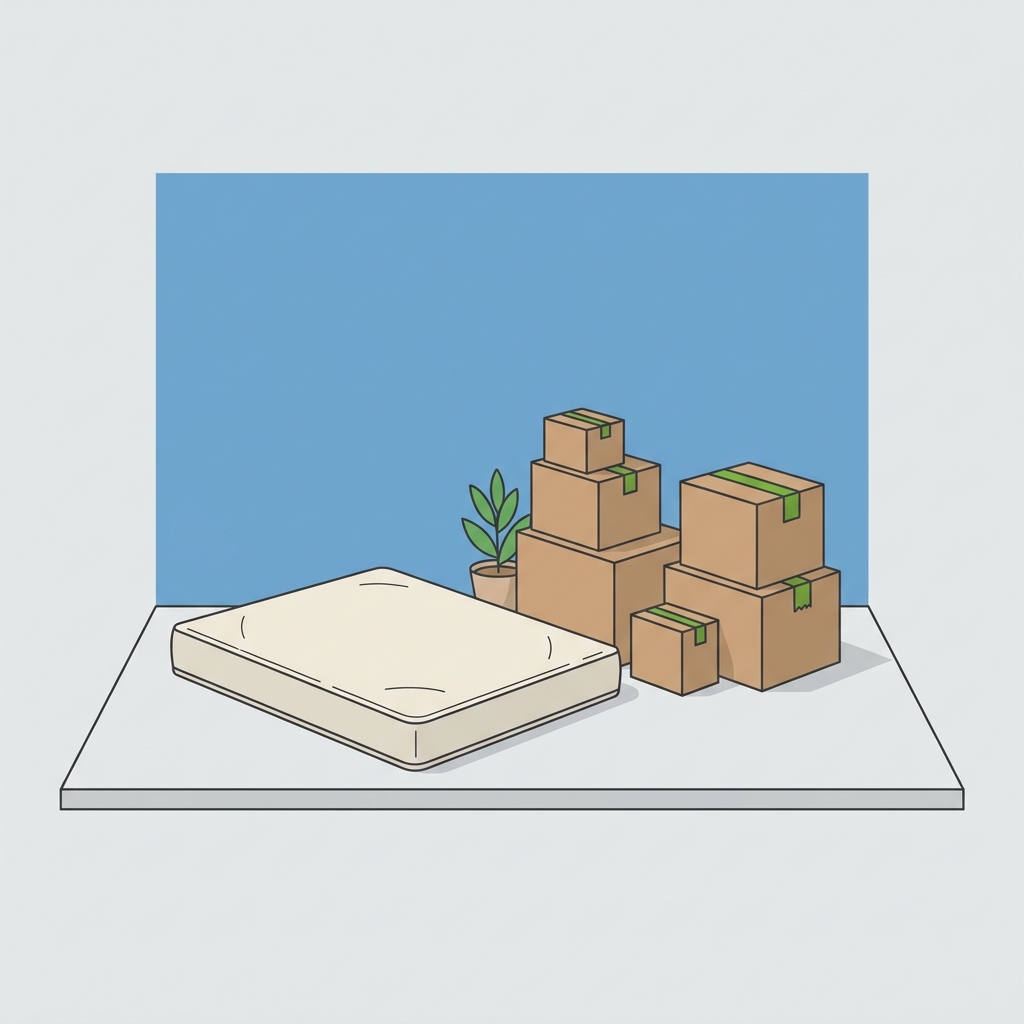
Garages, attics and unfinished basements often experience wide temperature and humidity swings that increase risks for rust on springs, foam degradation and mold, so avoid these spaces if you plan to store a mattress for more than a short period.
Target temperature and humidity and ventilation tips
Aim to keep storage humidity below 60 percent and ideally in the 30 to 50 percent range to reduce mold growth and persistent odors. Use a hygrometer to monitor relative humidity in the storage space and a dehumidifier when needed to maintain a safer range. See additional indoor air guidance from the EPA EPA indoor air quality guide.
Keep the storage space cool, dark and ventilated to slow material aging, especially for latex and foam, and rotate or check the mattress occasionally to make sure conditions remain stable.
How to position and support a mattress in storage
Store a mattress flat on a level surface when possible to avoid uneven compression and body impressions; industry guidance warns that upright or bent storage can cause permanent deformation unless the mattress is designed for that position Bed Advice mattress care.
If short-term upright storage is unavoidable, stand the mattress upright on its side for the briefest time possible and check manufacturer guidance, but do not leave a mattress standing on edge for extended periods.
Inspecting after storage and deciding whether to reuse or recycle
Signs that mean you should not reuse a mattress
Do a careful visual inspection and smell test after removal from storage. Visible mold, a persistent musty odor that cleaning cannot remove, signs of active bed bugs or structural problems such as broken springs or deep, set-in body impressions are all reasons to avoid reuse and to dispose of the mattress according to local rules Mattress Recycling Council guidance.
When in doubt about whether a mattress is safe to reuse, favor disposal over reuse to avoid health or pest risks. Documentation such as photos and notes helps support disposal decisions or a warranty claim.
Safe disposal and local recycling options
Many regions offer mattress recycling programs or guidance on mattress pickup and drop-off; check local services for rules that apply in your area Mattress Recycling Council guidance. You can also check local resources for pickup and recycling options mattress recycling programs.
Follow local disposal rules. If mattress contamination includes mold or bed bugs, some regions require special handling; local waste authorities can advise on accepted procedures and recycling options.

When to consult manufacturer or local waste authority
If a stored mattress shows uncertain issues, consult the manufacturer for warranty and safety guidance, and contact local waste authorities for disposal or recycling rules to ensure you meet local requirements. Keep photos and records of your inspection to help those discussions.
Common mistakes, troubleshooting and a quick printable checklist
Frequent errors that shorten storage life
Avoid these common mistakes: storing a mattress while damp, packing it in nonbreathable plastic that traps moisture, leaving it in a hot attic or damp garage, folding or tightly rolling a mattress not designed for that, and ignoring manufacturer compression limits for boxed mattresses. Each of these errors raises the risk of mold, material breakdown or structural damage.
Do not rely on improvised covers that do not fit; a loosely wrapped or floppy covering can let pests in and does not protect against dust or accidental moisture exposure.
Quick fixes and when they are not enough
Small issues like surface dust, light staining or a short storage period can often be managed with surface cleaning and airing the mattress before reuse. However, visible mold, persistent odors, or any bed bug evidence are not problems that should be fixed casually; they are signs you should dispose of the mattress instead of reusing it EPA bed bug guidance.
If foam or latex shows brittle edges, large cracks or clear compression damage, or springs feel broken or uneven, the mattress has likely lost functional support and should be recycled or disposed of.
One page checklist to copy
Copy this short checklist before you store any mattress: 1) Clean and fully dry mattress and bedding. 2) Inspect for mold, pests or structural damage and document condition. 3) Use a fitted, zippered encasement for pest protection if needed. 4) Choose a cool, climate-controlled storage location. 5) Store flat on a level surface and avoid bending. 6) Monitor humidity and check the mattress periodically. 7) Inspect again after storage and dispose rather than reuse if mold, musty odor, pests or structural failure appear.
These steps summarize the actions that most reduce risk and help you make a safe decision about reuse during and after storage.
Frequently asked questions
How long is it safe to store a mattress?
There is no universal fixed time; safe storage depends on maintaining dryness, low humidity, pest protection and avoiding heat or mechanical damage. If conditions are stable and climate-controlled, mattresses can remain usable for extended periods, but any mold, persistent odor, pest evidence or structural damage means you should not reuse it.
Can I store a mattress upright to save space?
Short-term upright storage is sometimes unavoidable but not recommended for long periods unless the manufacturer permits it. Long-term upright storage can cause sagging or permanent deformation in many mattresses.
Should I use plastic wrap to protect a mattress in storage?
Avoid nonbreathable plastic that traps moisture. Use breathable covers or storage encasements designed for mattresses and ensure the mattress is completely dry before covering.
Storing a mattress involves trade-offs between convenience and material longevity. By keeping mattresses dry, using pest-safe encasements, choosing climate-controlled locations and checking manufacturer guidance, you can extend safe storage life and make a careful, conservative decision about reuse. If you discover mold, persistent odor, bed bugs or structural failure after storage, follow local disposal guidance to remove the risk rather than attempting to reuse the mattress.
References
From another publication
If the storage room is damp, these home ventilation and condensation checks are a useful starting point. Does condensation on windows mean the house is too cold? Practical steps to stop it (Home by Doing)