
The journal
What is the best humidity level for a closet?
A clear, source-backed answer for linen closets: target 30-50% relative humidity, and keep it below 60% to prevent musty odors and mold. Practical measurement and control steps inside.
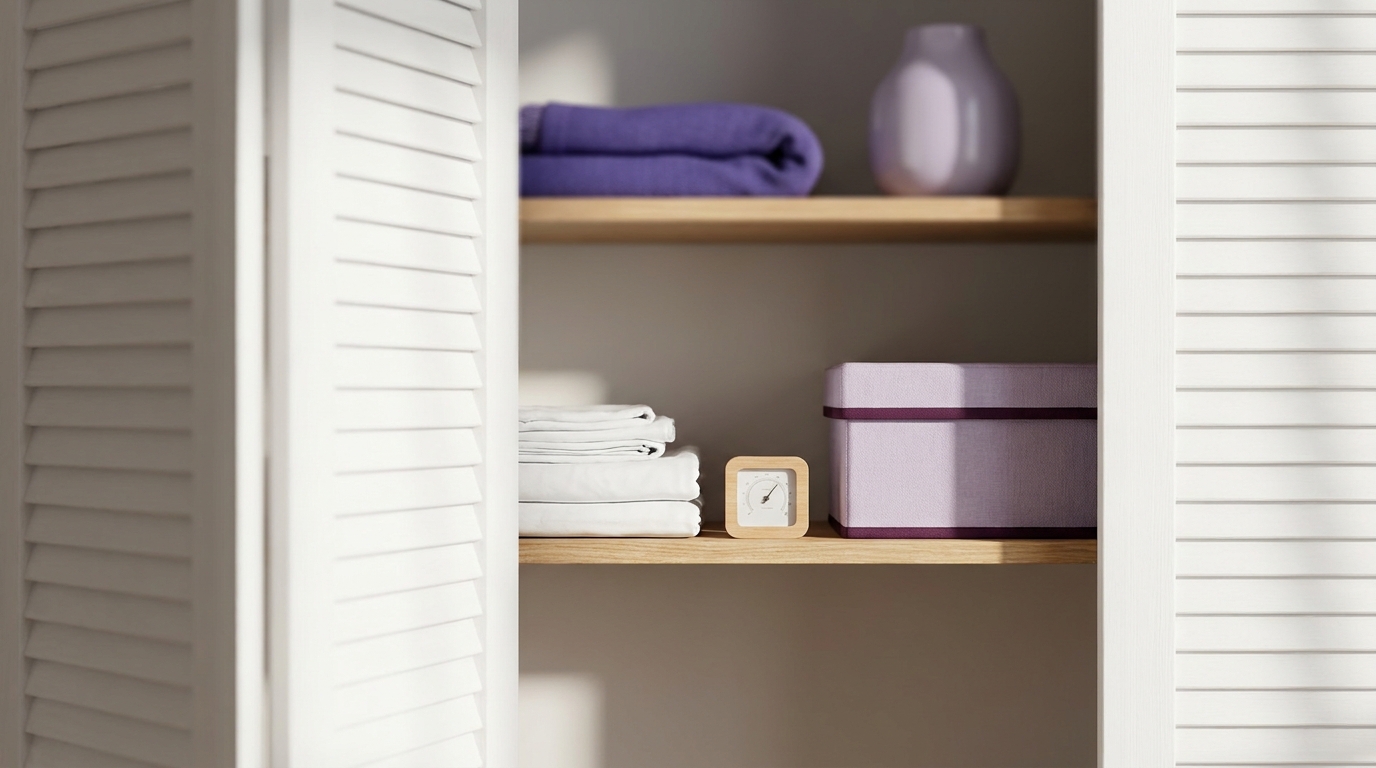
Short answer: For a linen closet, aim for 30-50% relative humidity (RH), and keep it below 60%. The EPA advises keeping indoor humidity ideally between 30-50% and under 60% to limit mold growth and musty odors (EPA mold guide (PDF); EPA Care for Your Air).
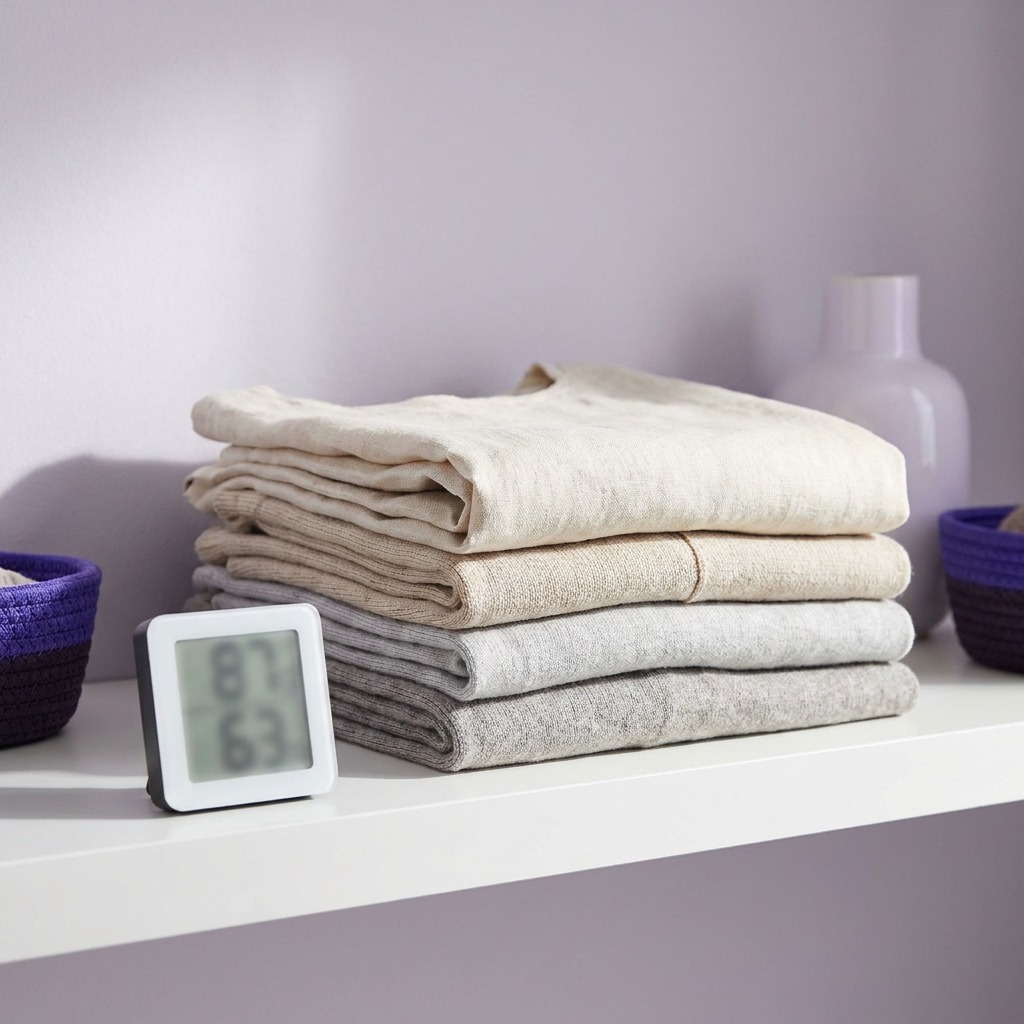
Why that range works for a linen closet
Moisture control is the key to preventing mold on shelves, towels, and bedding. EPA guidance notes that indoor humidity should be kept low, ideally 30-50%, and certainly below 60% RH to discourage mold. Wet or damp items should be dried within 24-48 hours, because lingering moisture enables growth (EPA mold guide (PDF); EPA mold guide (web)).
How to measure closet humidity accurately
- Use a small digital hygrometer placed inside the closet, away from the door gap and not pressed against an exterior wall.
- Check readings at different times of day and during/after showers if the closet is near a bathroom.
- Condensation, stuffy air, or musty smells are warning signs to reduce humidity (EPA Care for Your Air).
Keep a linen closet in the 30-50% RH sweet spot
Promote airflow
- Don’t overpack shelves; leave space between stacks so air can circulate.
- If possible, use a louvered door or leave the door slightly ajar to avoid stagnant air.
Control nearby moisture sources
- Run a bathroom exhaust fan that vents outdoors during and after showers; vent moisture-producing appliances to the outside when possible (EPA mold guide (PDF)).
- Only store linens completely dry; never put away slightly damp towels or bedding (EPA mold guide (web)).
- Fix any plumbing or building leaks promptly and dry affected areas within 24-48 hours (EPA mold guide (web)).
Dehumidify the space when needed
- In humid seasons, use a small dehumidifier in the hallway or room that feeds your closet; for very tight spaces, consider desiccant packs and replace them regularly.
- Air conditioners and/or dehumidifiers can help keep RH within range (EPA mold guide (PDF)).
Prevent condensation on cold surfaces
- Avoid pressing linens tight against exterior walls where surfaces can be cooler.
- If accessible, insulate cold water pipes to prevent moisture beading (EPA mold guide (PDF)).

Quick example: a damp hallway linen closet
If your closet shares a wall with a bathroom and RH jumps to 60%+ after showers:
- Vent moisture from the bathroom using its proper ventilation system; follow the fan’s instructions rather than treating a fixed runtime as sufficient.
- Store only fully dried towels and sheets; don’t stack tightly.
- If needed, use a suitable dehumidifier according to its instructions and check the actual humidity.
- Record readings at different times and check whether ventilation and source control improve them.
For more storage-specific odor fixes and prevention, see Why bed sheets smell after being stored and How to store pillows when they’re not in use.
If you spot mold
Clean up promptly and fix the moisture source. The EPA notes that small areas (about 10 square feet or less) are typically manageable for homeowners; larger or contaminated water events may require professionals (EPA mold guide (web)).
Put this into practice
Log conditions in the actual closet over time rather than using one room reading as the whole answer. If moisture persists, investigate its source; a target range or a hygrometer does not remove dampness.
Linen closet humidity check: quick actions
FAQ
Is 40% RH too dry for a linen closet?
No. EPA’s general indoor guidance supports 30-50% RH as an ideal range; it’s safe for linens and helps prevent mold (EPA Care for Your Air).
What if my home often sits at 55-60% RH?
Keep the closet door ventilated, dry items before storing, and use dehumidification so the closet stays under 60% and preferably in the 30-50% target (EPA mold guide (PDF)).

If the closet reading is part of a wider dampness problem, Home by Doing explains how to investigate household condensation instead of masking it with fragrance. Does condensation on windows mean the house is too cold? Practical steps to stop it.
Optional equipment for this guide
If you need measurements, log humidity in the actual storage space. A meter helps observe conditions; it does not remove dampness or establish the cause.
As an Amazon Associate I earn from qualifying purchases. These are researched options, not hands-on test results. Check the exact size or model, current price and availability on Amazon.
| Product option | Fit and limits to check | Retailer |
|---|---|---|
| TempPro TP50 indoor thermometer and hygrometer | An optional way to log humidity where linens are stored. It does not locate a leak, diagnose mould or remove moisture; check the model’s placement and accuracy instructions. | View on Amazon |