
The journal
How to keep a linen closet from smelling musty
A clear, label-first answer: prevent musty odors in a linen closet by controlling moisture and humidity, improving airflow, and drying items fully before storage. Practical steps grounded in current EPA indoor air and mold guidance.

Keep a linen closet from smelling musty by cutting moisture first: store only fully dry items, keep relative humidity below 60 percent (ideally 30-50 percent), and improve airflow inside the closet. If you already notice mustiness or visible mold, clean hard surfaces with detergent and water and fix the moisture source so odors do not return (U.S. EPA guidance: mold basics and cleanup; indoor air care).
Why linen closets get musty
Musty odors usually come from microbial growth that starts when moisture is present. Mold spores are common indoors but do not grow without water or high humidity. Inadequate ventilation can let indoor pollutants and odors accumulate, and high humidity increases the likelihood of mold and mildew in enclosed spaces like closets (EPA mold guide; EPA Inside Story).
Practical steps that work
1) Store only fully dry linens
- Ensure towels and sheets are completely dry before folding and storing. Mold will not grow without moisture, and drying items within 24-48 hours after getting wet prevents growth (EPA mold guide).
- Let items cool after tumble drying to avoid trapping residual warmth and moisture in tight stacks.
2) Control humidity in and around the closet
- Use a small humidity meter (hygrometer). Aim for indoor relative humidity below 60 percent, ideally 30-50 percent (EPA indoor air care; EPA mold guide PDF).
- If humidity runs high, use air conditioning and/or a dehumidifier to bring levels into range. Vent moisture-producing appliances (like clothes dryers) to the outdoors (EPA mold guide PDF).

3) Improve airflow in the closet
- Avoid overpacking shelves; leave small gaps between folded stacks so air can move.
- Open the closet door periodically, and increase air movement by opening nearby doors/windows or using a fan when practical (EPA mold guide PDF).
- Choose storage that allows some air movement (for example, shelving with space around items). Increasing ventilation helps reduce humidity and odors (EPA Inside Story).
4) Eliminate moisture sources
- Check adjacent bathrooms, laundry rooms, exterior walls, and ceilings for leaks or condensation, and fix water problems promptly. Clean gutters and drainage outside rooms if they contribute to damp walls or ceilings (EPA mold guide).
- Watch for warning signs like condensation on closet walls or pipes; dry surfaces quickly and reduce the moisture source (EPA mold guide PDF).
5) Clean safely if mustiness or mold appears
- For small areas, scrub hard, nonporous closet surfaces with detergent and water, then dry completely. Do not paint or caulk over mold (EPA mold guide).
- If mold covers more than about 10 square feet, consider professional guidance and EPA’s remediation document for larger jobs (EPA mold guide).
- Routine use of disinfectants/biocides is not recommended; removing moisture and physical cleaning is the priority (EPA mold guide).
6) Keep products that add pollutants out of tight closets
- Air fresheners and some stored chemical products can add volatile organic compounds (VOCs) to stuffy spaces. Reducing sources and increasing ventilation is more effective than masking odors (EPA Inside Story).
A simple humidity-first game plan
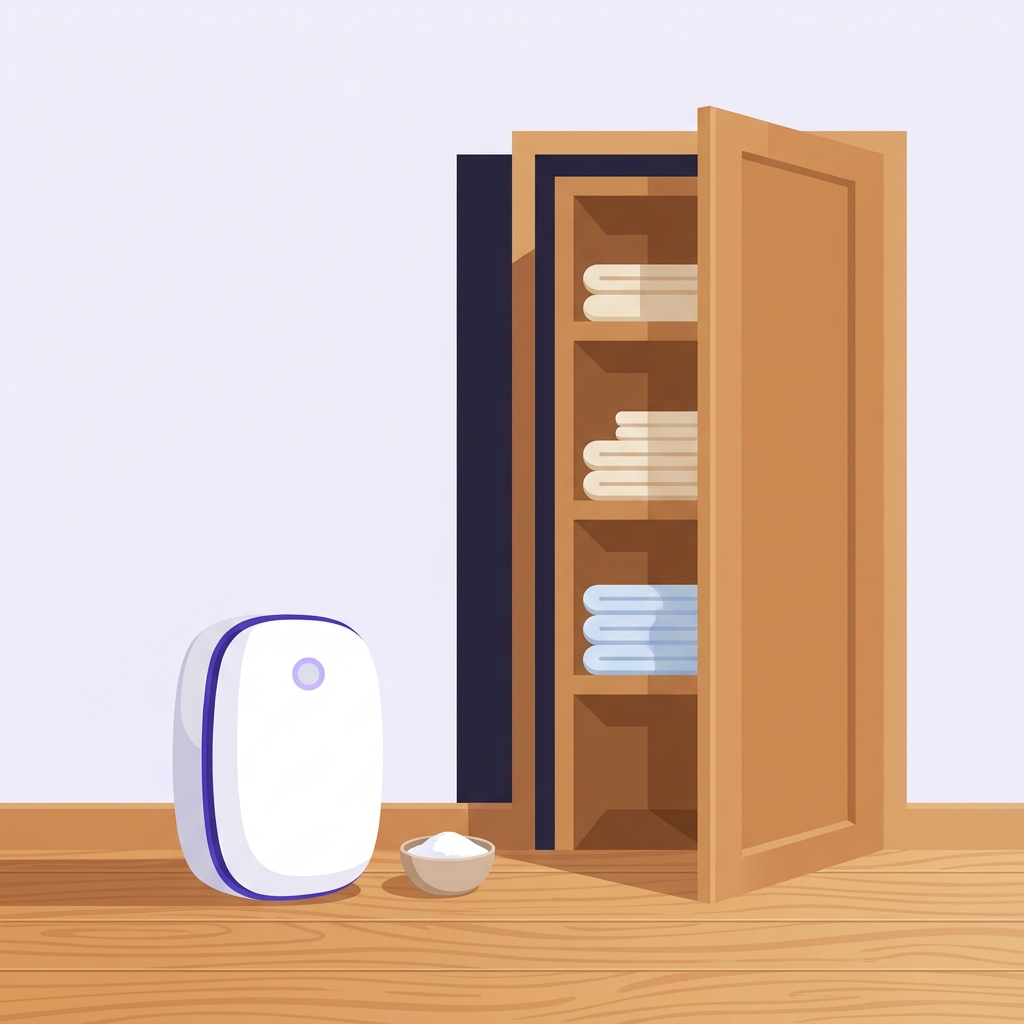
Measure closet-area humidity for a week. If readings exceed 60 percent, run a dehumidifier or AC to maintain 30-50 percent, space out your stacks, and open the closet daily for quick airing. Store only fully dry items, then recheck humidity and sniff-test after a few days. If odor persists, inspect for leaks or condensation and clean any small mold patches with detergent and water, drying thoroughly afterward (EPA sources above).
Good-to-know limits and realities
- There is no single spray that fixes musty odors for good. Odors return if moisture remains. Source control, drying, and ventilation are the durable fixes (EPA indoor air care).
- Some porous items that have become moldy may be difficult to clean fully and might need replacement (EPA mold guide).
Put this into practice
Check the storage space and stored items separately for dampness before adding fragrance or a tighter lid. Correct the cause and dry suitable items as directed; masking an odour does not establish that storage conditions are sound.
Quick checklist to keep a linen closet fresh
Related reading from Talk About Sleep
- Why bed sheets smell after being stored: causes and fixes
- How to store pillows when they’re not in use
FAQ
What humidity should I aim for in a linen closet?
Keep indoor humidity below 60 percent; 30-50 percent is ideal to reduce mold risk (EPA indoor air care).
How fast should I dry damp items to avoid musty smells?
Dry water-damp materials within 24-48 hours to prevent mold growth (EPA mold guide).
Is bleach recommended for a musty closet?
EPA does not recommend routine use of disinfectants/biocides for mold cleanup. For small areas, scrub hard surfaces with detergent and water and dry completely; address the moisture source so it does not return (EPA mold guide).

For a storage space affected by household dampness, Home by Doing offers a separate condensation checklist. A container change alone does not resolve the source. How to stop condensation on windows overnight, simple steps that work.
Optional equipment for this guide
If you need measurements, log humidity in the actual storage space. A meter helps observe conditions; it does not remove dampness or establish the cause.
As an Amazon Associate I earn from qualifying purchases. These are researched options, not hands-on test results. Check the exact size or model, current price and availability on Amazon.
| Product option | Fit and limits to check | Retailer |
|---|---|---|
| TempPro TP50 indoor thermometer and hygrometer | An optional way to log humidity where linens are stored. It does not locate a leak, diagnose mould or remove moisture; check the model’s placement and accuracy instructions. | View on Amazon |