
The journal
What’s better, OEKO-TEX or GOTS for bedding?
Direct answer for bedding: GOTS verifies organic fiber content plus supply-chain criteria; OEKO-TEX Standard 100 tests the finished item for harmful substances. Choose based on what you want verified, or pick products that carry both labels.
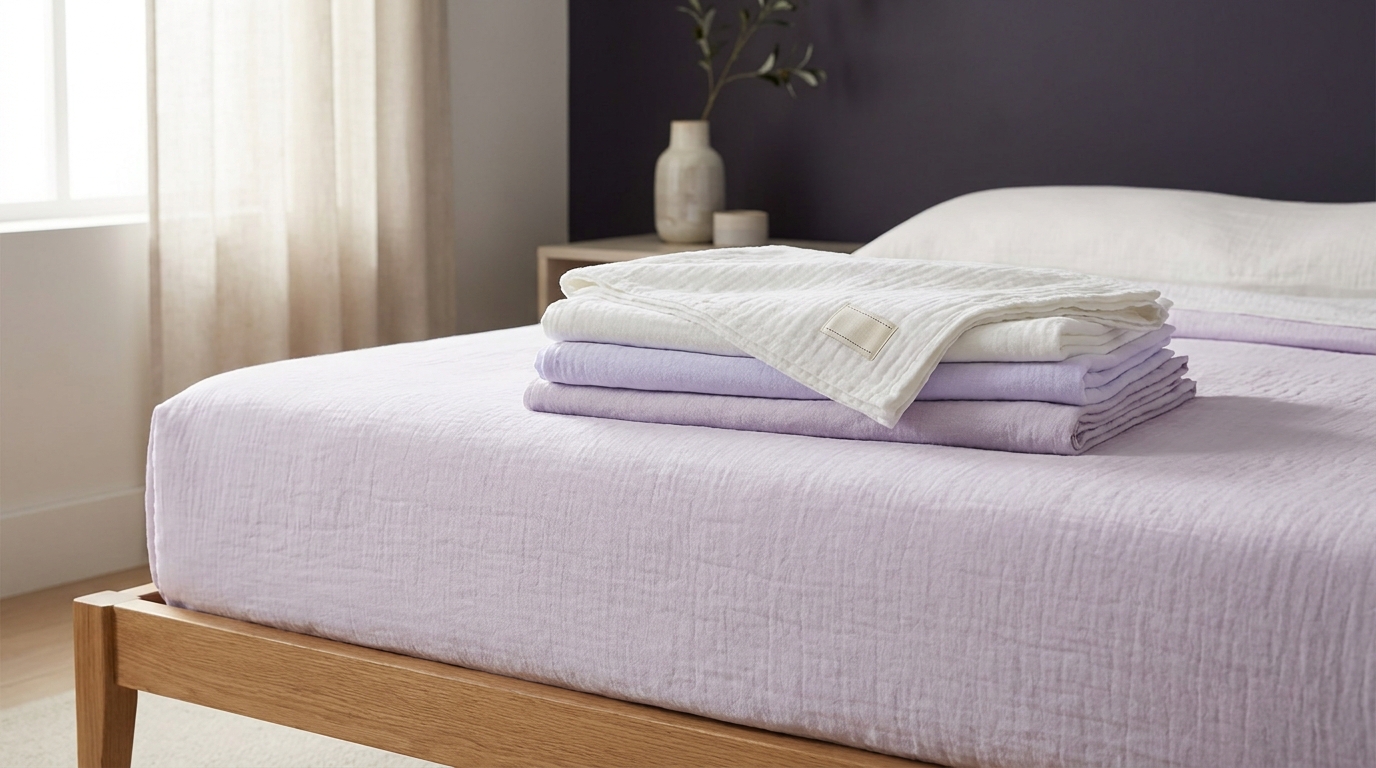
Short answer: neither label is universally better for bedding. OEKO-TEX offers several standards; this comparison concerns STANDARD 100, the harmful-substance label commonly found on sheets. GOTS verifies organic fiber content and adds environmental and social criteria across the supply chain, while OEKO-TEX Standard 100 tests the finished item for harmful substances. Choose based on what you want independently verified, or look for both on the same product for broader coverage (GOTS: how the system works; OEKO-TEX STANDARD 100; OEKO-TEX STANDARD 100).
What each label covers for bedding
GOTS for organic textiles and supply-chain criteria
GOTS (Global Organic Textile Standard) identifies textiles made with certified organic fibers and layers environmental processing rules and social criteria along the supply chain. For labeling, GOTS requires at least 70% certified organic fiber to carry the standard GOTS label and at least 95% to carry an “organic” label grade (GOTS: how the system works).
Before a sheet or duvet cover can carry the GOTS label, multiple stages are assessed, including initial fiber processing, spinning, weaving or knitting, wet processing (such as dyeing or bleaching), manufacturing, and trading controls (GOTS: how the system works).
OEKO-TEX Standard 100 for finished-product chemical testing
OEKO-TEX Standard 100 screens finished textile components (fabric, thread, trims) for harmful substances. It is not an organic standard; it confirms an item was tested against a harmful-substance list, with product classes that reflect skin-contact levels, including options used for baby items (OEKO-TEX STANDARD 100; OEKO-TEX STANDARD 100).
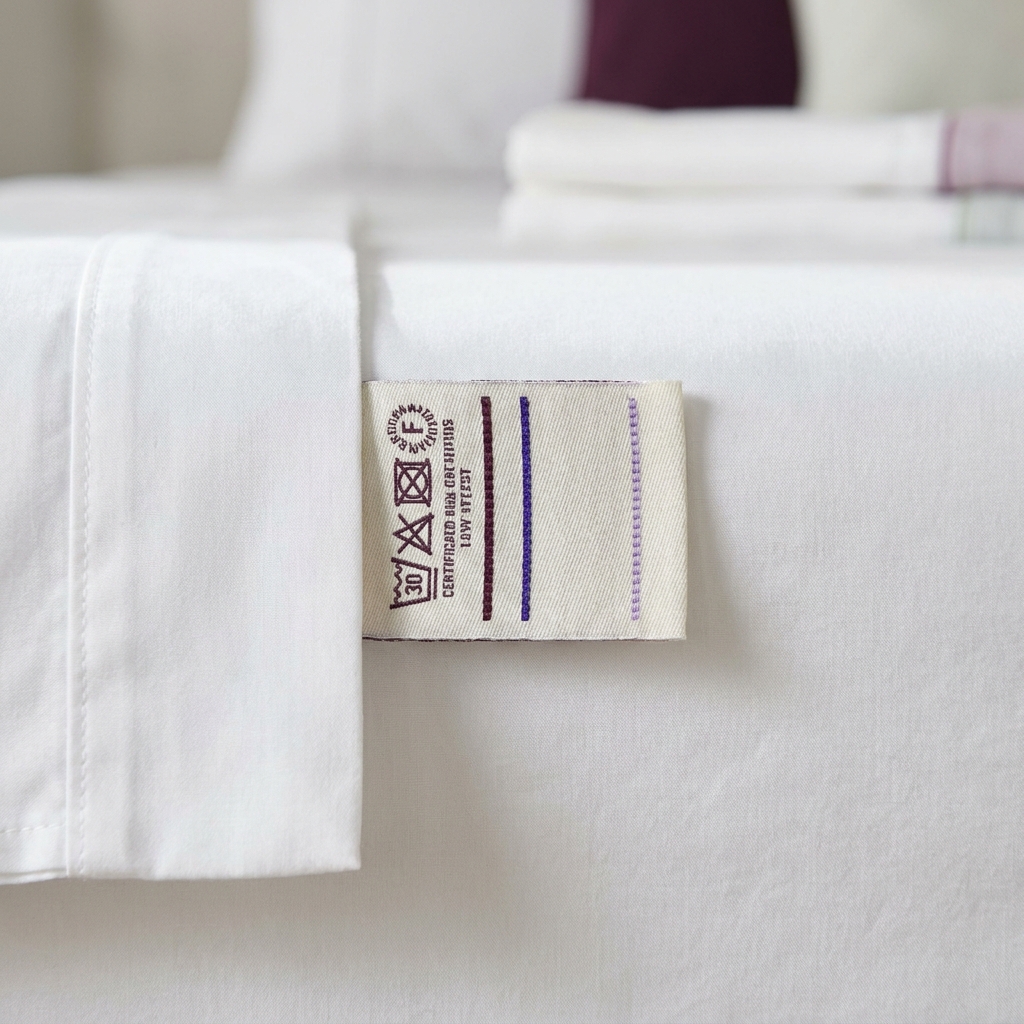
How to read a GOTS label on sheets and duvet covers
The official GOTS labelling guide explains the two fibre-content grades and the required certification information. Read the grade and exact percentage on the product label.
On a bedding hangtag or product page, look for the GOTS grade shown:
- “Organic”: at least 95% certified organic fiber content.
- “Made with organic materials”: at least 70% certified organic fiber content.
GOTS includes chemical-input and processing requirements, but does not use the identical STANDARD 100 testing criteria; it addresses organic content and supply-chain criteria. Some products carry both labels to cover both scopes (GOTS: how the system works; OEKO-TEX STANDARD 100).
A simple decision rule for bedding buyers
- Choose GOTS when verified organic fiber content plus environmental and social criteria across the supply chain are your top priorities for sheets, duvet covers, and pillowcases (GOTS: how the system works).
- Choose OEKO-TEX Standard 100 when your priority is testing of the finished bedding item for harmful substances (OEKO-TEX STANDARD 100).
- Pick both when you want organic fiber and supply-chain criteria verified by GOTS plus finished-product chemical testing verified by OEKO-TEX; pairing the two covers different scopes (OEKO-TEX STANDARD 100).
Check a bedding label before you buy
Why verify? Public registries help you avoid mislabeled claims and confirm the certificate is active and matches the product category (OEKO-TEX STANDARD 100).

Common misreads to avoid
- OEKO-TEX Standard 100 is not an organic claim. It confirms harmful-substance testing of the finished item, not organic farming or supply-chain labor criteria (OEKO-TEX STANDARD 100).
- GOTS also sets rules for chemical inputs and processing. It is not interchangeable with STANDARD 100’s testing criteria; compare the exact certificate scope rather than assuming either label covers every property (OEKO-TEX STANDARD 100).
Practical bedding examples
- If you want organic fiber content verified for a sheet set and care about environmental and social criteria in processing, GOTS is the relevant label to look for on the product page or tag (GOTS: how the system works).
- If you mainly want assurance that a pillowcase or duvet cover has been tested against a harmful-substance list, look for OEKO-TEX Standard 100 on the item or packaging (OEKO-TEX STANDARD 100).
Care and use next steps
Label in hand, follow the care tag so your bedding lasts. For upkeep, see our guides on how often to wash your pillowcase and washing linen sheets in a machine.
FAQ
Does OEKO-TEX mean the bedding is organic?
No. OEKO-TEX Standard 100 addresses harmful-substance testing on finished textiles and does not verify organic fiber content or farming practices (OEKO-TEX STANDARD 100).
What do the two GOTS label grades on bedding mean?
“Organic” indicates at least 95% certified organic fiber; “Made with organic materials” indicates at least 70%. Both sit within a standard that also reviews multiple supply-chain stages (GOTS: how the system works).
