
The journal
Why is my comforter still wet after drying? Practical fixes
A label-first, capacity-aware guide to finish drying a damp comforter without heat damage. Learn why fills stay wet, how sensors can stop too soon, and how to get it fully dry before storage.

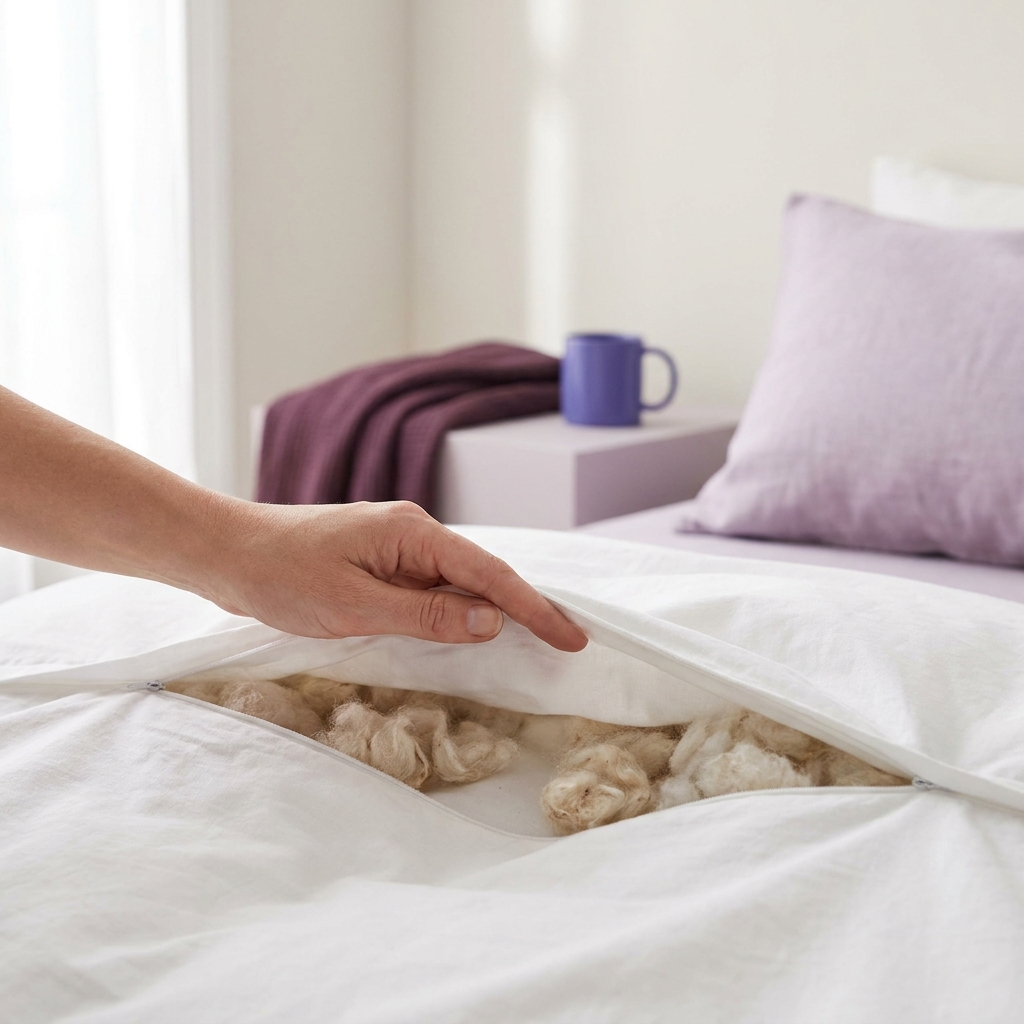
Because a comforter’s thick fill dries slowly, the outer fabric can feel dry while the core is still damp. Humid room air and small-capacity machines make this worse. The fix is to follow the care label, give the insert enough room to move in a suitable machine, pause to redistribute the fill, and confirm the thickest sections are truly dry before you cover or store it. Sources explain that hidden moisture in bulky fills is the usual culprit and can cause musty odors if you stop too soon (WaveMAX Laundry on trapped moisture; Julian’s Dry Cleaners on damp bedding and humidity).
Why comforters stay damp after a dryer cycle
Filling holds moisture longer than the shell
Bulky inserts are a shell wrapped around a thick fill. Household dryers move limited air through that bulk, so the shell can warm and dry while the middle stays wet. If you stop here, body heat brings that moisture forward and a sour smell can follow (WaveMAX Laundry).
Uneven distribution and clumping
When the fill bunches up, some areas dry while dense patches trap moisture. Inspection and redistribution between cycles is part of finishing the job; “turning up the heat” is not a cure for a damp core or clumps (YumeFeel on inspecting and redistributing fill).
Moisture-sensor cycles can stop early
Sensor programs may read the surface as dry and end while thick sections remain damp. If items still feel damp at the end of a sensor cycle, switch to a timed finish and monitor to avoid over-drying, as advised for tangled bedding loads (Good Housekeeping on sensors and finishing).
Room humidity can re-dampen fibers
In a humid or poorly ventilated room, fibers can reabsorb moisture after drying and feel clammy again. Ventilation or dehumidification helps, and storing only when completely dry prevents musty odors and potential mold growth (Julian’s Dry Cleaners on humidity and storage).
Finish drying it safely, label first
Read the care label and follow the maker’s method
Use the exact drying method and temperature the label permits (tumble, air, line dry, or professional/“dry clean only”). If the label restricts heat or machine drying, respect that. YumeFeel’s guidance illustrates why a label-led approach matters and why there is no universal extra-time rule for every insert (YumeFeel on label-approved drying and no one-size timeline).
Make space: capacity and movement
The drum must have room for the comforter to move so air can reach the core. If your home dryer is cramped, a larger-capacity commercial machine is the better next step. Capacity is also key for proper rinsing that prevents residues from holding moisture in the fill (WaveMAX Laundry on capacity and air flow; YumeFeel on choosing a suitable machine).
Pause and redistribute
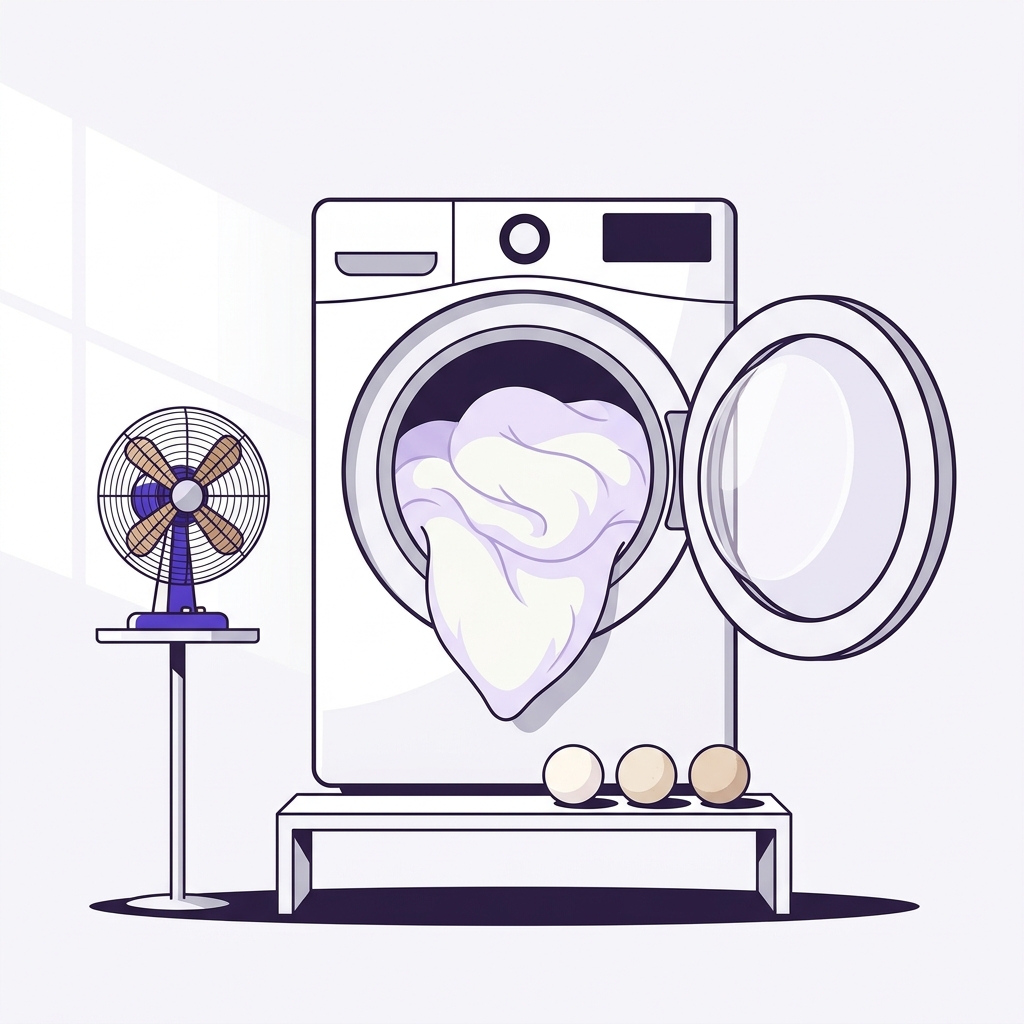
Stop the cycle periodically to shake, knead, and spread out any dense patches so the thickest areas get air. Resume the label-permitted drying method and repeat checks until the loft looks even and no section feels heavy or cool to the touch (YumeFeel).
If air-drying, control the environment
Use good airflow and low humidity so the core can dry through. In humid seasons, a dehumidifier or a drier indoor spot speeds completion and helps prevent that clammy feel from reabsorption (Julian’s Dry Cleaners).
Avoid heat damage while getting it truly dry
Do not exceed the label’s temperature. Higher heat does not fix a damp core or clumps and can harm certain fills or shells; instead, keep redistributing and allow enough movement and time for the core to release moisture (YumeFeel on inspecting, redistributing and not relying on more heat). If a sensor program ends early, extend drying manually and check often, as general laundry guidance suggests for bulky bedding (Good Housekeeping).
When size or conditions are the real issue
Some comforters simply need a larger drum or a drier space. Commercial dryers provide more room and airflow so the shell and core dry together. This capacity point is emphasized in practical drying advice for bulky bedding (WaveMAX Laundry; YumeFeel).
Before you cover or store it
Hidden moisture is what causes odors later. Confirm the thickest baffles feel dry all the way through, then let the insert cool and recheck; a cool, heavy spot signals remaining moisture (WaveMAX Laundry on shell-dry vs core-wet). Store only when fully dry, and prefer breathable storage in a cool, dry place to avoid mustiness (Julian’s Dry Cleaners on storage and humidity).
Related reading from Talk About Sleep: Wash a Quilt Without Ruining It and Why bed sheets smell after being stored.
Finish drying a comforter the label-safe way
Short FAQs
How do I know the core is dry?
Press and hold the thickest baffles; if they feel cool or heavy compared with the edges, moisture remains. This surface-dry, core-wet effect is common with bulky fills (WaveMAX Laundry).
Why did it feel dry, then clammy again?
High indoor humidity can re-dampen fibers after drying. Improve ventilation or use a dehumidifier and store only when fully dry to avoid musty odors (Julian’s Dry Cleaners).
Are moisture sensors reliable for comforters?
They often stop when the surface is dry while the core is not. Use a timed finish and hands-on checks for bulky bedding, taking care not to over-dry (Good Housekeeping).
