
The journal
What is the best way to store a weighted blanket?
A clear, label-first way to fold and store a weighted blanket so it stays clean, dry and easy to lift next time you need it.

The best way to store a weighted blanket is to clean it per its care label, let it dry completely, fold or roll it to distribute weight evenly, and keep it in a breathable bag on a low, stable shelf in a cool, dry space with indoor humidity around 30-50 percent. Avoid airtight plastic and never put a damp blanket into storage, because trapped moisture can lead to mold and odors (US EPA: Care for Your Air; US EPA: Mold, Moisture and Your Home).
How to fold a weighted blanket neatly (and safely)
This quick fold keeps the mass compact and easy to carry without straining seams.
- Lay the blanket flat on a bed or clean floor and smooth out corners.
- Fold lengthwise in thirds to create a long, even strip. This distributes weight so edges don’t sag.
- For shelf storage: fold the strip into thirds again to form a tidy rectangle. For a bin or under‑bed drawer: roll the strip from the short end into a firm cylinder and secure with soft straps or a ribbon.
- Lift with two hands and store on a low shelf or in a drawer so you’re not overhead‑lifting a heavy bundle.
If your blanket has a removable cover, fold and store the inner weighted insert and cover separately to reduce bulk. Always follow the manufacturer’s label for any fasteners or special handling.
Short‑term vs seasonal storage
Short‑term (daily/weekly)
- Tri‑fold and place at the foot of the bed, or roll and slot into a low bench or ottoman.
- Keep it uncovered so any residual body moisture can air out between uses.
Seasonal (weeks or months)
- Wash or spot‑clean according to the care label. Different materials (e.g., cotton, microfiber, wool covers) have different temperature and dryer limits.
- Ensure it is fully dry before bagging. The US EPA notes that drying wet items within 24-48 hours helps prevent mold growth; don’t store until you’re confident the blanket is thoroughly dry to the touch (US EPA: Mold, Moisture and Your Home).
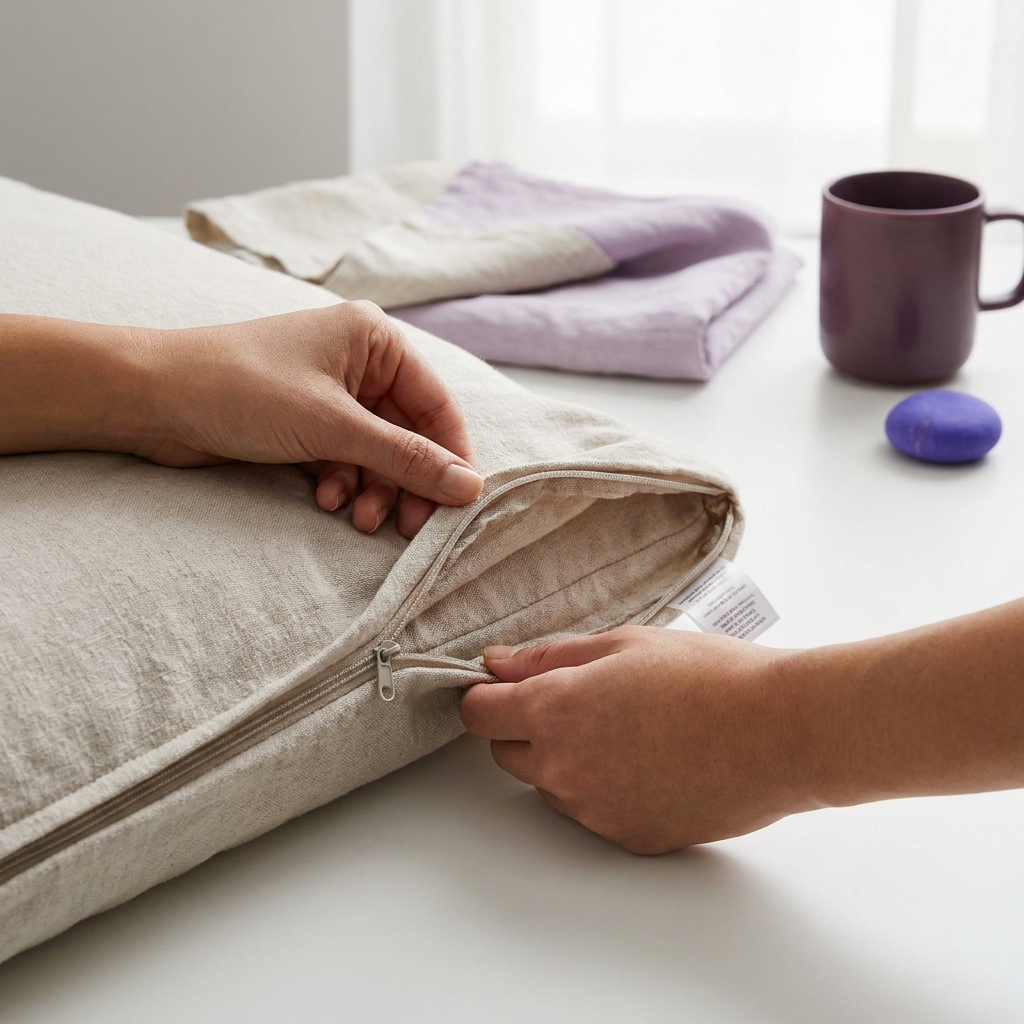
- Place the folded or rolled blanket in a breathable cotton bag or spare duvet cover. Avoid sealed plastic unless you are certain the blanket is bone‑dry, because plastic can trap moisture.
Choose the right spot
- Prefer a cool, dry, well‑ventilated closet or under‑bed drawer. Indoor humidity of about 30-50 percent helps discourage musty odors and mold (US EPA: Care for Your Air).
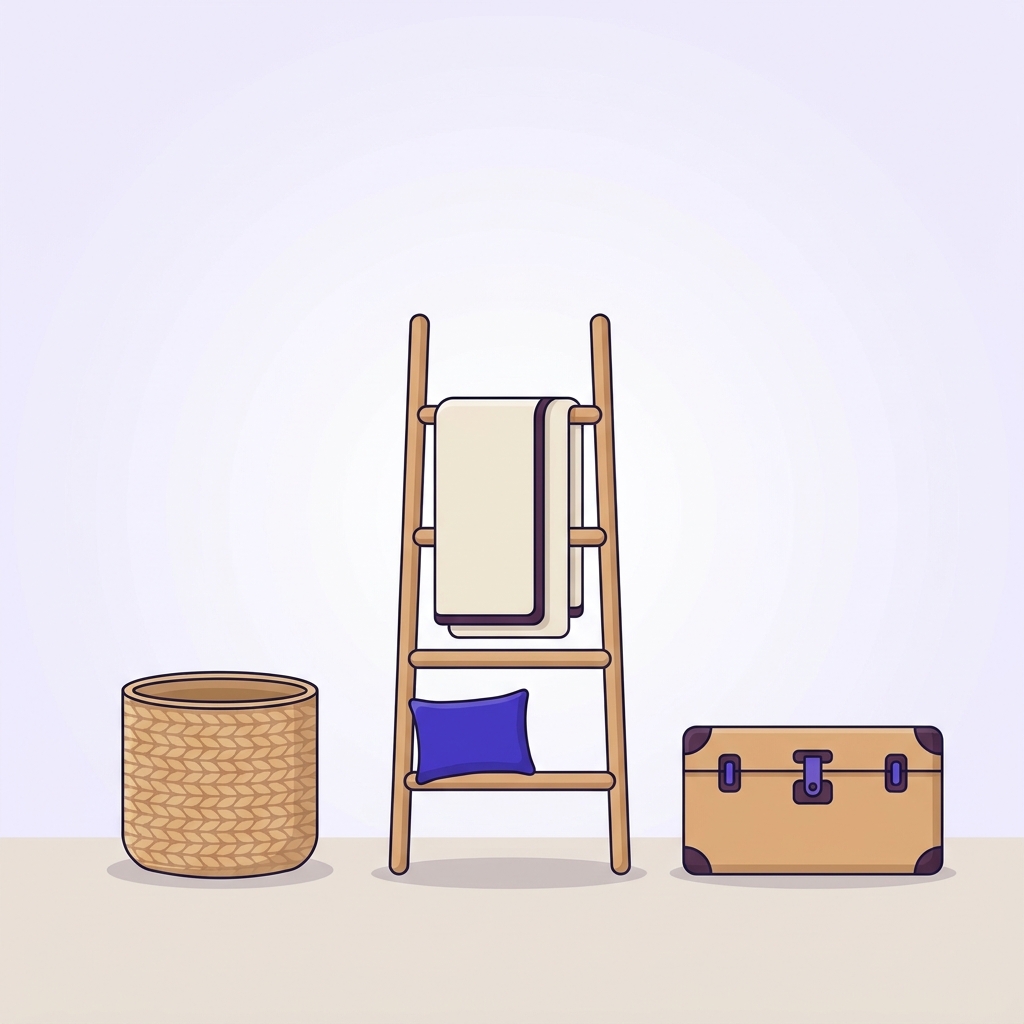
- Store low. Weighted blankets are heavy; a low shelf, trunk, or drawer is safer and easier on your back than an overhead shelf.
- Avoid basements or attics prone to damp, heat, or large temperature swings.
Choose storage for your exact blanket
Bearaby’s Napper storage guide gives a concrete maker example: start with a clean, dry blanket and gently roll or fold it for suitable storage. Its instructions describe that brand’s products. Check your own blanket’s construction and care guidance before applying the same treatment, especially if it has a separate filled insert.
Breathable protection matters
Use a cotton storage bag, pillowcase, or duvet cover so air can move through the fabric. This helps any harmless residual humidity dissipate. If you use a storage container, check the blanket maker’s instructions and keep the blanket fully dry. A desiccant is not a substitute for dealing with a damp room or wet fabric. EPA guidance emphasizes source control of moisture and ventilation to reduce indoor air quality issues, including mold (US EPA: Care for Your Air).
Avoid these common mistakes
- Storing even slightly damp. If you notice cool or clammy fabric or a musty smell, stop and finish drying before storage (US EPA: Mold, Moisture and Your Home).
- Hanging by one corner or loop. The concentrated pull can distort seams over time; fold or roll instead.
- Over‑compressing for months. Vacuum bags can trap moisture; prolonged compression can crease fabrics. Use breathable covers for long‑term storage unless the maker specifically allows vacuum packing.
- High shelves. Avoid lifting a dense bundle overhead.
Refresh after storage
- Unpack and inspect the blanket before using it again; follow its care instructions if it needs cleaning.
- Do not put the blanket into a dryer or use dryer accessories unless its own care instructions permit them.
Related reading from Talk About Sleep
- Why bed sheets smell after being stored: causes and fixes
- How to store pillows when they’re not in use
Put this into practice
Confirm the blanket is clean and completely dry before choosing a container that supports its weight. Separate the storage plan from any compression or hanging method that the specific product does not permit.
Quick storage checklist for weighted blankets
FAQ
Can I vacuum‑seal a weighted blanket?
Only if the manufacturer says it’s safe and the blanket is completely dry. Airtight bags can trap moisture; EPA guidance ties moisture to mold growth and odors, so breathable storage is the safer default for fabric items (US EPA).
What humidity is best where I store bedding?
EPA home guidance recommends keeping indoor humidity between about 30 and 50 percent. That range helps limit moisture problems that lead to musty odors or mold (US EPA).
