
The journal
How to stop a duvet cover tangling in the dryer
Practical steps to keep an empty duvet cover from balling up: give it space, close the closure if the label allows, use dryer balls, and pause to shake out.
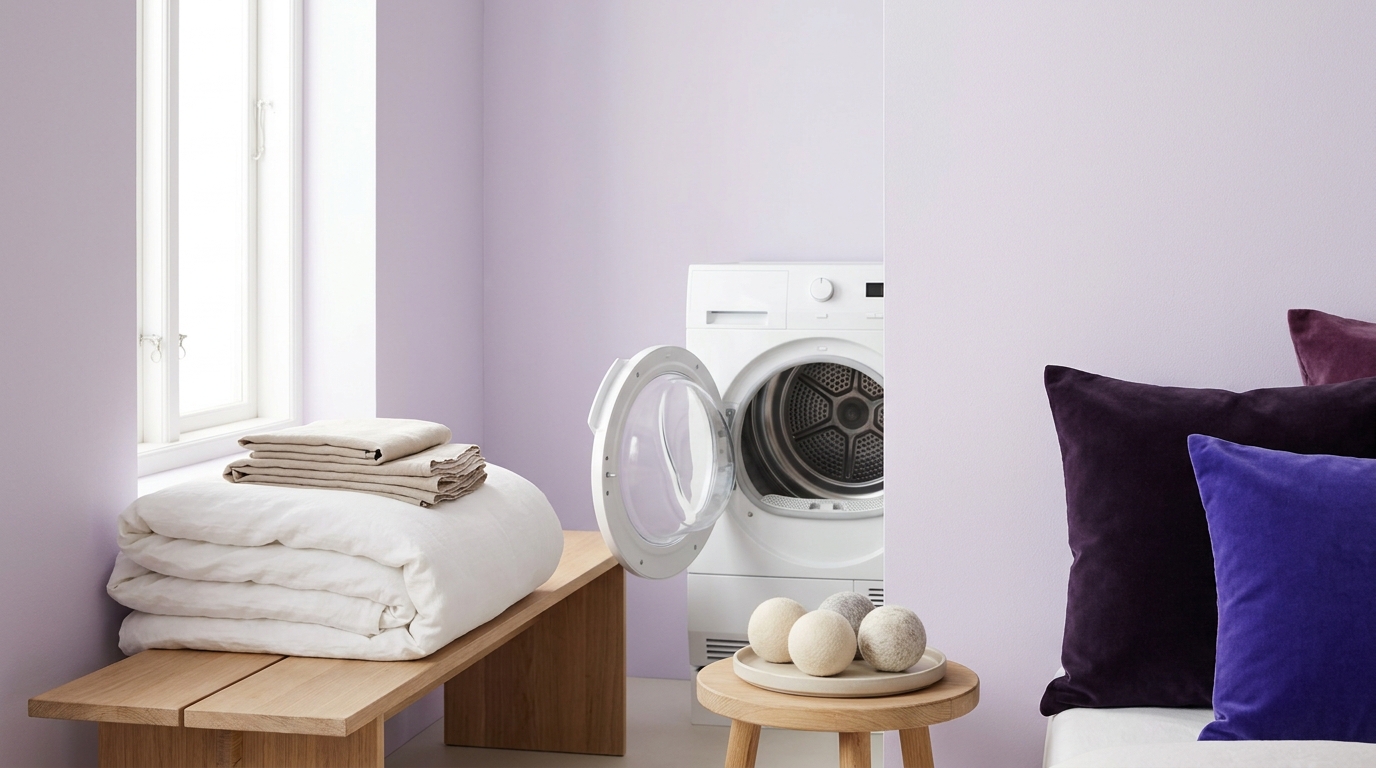
Quick answer: Give the empty cover room to tumble, close its zip or buttons if the care label allows, add 2-3 dryer balls (or a tennis ball), and pause mid-cycle to shake it out. If your home dryer is small or the cover still wads up, switch to a larger commercial dryer or air-dry. These tips are widely recommended for preventing balled-up bedding and improving airflow in the drum PeachSkinSheets: Beat balled-up bedding.
Why empty duvet covers tangle
Long, lightweight textiles can catch an edge and wrap around themselves as the drum turns, especially when the load is cramped or mixed with heavy items. Giving bedding space to tumble and avoiding overload are standard ways to reduce balling and damp bundles PeachSkinSheets: Beat balled-up bedding.
Set up the load for fewer tangles
Follow the care label and close the cover
Confirm the care label allows tumble drying and choose the recommended heat and cycle. If your cover has a zipper or buttons, close them before drying to keep the cover flat and to stop small items from getting trapped inside. Home users note that open covers can swallow pillowcases; buttoning helps prevent this Mumsnet: Quilt cover/sheet balling up in dryer.
Shake out and load with space
Give the cover a good shake so it starts untwisted, then dry it by itself or only with a few similarly light items. Avoid mixing with heavy pieces like jeans or towels that encourage tangling and uneven drying PeachSkinSheets: Beat balled-up bedding.
Consider a light fold
Some home caretakers find that loosely folding a large cover before drying reduces the chance of an edge catching, making mid-cycle shaking easier. It’s a simple, gentle tactic you can try alongside the steps below Mumsnet: Quilt cover/sheet balling up in dryer.
In the dryer: what actually helps
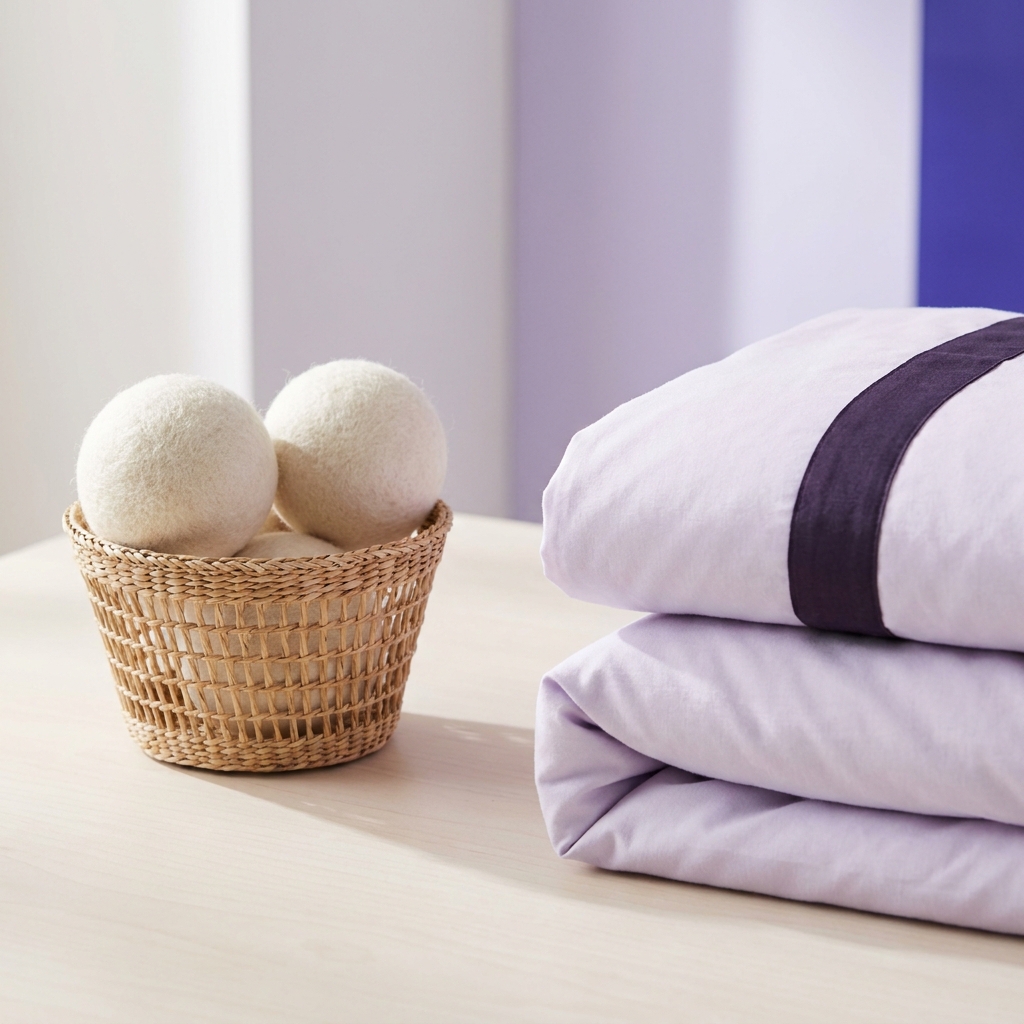
Add 2-3 dryer balls or a tennis ball to create separation and improve airflow; this helps layers dry more evenly and reduces clumping. Many laundry guides and manufacturers recommend this approach for larger bedding PeachSkinSheets: Beat balled-up bedding.
Mid-cycle, pause the dryer. If you feel a growing bundle, pull the cover out, give it a strong shake to open any roll, then resume. This simple check often prevents a tight wad and speeds up the total dry time PeachSkinSheets: Beat balled-up bedding.
If tangling persists
Very large covers in compact home dryers are more likely to ball up. Dry the cover completely on its own, and if it still wads tightly, use a larger commercial dryer or switch to air-drying to avoid extra wear. Home users report that separating the cover and choosing air-dry when needed solves persistent tangling Mumsnet: Quilt cover/sheet balling up in dryer.
Related reading from Talk About Sleep (different issue): if your duvet shifts inside the cover during use, see Why your duvet moves inside the cover and how to stop it. For washing setup basics, including turning covers inside out, see Should you wash a duvet cover inside out?
Prevent a balled-up duvet cover: quick run-through
FAQ
Should I close the cover before drying?
Yes, if the care label allows tumble drying. Closing zips or buttons helps keep the cover flat and prevents small items from getting trapped inside Mumsnet: Quilt cover/sheet balling up in dryer.
How many dryer balls should I use?
Two to three dryer balls (or a tennis ball) are commonly suggested to improve airflow and reduce clumping for bedding PeachSkinSheets: Beat balled-up bedding.

A useful next step
If the care label permits fastening the cover and a sewn button has come loose, Made in Steps has a guide to replacing a four-hole button by hand. Sew a 4-hole button by hand: a simple step-by-step.