
The journal
What Is Double Gauze Bedding? Read the Weave and the Finished Layer Count
Find out how double gauze is constructed, how the layers differ from the blanket’s full construction, and what to check on the care label.
 Talk About Sleep
At a glance
One piece of double gauze contains two open-woven layers joined to act as one fabric. The finished item may use several panels or an added binding, so check its actual layer description and care label.
In this guide
Double gauze is made with two open-woven layers that are joined at intervals so they behave as one cloth. On bedding the folds can feel soft and light. Read the actual fabric and the item’s care label before treating every gauze blanket as the same layer.
Check what the two layers refer to
“Double” refers to the construction described by the fabric maker. Shannon Fabrics, for example, describes its Embrace double gauze as two layers joined at regularly spaced points. See whether the product listing is describing the number of layers inside the cloth or the number of pieces of cloth used to make the finished blanket.
An item can use more than one sheet of double gauze. The finished blanket may then have a different weight, drape or thickness from a single double-gauze panel. A lined edge, a sewn binding or a second textile can also change the feel. Ask about the completed item’s fabric, dimensions and care, especially if you intend to fit it into an existing bedding rotation.
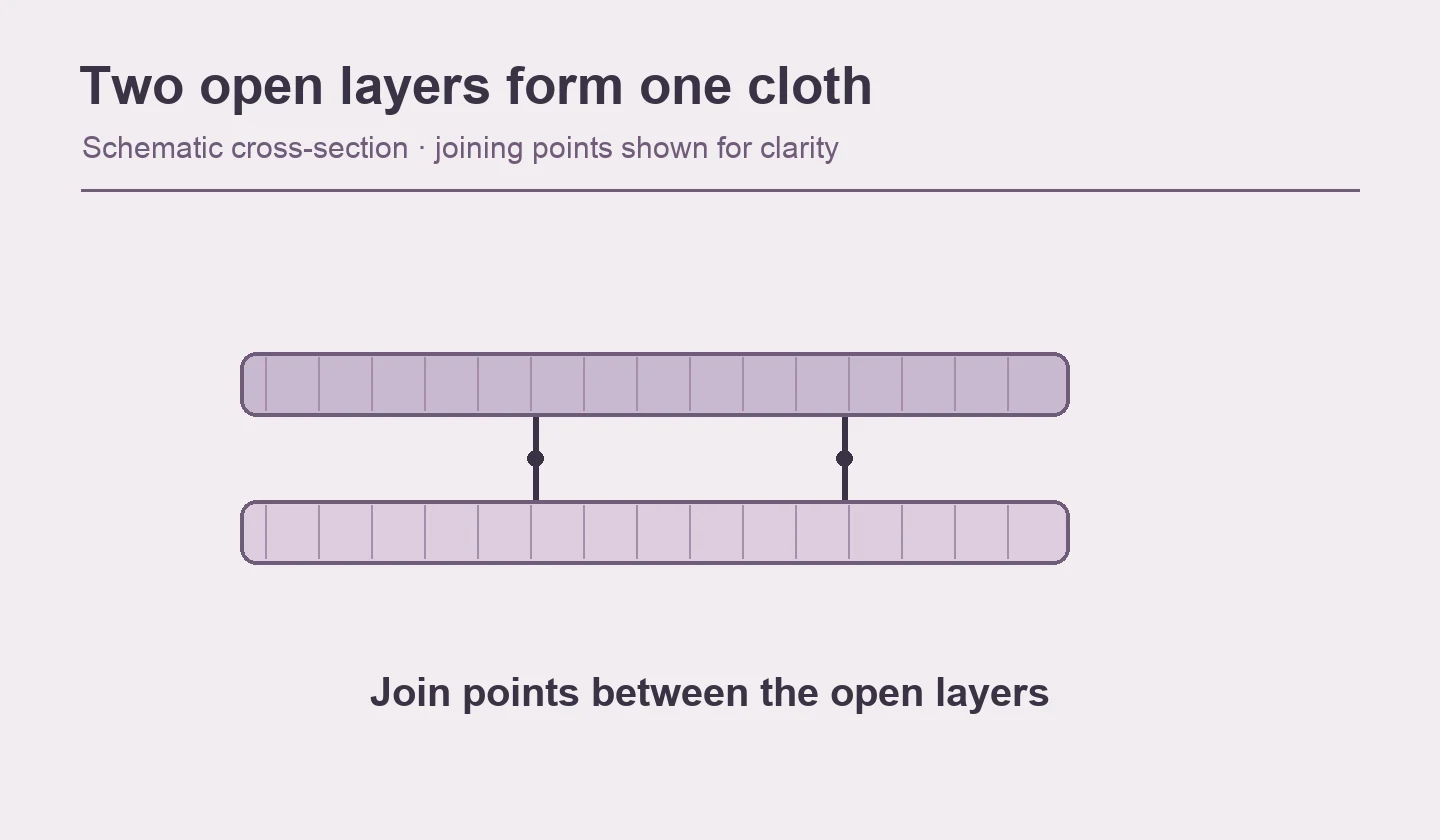
For the textile maker’s construction description, see Sewing with Embrace Double Gauze.
Sources: Sewing with Embrace Double Gauze · Sew Simple Embrace Blanket instructions
Compare the same size and the same light
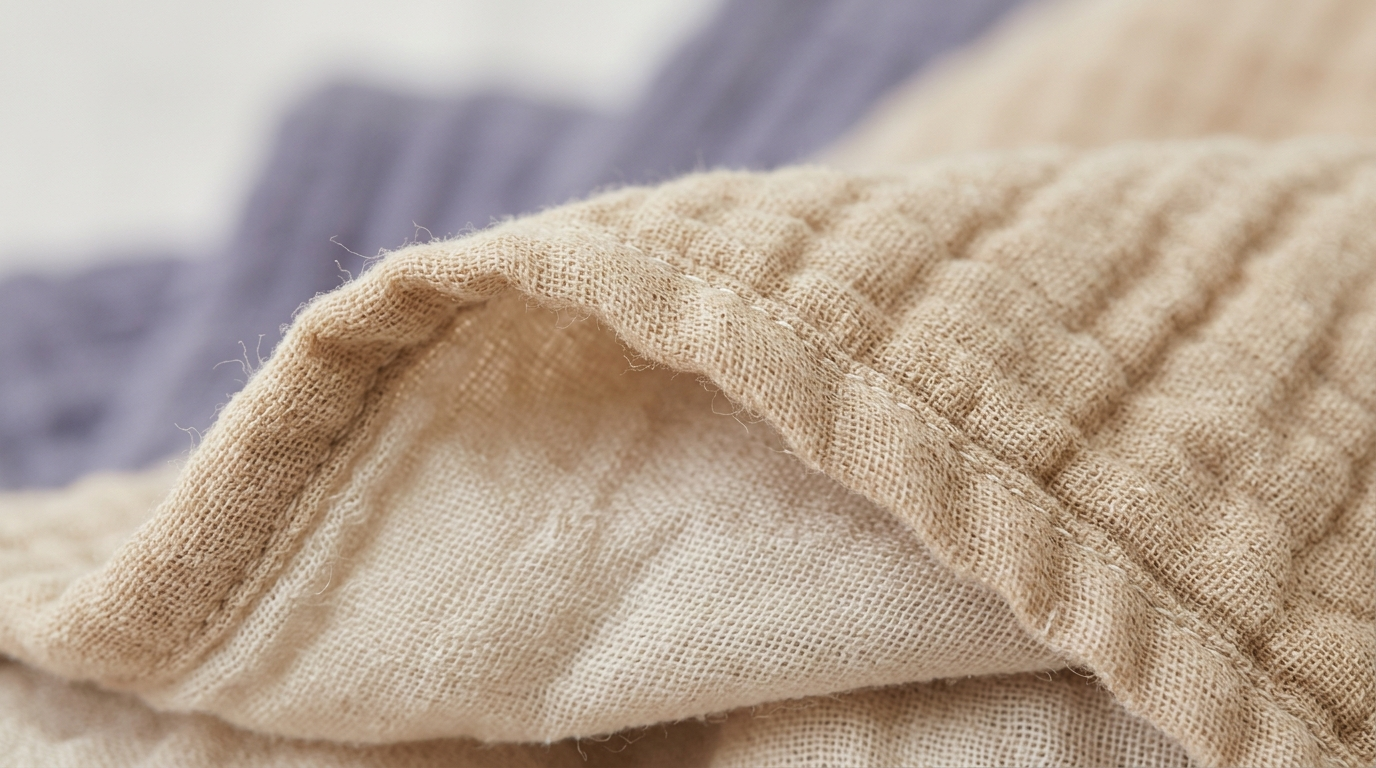
Fold back one edge or look at a supplied swatch. Use side light to see the weave without stretching it. Some double-gauze pieces show a discreet grid where the layers attach. A smooth or crinkled finish can also affect how much air space you perceive when you hold it. Comparing two folded corners under the same light makes those differences easier to see.
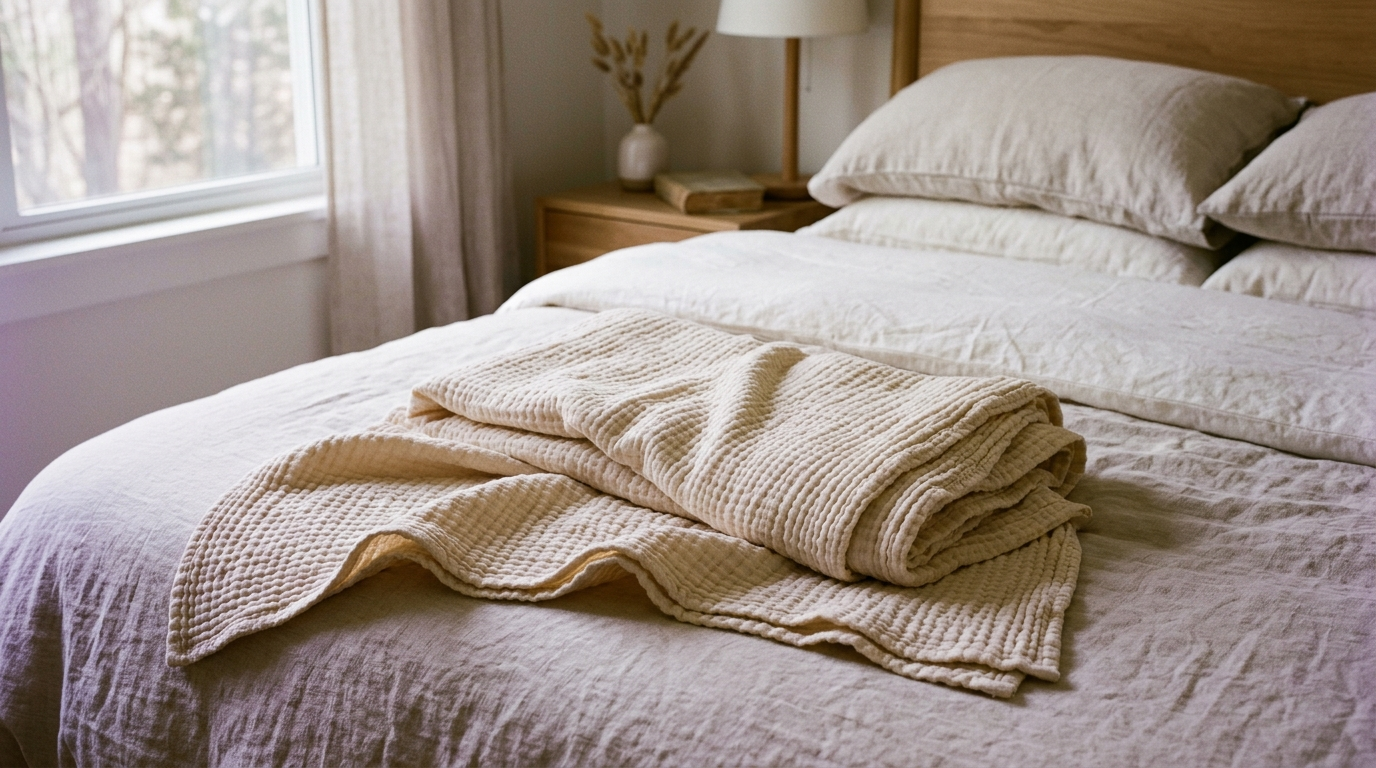
If trying two blanket options, use similar finished dimensions and hold them in the same way before deciding which drapes more easily. The word gauze describes a fabric construction or product description. It does not give you a universal warmth rating. Think about whether you want a light layer on top of the bedding you already use, or a stand-alone blanket with a different weight.
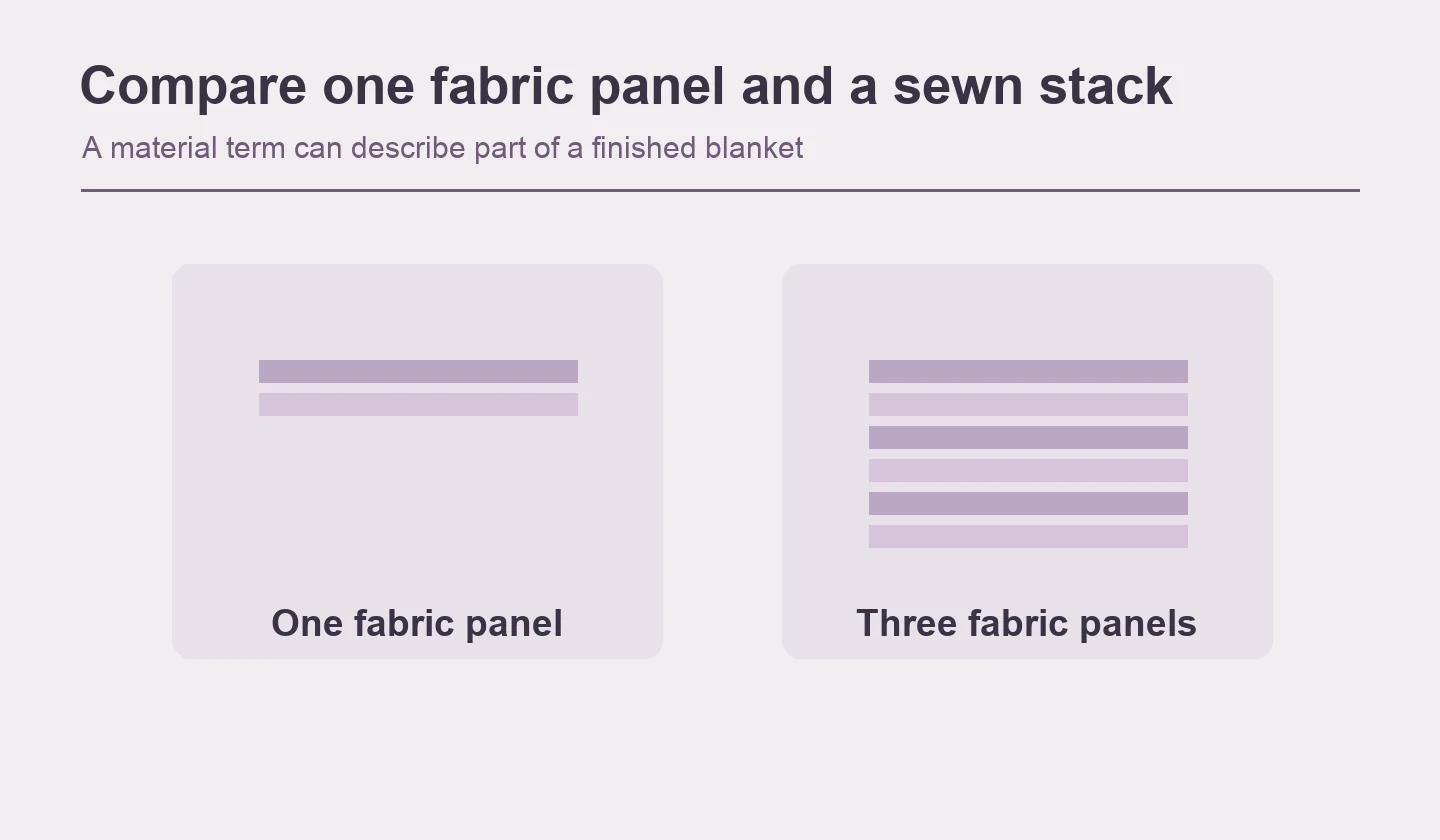
View full-size illustration (2.5 MB)
Check the cloth and the finished item
Double-gauze fabric
Two fine woven layers are joined at points.
Finished blanket
May use several fabric panels, other layers or an added binding.
For a finished design using multiple panels, see Sew Simple Embrace Blanket instructions.
Sources: Sewing with Embrace Double Gauze · Sew Simple Embrace Blanket instructions
Follow the care label for the finished piece
Check the finished care label before putting it in the laundry. An instruction for sewing yardage can differ from the instructions for a finished blanket with seams, binding, another fibre or a special finish. Follow the label’s washing and drying limits. If it permits machine washing, remove the item according to the stated care method and unfold it before checking its drape.
Keep a note of the layer description, fibre and care alongside the size. It will help if you later compare a replacement with a different fold, weight or edge finish.
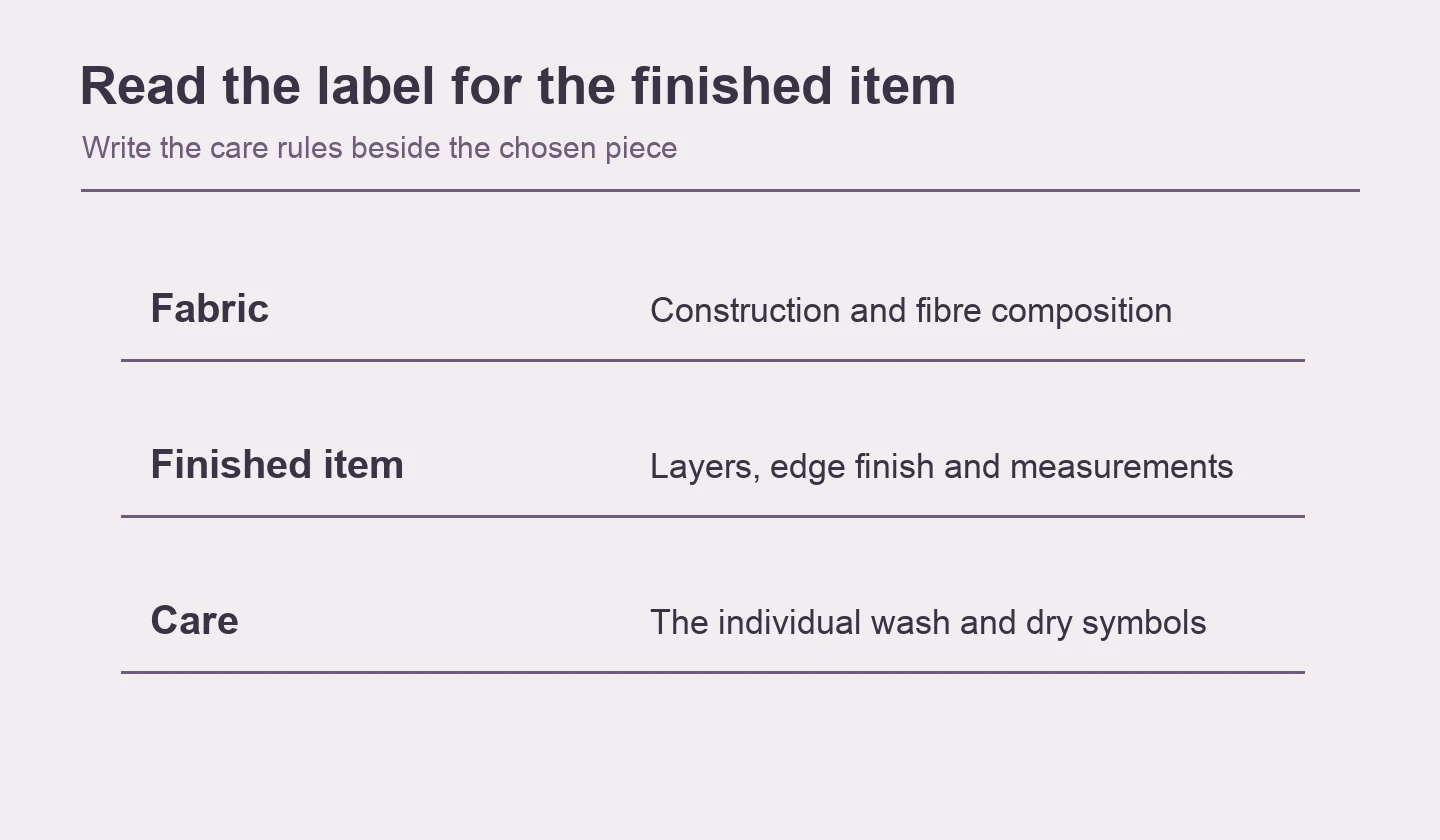
| Record | Where to check |
|---|---|
| Textile and fibres | The item label or product details |
| Finished layers and size | Blanket description and actual measurements |
| Laundering | Care label washing and drying symbols |
Compare two real blanket options
- Write the stated construction and fibre.
- Check the finished dimensions.
- Read the finished wash and dry label.
- Compare the two folds from the same angle and distance.
To check the laundering symbols on the item, see Textile care symbols.
For the related task, see Compare with the broader muslin blanket guide.
Sources: GINETEX · Shannon Fabrics
Frequently asked questions
Is double gauze just a cotton fibre name?
It describes the way the fabric is built. Check the item's fibre composition separately.
Does double gauze always feel cool enough for a warm room?
Consider the finished blanket’s weight, fabric, other layers and your own bedding setup.
Can I wash a finished piece the way I would wash yardage?
Use the finished item’s directions. Added binding, finish or fibres may change treatment limits.
Why does the weave look crinkled?
Finish and how the fabric settles can change its texture. Compare a swatch without stretching it.
Talk About SleepRead a gentle wash label
Use the actual label to choose washer settings.
Read the wash label on the actual blanketContinue with a related guide
- Read a gentle wash label
Use the actual label to choose washer settings.
- Compare with the broader muslin blanket guide
See where a lighter layer fits with the rest of the bed.
- Compare two other cotton weaves
Use the same light, colour and feel test on each swatch.
References
- Sewing with Embrace Double Gauze Shannon Fabrics
- Sew Simple Embrace Blanket instructions Shannon Fabrics
- Textile care symbols GINETEX