
The journal
How to Keep a Duvet Cover From Bunching in the Washer
Separate a duvet cover that traps other laundry from one that twists by itself. Check the closure, load and washer instructions before changing settings.
 Talk About Sleep
At a glance
Close the cover if the care label allows, load it loosely as the washer manual directs and check which problem remains at the end of the wash.
In this guide
Remove the insert, close the duvet cover’s fasteners if its care instructions allow, and put the loose cover in the washer without rolling it into a ball. An open cover can catch smaller pieces. A closed cover can still twist or make the load uneven. Watch for those two different problems and use the loading directions for your machine as well as the care label on the cover.
Check what was inside the bundle
Think about what you found the last time the cover bunched up. If pillowcases or a sheet came out of its opening, focus on the opening first. If the cover was one large wet knot with nothing inside, focus on the shape of the load, the drum and the machine’s cycle guidance. The two problems can happen in the same wash, but the checks are different.
Make sure the duvet insert is out of the cover before this test. Check that the cover is machine washable, what temperature it permits and whether it has instructions about turning it inside out. Treat decorative trims and delicate fabrics according to the label. This guide applies to the empty cover, so it does not change the insert’s separate care instructions.

Two different kinds of bundle
Other items inside
Check the fasteners and gaps at the opening. Review what can go in the same load.
Only the cover twisted
Check how you put it in and whether the load has enough room to move.
Close the opening without forcing the fastener
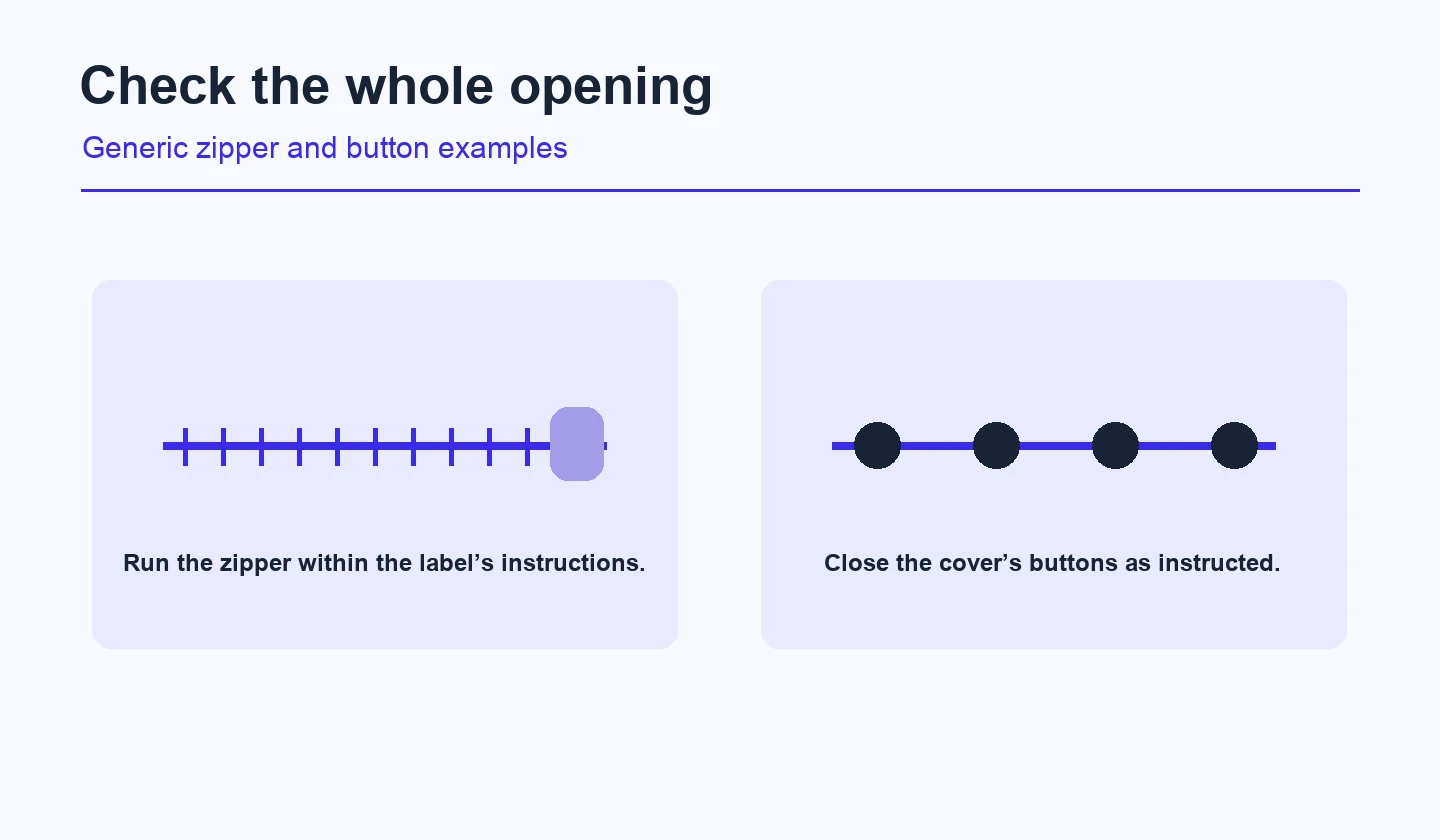
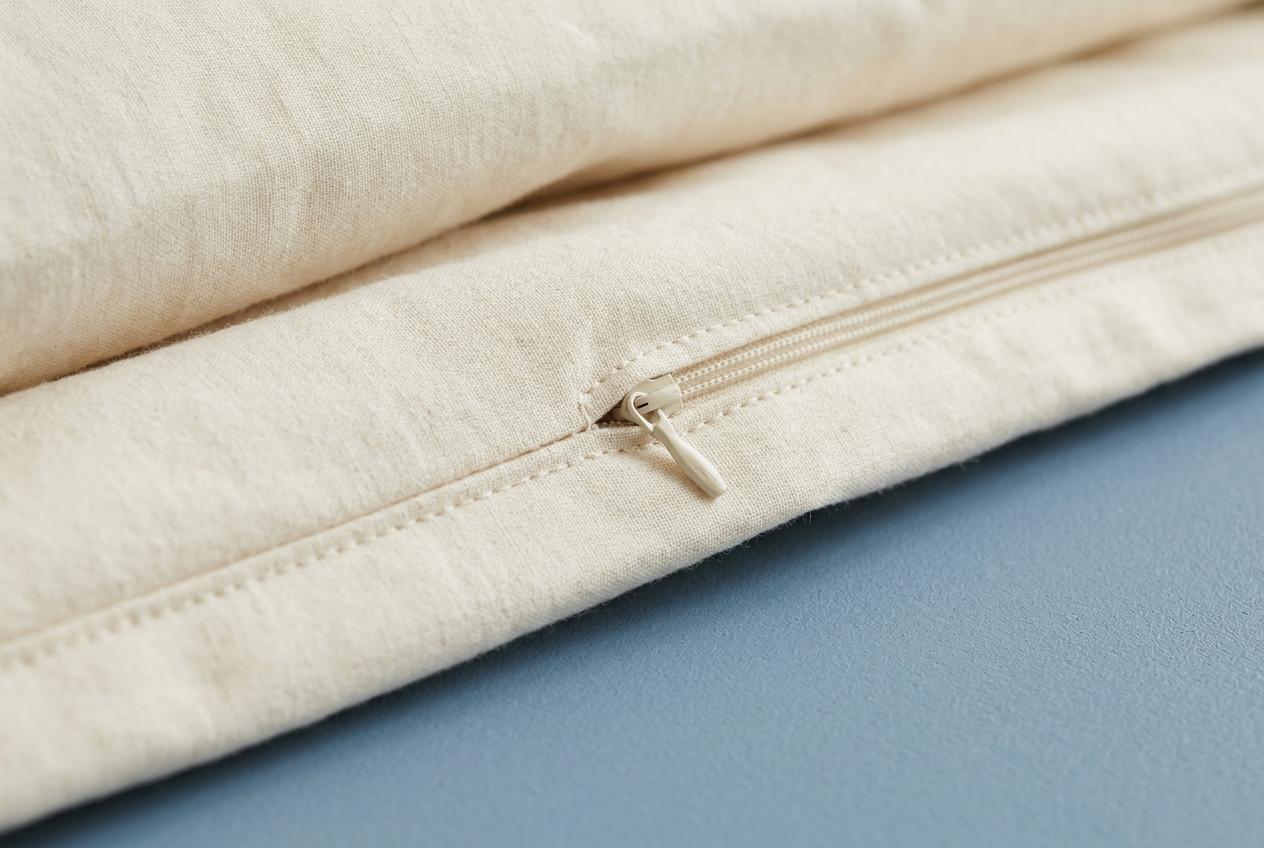
With the empty cover on a surface, run the zipper or engage the buttons as the textile instructions allow. You are closing the entry, so look along the full opening for a gap that a small piece could enter. Do not force a sticking zip or tie fabric over a damaged button. If you cannot secure the opening, a simple comparison is to keep small items out of the load where the washer manual allows that load.
Bosch tells users troubleshooting imbalance to close zippers and buttons on pillow and duvet covers. It also suggests a mix of large and small pieces in relevant loads. Follow the advice for your particular washer. Closing the opening can prevent something entering. It does not establish that one large wet cover will spin evenly by itself.
For model-specific help with poor spin, read Washer support: wet laundry and an unbalanced load.
Sources: Bosch
Load the cover loosely for the drum you have
Shake out the empty cover before putting it in. Follow your machine’s guidance for large items and use its weight or fill limit as directed. A front loader needs enough space to move the load as the drum turns. A top loader can have specific instructions for arranging large items around the impeller or agitator. If the cover cannot move freely at the allowed load size, use a larger suitable machine rather than pushing the fabric in.
Do not automatically change detergent, spin speed or temperature in response to one tangled load. Start with the setting that fits both labels and the loading pattern your manual specifies. Make the closure and loading changes first so you can tell whether they helped.
Compare how different drum types are addressed in How to wash and dry blankets.
Decide what to change next time
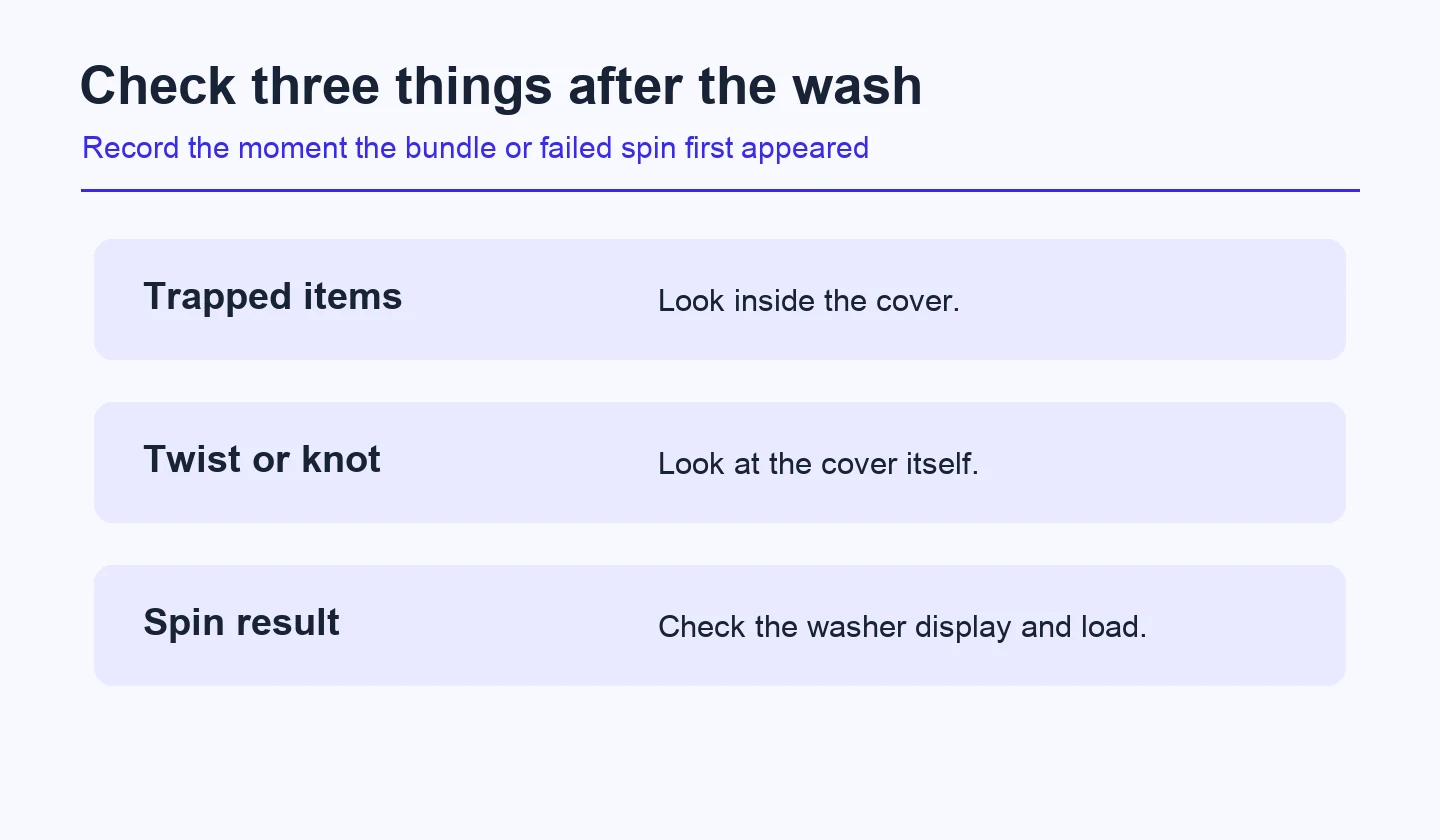
After the cycle, wait until the machine is stopped and the door can open normally. Check whether anything entered the cover, whether it came out in a compact ball and whether the washer had trouble spinning. If the spin repeatedly stops, follow the machine’s imbalance help rather than trying to force the door open or immediately running another spin with the same arrangement.
Record one useful detail for the next wash. If the pillowcases stayed out but the cover still balled up, the closure addressed one issue. Look next at load size or how the cover was placed. If the bundle only formed later in the dryer, troubleshoot drying separately. The wash checklist is meant to clear up what happens in the washer.
| What happened | Review first | Record |
|---|---|---|
| Small pieces were inside | Opening and fasteners | Which pieces entered and where. |
| The empty cover twisted | Loading pattern and allowed size | How the cover went into the drum. |
| Spin interrupted or weak | Manual instructions for imbalance | Any visible error and how the load sat. |
Sources: Bosch
Keep the next wash comparable
Use the same cover, an allowed wash setting and a similar load when checking a change, if that is practical. Compare how the fabric comes out and whether the spin finished normally. Once you have a load that works, note the closure setting and what else was in the drum so you can repeat it.
Check the next cover load
- Remove the insert and confirm the care label.
- Secure permitted fasteners.
- Place the cover loosely according to the washer manual.
- Check trapped pieces, twists and spin separately.
For the related task, see Troubleshoot a cover in the dryer.
Frequently asked questions
Should I wash a duvet cover by itself?
Check the machine guidance. Some washers do better with a permitted mix of large and small pieces to distribute load.
Do I need to turn it inside out?
Use the care directions for the cover, particularly trims and fasteners. The stuffing problem is mostly about the opening.
Should I put the duvet insert in with its cover?
Remove the insert for this check and follow its separate care label.
What if the cover tangles only in the dryer?
Follow the cover and dryer instructions for drying. Check which part of the process first produced the bundle.
Talk About SleepCheck the duvet cover care label
Choose permitted settings and determine whether your cover needs turning.
Read the care label guideContinue with a related guide
- Check the duvet cover care label
Choose permitted settings and determine whether your cover needs turning.
- Troubleshoot a cover in the dryer
Use a separate check for tangling that starts after the wash.
- Check washable linen sheet instructions
Read the separate care guide for those pieces before sharing a load.