
The journal
How to Store Blankets in a Small Bedroom: Check the Fold and Opening
Measure the removal space, test two folds and give everyday blankets a separate place from seasonal bedding.
 Talk About Sleep
At a glance
Give frequently used blankets a place you can reach in one move. Measure the clear opening, try a wider fold if the stack is too tall, and follow the care labels for seasonal storage.
In this guide
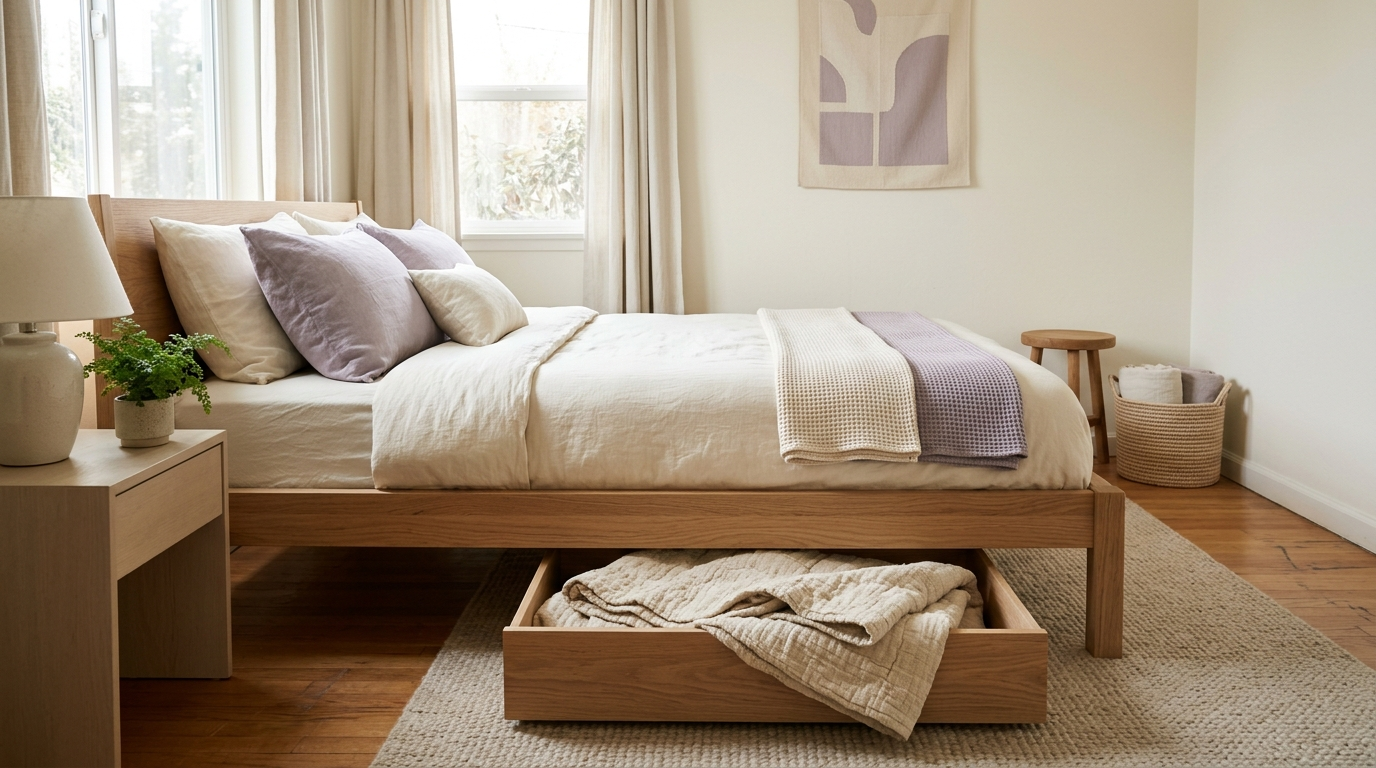
In a small bedroom, start with the space your clean, dry blanket can actually come out of. A spare drawer is useful only if it can open far enough for the folded blanket and your hands. Measure the opening, give everyday blankets an easy place to reach, and save the more awkward storage spot for the bedding you swap seasonally.
Choose a home for the blanket you use tonight
A blanket that goes back on the bed every evening needs a different home from one you take out twice a year. Keep the frequent one at hand. A shallow drawer or a shelf can work if you can lift it out without moving another stack. Test the spot by opening the drawer while standing where you normally get ready for bed.
Measure the clear space with the drawer extended. An under-bed box also needs space to come out without running into a wall or a nightstand. Measure the usable opening and compare it with the loaded container. A box that fits underneath the frame may still be too tall to remove comfortably with the lid on.
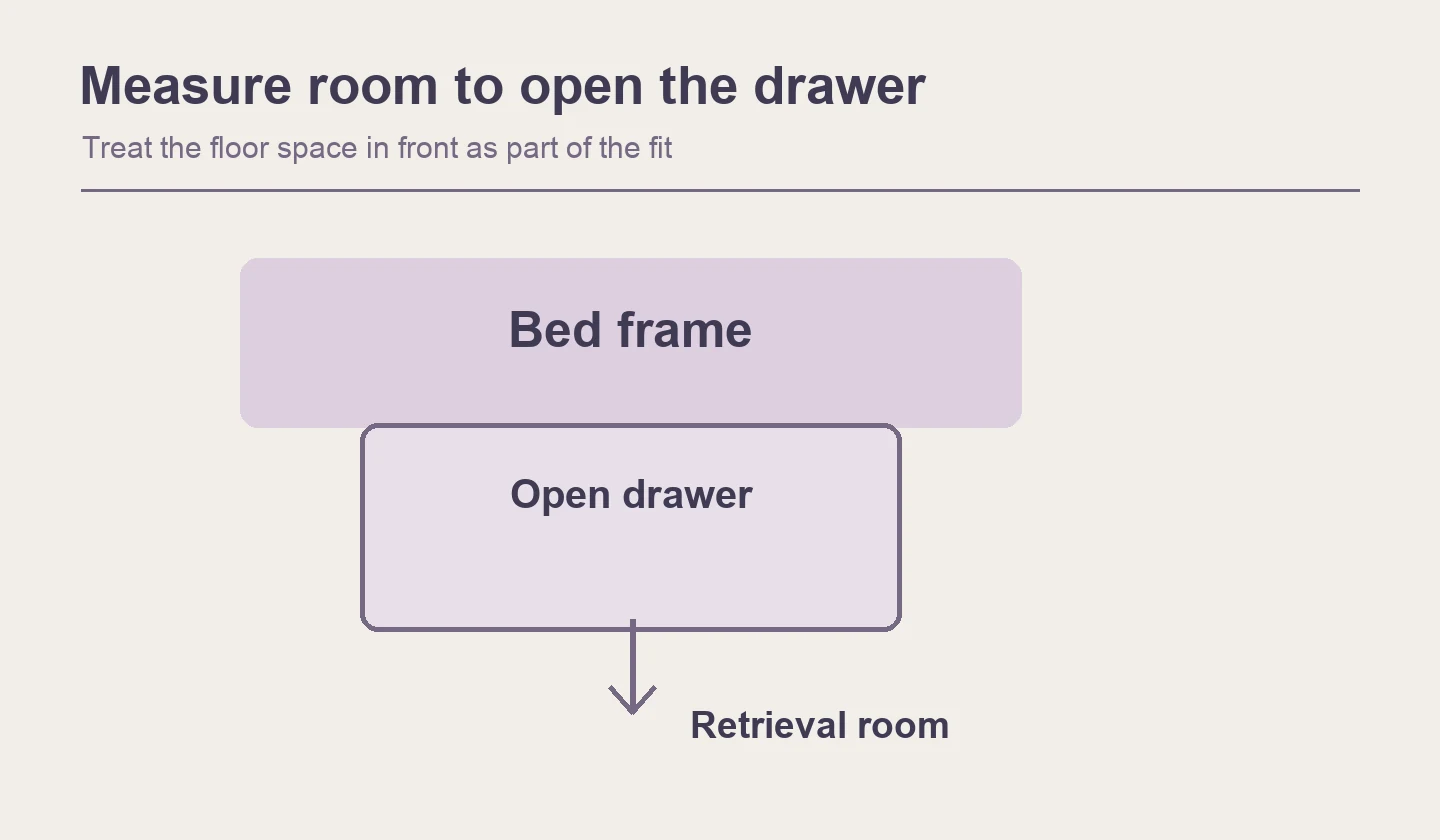
Match the place to how often you use it
Tonight’s blanket
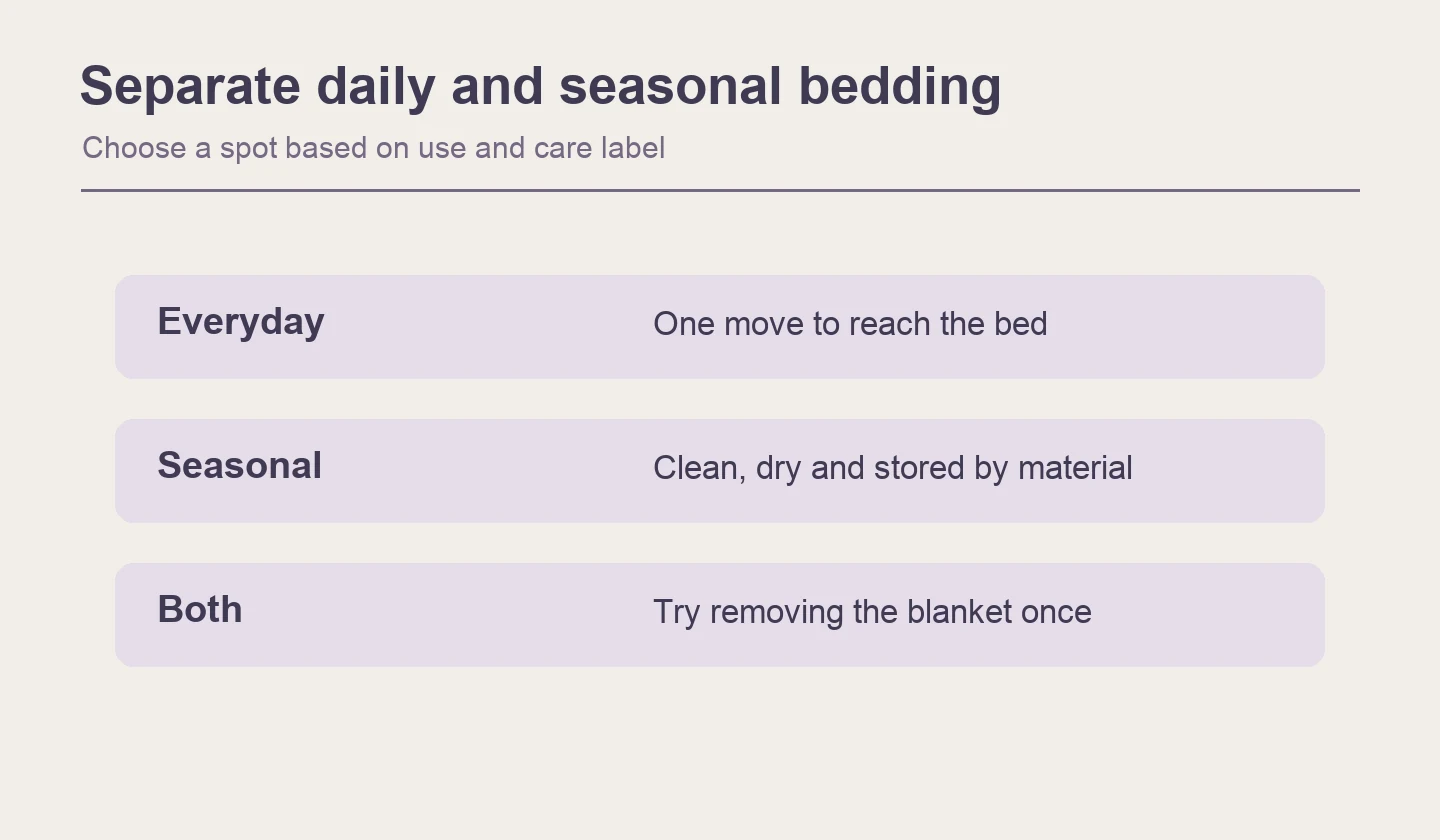
Keep it near the bed in a space that opens easily.
Seasonal bedding
Use a separate dry spot and store the blanket according to its label.
Sources: Woolmark · Canadian Conservation Institute
Measure the fold without pressing down
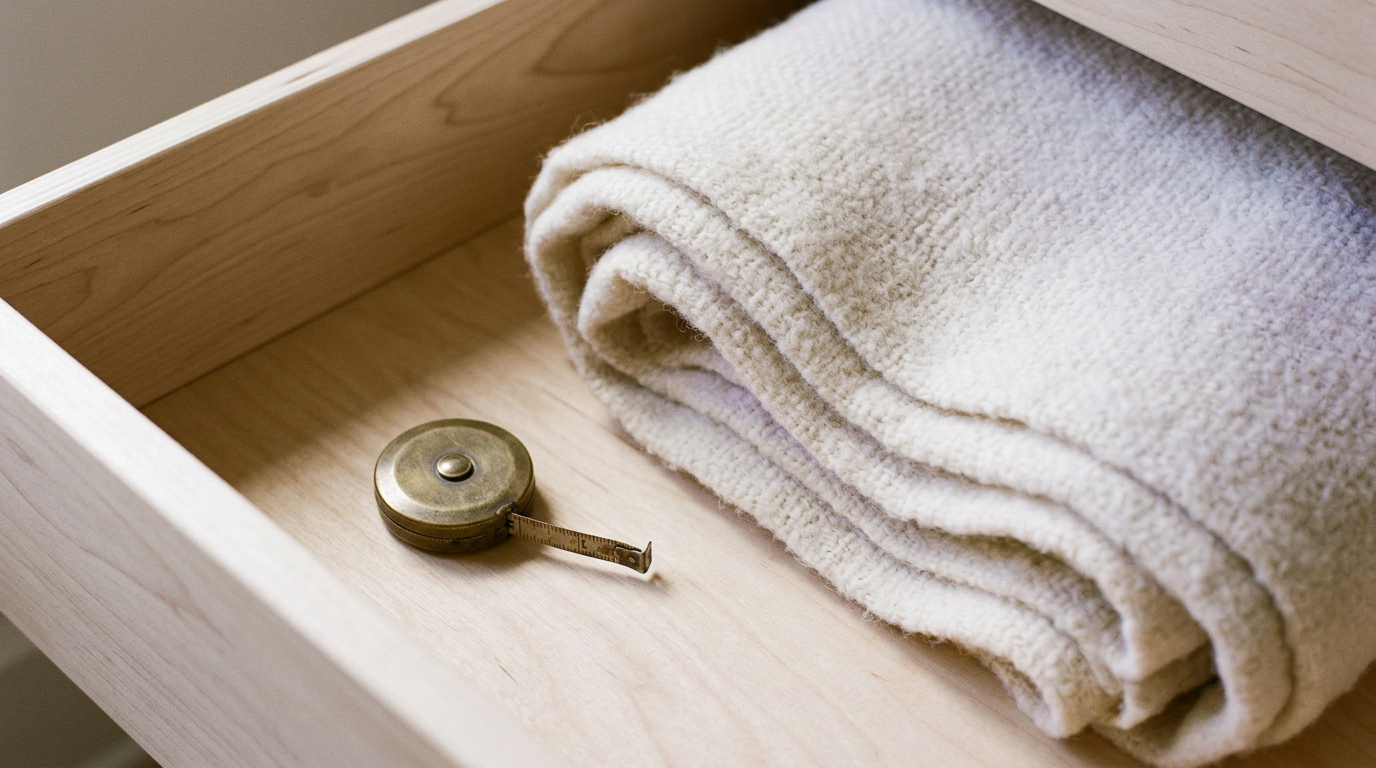
Lay the blanket on a clean surface. Fold it into the shape you would actually want to unfold later. Measure its length, width and height at the thickest part. Then try it in the intended space once. Stop if the drawer drags or the stack needs to be forced down to close.
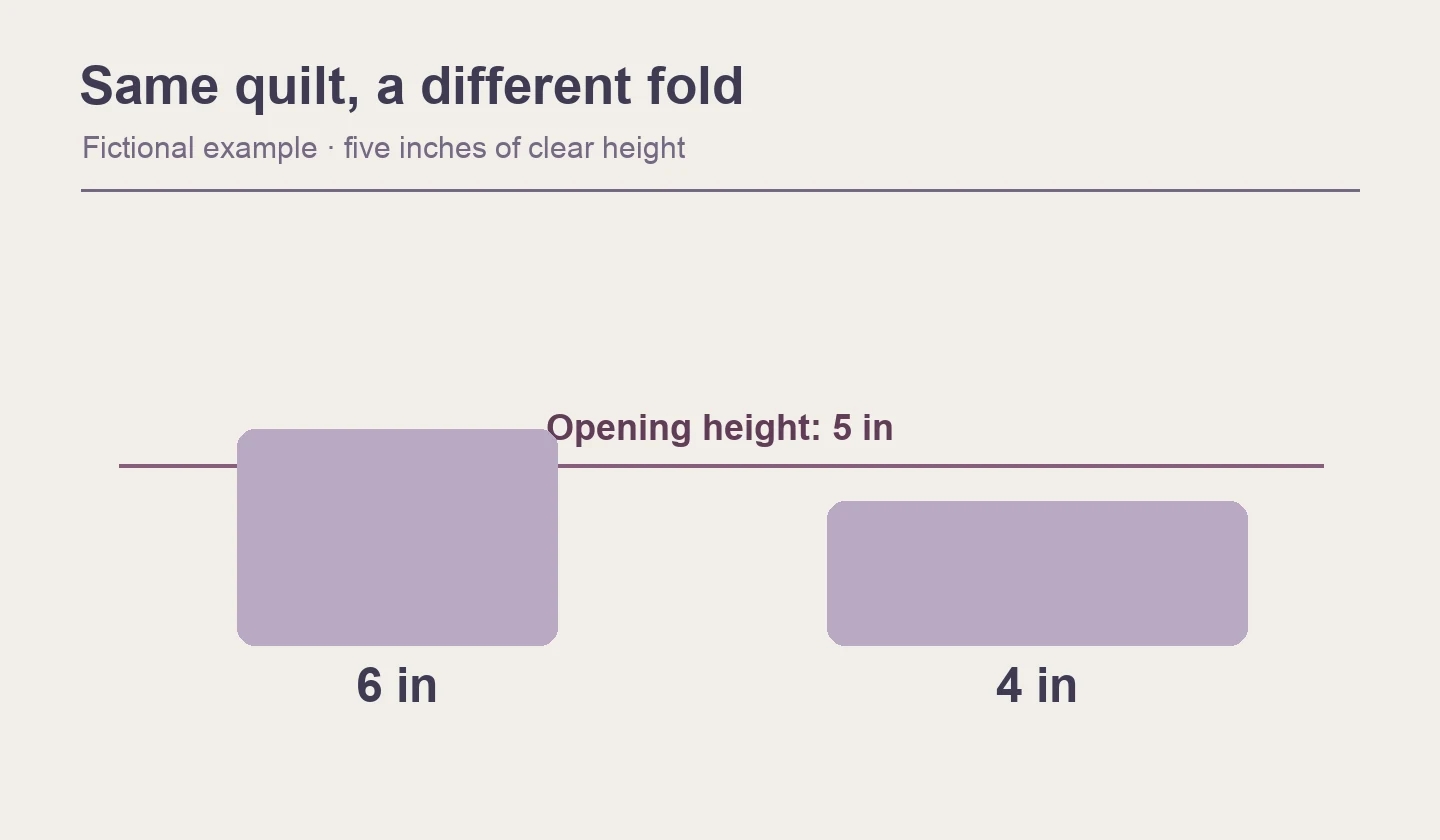
Suppose a drawer has just five inches of clear height. A fictional quilt measures six inches high after a tight set of folds. You have a second option if the drawer is wide enough: use fewer folds so the same quilt spreads across more floor area. If the new fold is four inches high and you can slide it in without folding a corner over, this is a better fit for that drawer. Measure the new width and depth as well.
| Fold | Relaxed height | What to check |
|---|---|---|
| Smaller footprint | 6 inches | Too tall for the opening |
| Wider footprint | 4 inches | Height clears; check width and depth |
| Loaded storage box | Measure with its lid | Check the path to pull it out |
For separate guidance on preserving fragile textiles, see Basic Care of Textiles.
Sources: Canadian Conservation Institute
Store seasonal bedding by its material
Follow the care label and put the blanket away clean and dry. Woolmark recommends keeping wool blankets in a cool, dark place and using an airtight container or bag. For older or fragile textiles, the Canadian Conservation Institute describes using a supportive surface and reducing sharp creases. Use the care instructions for your own item when choosing a container and fold.
Once you have found a place for the seasonal blanket, do a quick removal check. If it sits behind everyday supplies, you will empty the whole shelf at the change of season. Use a simple label or store the fold opening toward you. One blanket you can retrieve in one move is often a better use of the space than several tightly wedged ones.
Take the blanket out once before deciding
- Measure the opening and reach.
- Try the fold without pressing it down.
- Match seasonal storage to the care label.
- Lift it back out without moving another stack.
For the wool blanket care and storage instructions, see How to Wash, Dry and Store Wool Blankets.
For the related task, see Check the label before washing wool.
Sources: Woolmark · Canadian Conservation Institute
Frequently asked questions
Should I measure the drawer inside or its opening?
Measure both where they differ. A deep interior can have a smaller opening to reach it.
Will a wider fold always be better?
It helps when height is limited and there is enough width and depth. Test your actual fold.
Can I store a wool blanket the same way as a fragile heirloom quilt?
Check each item separately. Woolmark gives wool-specific storage guidance, while conservation advice prioritizes supporting fragile fabric and limiting sharp creases.
How can I make seasonal blankets easier to reach?
Put the label or fold opening toward the accessible side, then practice taking it out once.
Talk About SleepCheck storage for a weighted blanket
Follow the separate guidance for its weight, fabric and filling.
Find a storage spot for a weighted blanketContinue with a related guide
- Check storage for a weighted blanket
Follow the separate guidance for its weight, fabric and filling.
- Check the label before washing wool
Prepare the blanket for clean, dry storage.
- Read about containers for sheets
Keep different bedding types easy to identify and remove.
References
- How to Wash, Dry and Store Wool Blankets Woolmark
- Basic Care of Textiles Canadian Conservation Institute