
The journal
How often does a mattress protector need to be washed?
Most mattress protectors should be washed every 1-2 months, with more frequent washing after spills or if you have allergies, pets or young children. Dry on low heat or air-dry according to the care label, especially for waterproof styles.

Wash a mattress protector about every 1 to 2 months under normal use, and wash immediately after any spill or accident. Households with allergies, pets, or young children may need to wash monthly or more often. These timelines align with manufacturer-care advice for protectors and similar bedding layers, and always defer to your item’s care label for exact instructions (Texas Mattress Makers; a mainstream cleaning guide recommends every other month for mattress pads, a comparable layer: TODAY cleaning guide).
Dry a mattress protector the safe way
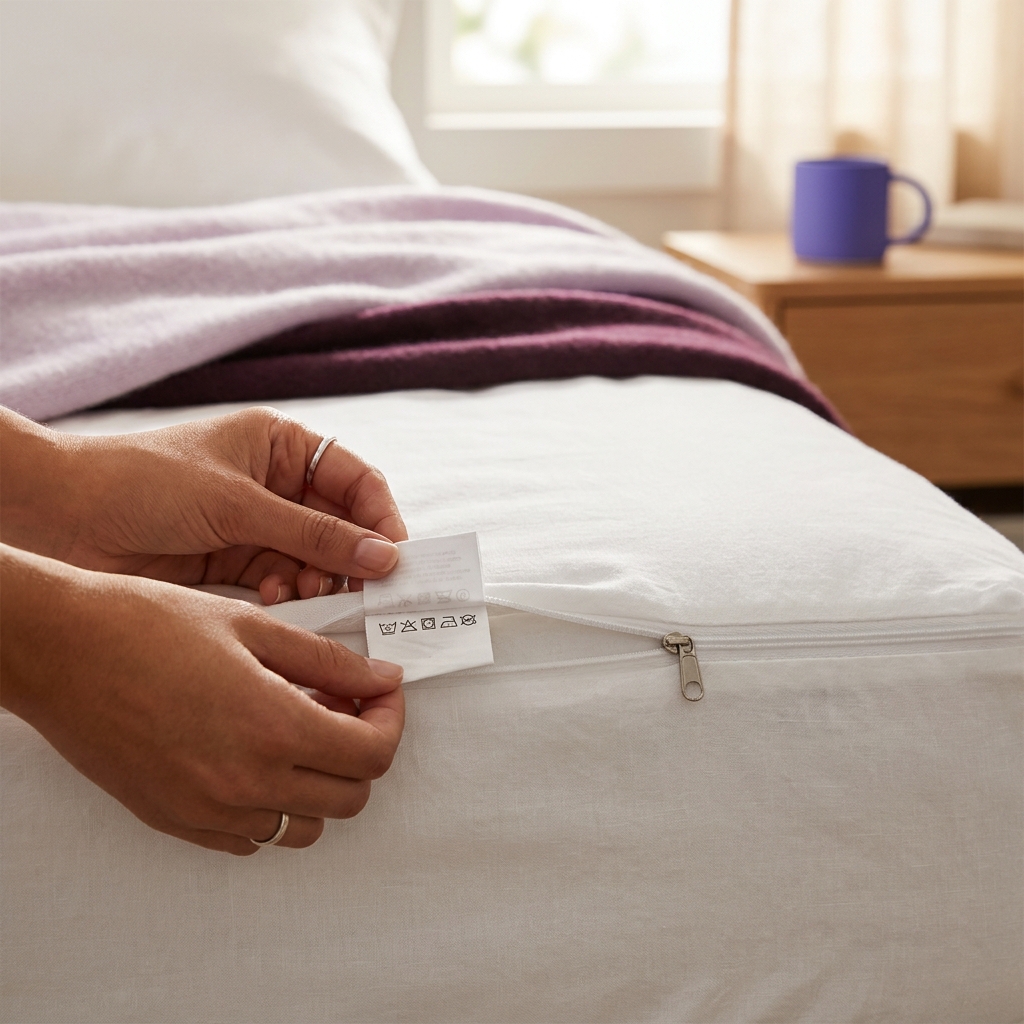
Drying depends on construction. Check the care label first for temperature limits and any material notes (for example, “waterproof membrane,” “vinyl-backed,” or “100% cotton”). Starting with the label is also the first step recommended by industry guides (Texas Mattress Makers).
If your protector is waterproof or vinyl‑backed
- Tumble dry on low heat only. High heat can damage or warp waterproof films or vinyl backings (Texas Mattress Makers; TODAY cleaning guide).
- If the label allows, you can air‑dry in a well‑ventilated area; keep it out of direct sun to avoid degrading some coatings (Texas Mattress Makers).
- Make sure it’s fully dry before putting it back on the bed to prevent odors, mold, or mildew (TODAY cleaning guide).
If your protector is all‑cotton (no waterproof layer)
- Tumble dry on low heat; remove promptly. This is typical guidance for tightly woven cotton encasements (The Company Store organic cotton protector care; The Company Store cotton protector care).
- Do not iron unless the label specifically allows it; many list “do not iron” (The Company Store cotton protector care).
- Use dryer accessories only if the protector and appliance instructions permit them (TODAY cleaning guide).
When to wash more often
Increase frequency if any of these apply:
- Allergies or asthma, or you notice dust accumulation.
- Pets or young children share the bed.
- You sweat heavily, eat or drink in bed, or live in a hot climate.
These factors are flagged by care guides as reasons to shorten the 1-2 month cycle (Texas Mattress Makers).
Drying mistakes to avoid
- Using high heat on waterproof or vinyl‑backed protectors. This can damage the barrier; stick to low heat (Texas Mattress Makers; TODAY cleaning guide).
- Putting a protector back on while damp. Always dry completely to prevent odors and mildew (TODAY cleaning guide).
- Ignoring care‑label specifics like “tumble dry low” or “do not iron,” which are common on cotton encasements (The Company Store cotton protector care).
- Prolonged direct sun exposure for coated or waterproof designs, which some guides caution can degrade materials (Texas Mattress Makers).
Care routine that works
Follow your care label for wash temperature and drying method. Many cotton protectors specify machine wash cold, gentle, and tumble dry low; waterproof designs often require low heat. Two practical references you can compare your label against: The Company Store organic cotton protector care and The Company Store cotton protector care.
Put this into practice
Build the wash plan around the actual label, use and observed soiling. Keep spare bedding practical, but do not replace a working protector just because a fixed calendar interval or a shopping table suggests it.
Keep-your-protector-fresh checklist
Quick answers
Can I use medium or high heat if I’m in a hurry? Stick to low heat unless your label clearly allows higher settings. Heat can damage waterproof films and vinyl backings (TODAY cleaning guide).
How do I know it’s time to replace my protector? If the waterproof layer fails (liquid seeps through) or coating degrades, or persistent odors remain after proper care, it’s time to replace (Texas Mattress Makers).
Related reading on Talk About Sleep: Can I wash a mattress protector in the washing machine? Practical washing and drying guidance and What causes yellow stains on a mattress protector? Practical cleaning and care.
