
The journal
What causes yellow stains on a mattress protector? Practical cleaning and care
how to wash a mattress protector, remove yellow stains safely and protect waterproof backings with enzyme pretreating and proper drying.
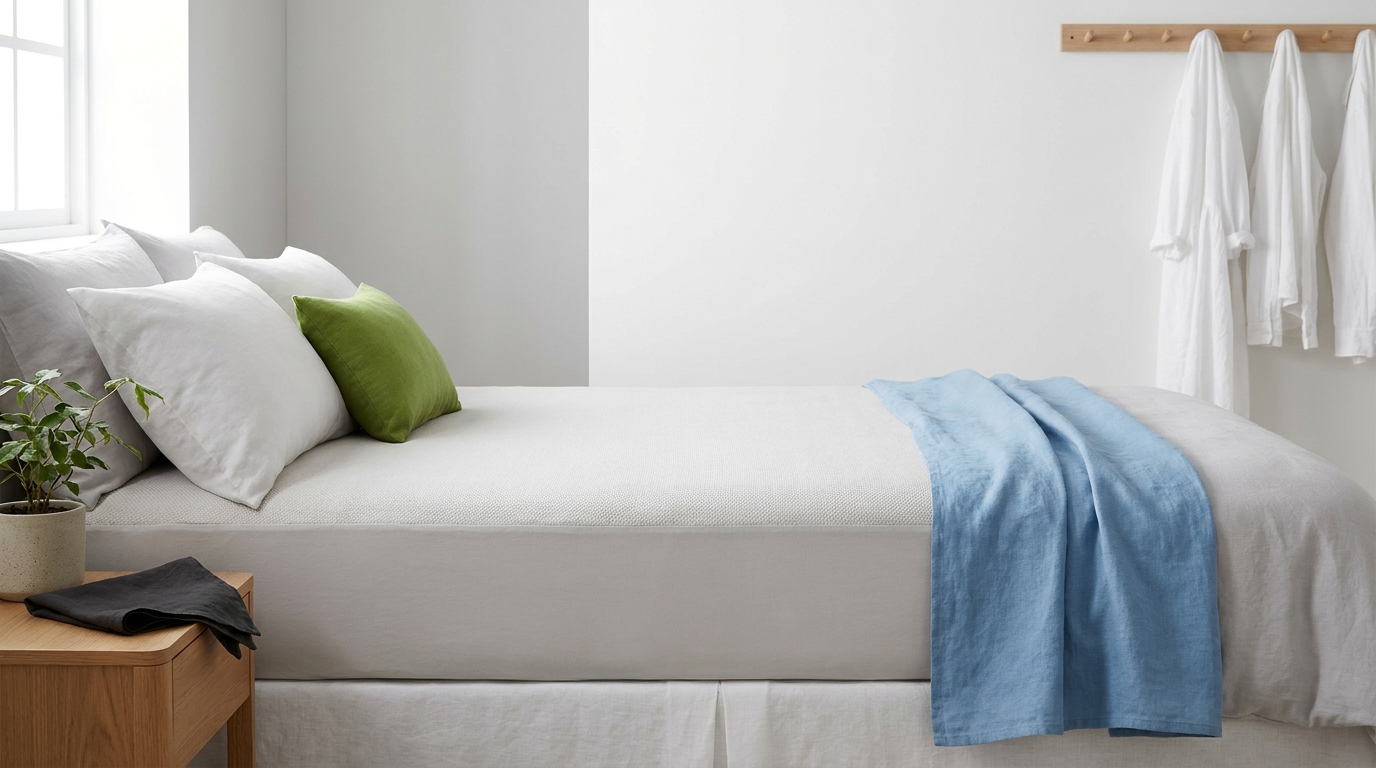
Quick overview: what makes mattress protectors turn yellow
Quick checklist: common causes include perspiration and body oils, fresh or dried urine, mold or mildew where dampness lingers, and leftover detergent residue that attracts soil. Each cause needs a different response so you can choose the safest cleaning method for your protector and its waterproof backing.
Perspiration and body oils are protein-based soils that often produce a faint overall yellowing on light fabrics, while urine stains tend to be more localized and may carry a distinct odor when fresh. Mold or mildew appears as spotty discoloration in damp conditions, and detergent residue can leave a dingy film that looks yellow over time.
For washable protectors with a waterproof membrane there are limits: strong bleach, high heat and harsh cycles can damage the backing. When the backing peels or odors and leaks persist after careful cleaning, replacement is usually the practical choice.
Prevention basics are straightforward: deal with fresh soil quickly, use enzyme-based pretreaters for protein or urine soils, dose detergent correctly, run an extra rinse when in doubt, and make sure protectors dry completely after washing. Those habits reduce the chance that stains will set or that mold will develop in damp spots. Find related guides on our site for routine care and further reading.
Perspiration and body oils, urine, mold, and detergent residue are the main causes readers should consider first when they see yellowing on a protector, because the right cleaning step depends on what made the stain.
Common stain sources at a glance
Perspiration and body oils: widespread pale yellowing from long-term contact, especially where sleepers sweat most.
Urine: localized pale yellow spot with odor when fresh, best treated quickly to avoid setting.
Mold and mildew: spotty discoloration that shows in damp storage or when a protector stayed damp; cleaning and full drying are essential.
Detergent residue: dingy, uneven yellowing caused by overdosing or inadequate rinsing that leaves residue to attract more soil.
Why some protectors yellow faster
Thin, light-colored fabrics and protectors used without regular washing will show yellowing faster because oils and salts build up over time. Using too much detergent or skipping an extra rinse lets residue collect and makes light fabrics look dingy.
Protectors that trap moisture against the surface, or that are stored damp, create the right environment for mold growth; the EPA recommends cleaning visible mold and ensuring complete drying to prevent recurrence EPA mold cleanup guidance.
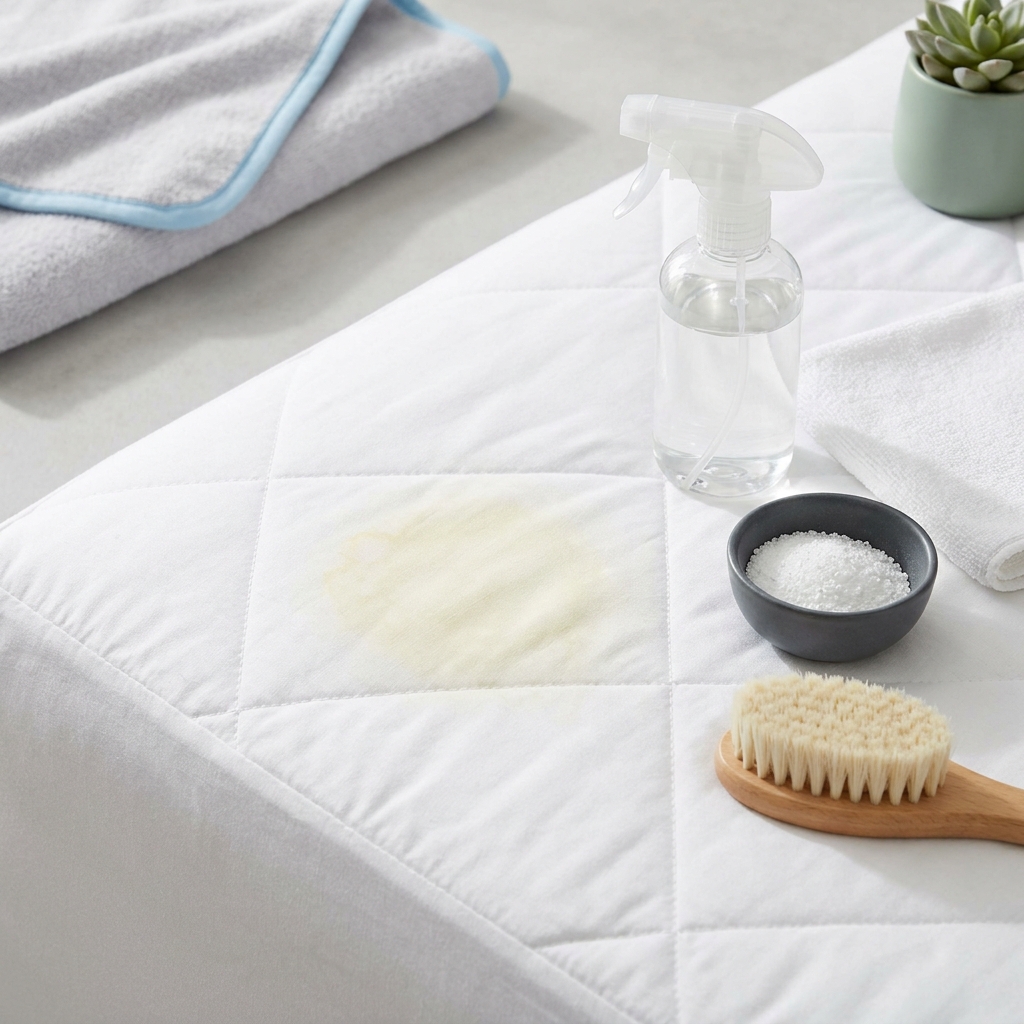
Diagnosing a yellow stain: how to tell what you're dealing with
Start with a short look-and-sniff check: where is the yellowing, does it smell, and does it feel different from the rest of the fabric? That quick triage points you toward either a protein soil like sweat, a urine spot, mold, or a detergent-related ding.
Perspiration and body-oil yellowing usually appears across areas where the body contacts the mattress protector frequently, such as the shoulders or hips. The color is often diffuse rather than sharply circled, and there is rarely a strong odor. Treatment that targets protein soils works best for these marks, and enzyme detergents are commonly recommended for this purpose American Cleaning Institute perspiration stains.
Fresh urine stains are often near the sheet edges or on areas a child or pet could reach. They are usually more localized, may look paler at first, and carry a distinct urine smell while fresh. Prompt blotting and a cold-water rinse reduce the chance the stain will set, and enzyme stain removers are advised before laundering American Cleaning Institute urine stain guidance.
Mold shows differently: look for spotty, irregular patches or a change in texture, often with a musty odor if growth is established. The CDC and EPA advise cleaning visible mold on washable textiles with detergent and water and making sure items dry completely; discard porous items if cleaning and drying cannot fully remove the growth CDC mold cleanup and remediation guidance.
Detergent residue or dinginess tends to be more even or patchy without a clear center, and repeated heavy dosing or skipped rinses are common causes. If the fabric feels slightly stiff or soap-slick, try running an extra rinse and checking whether the yellowing fades.
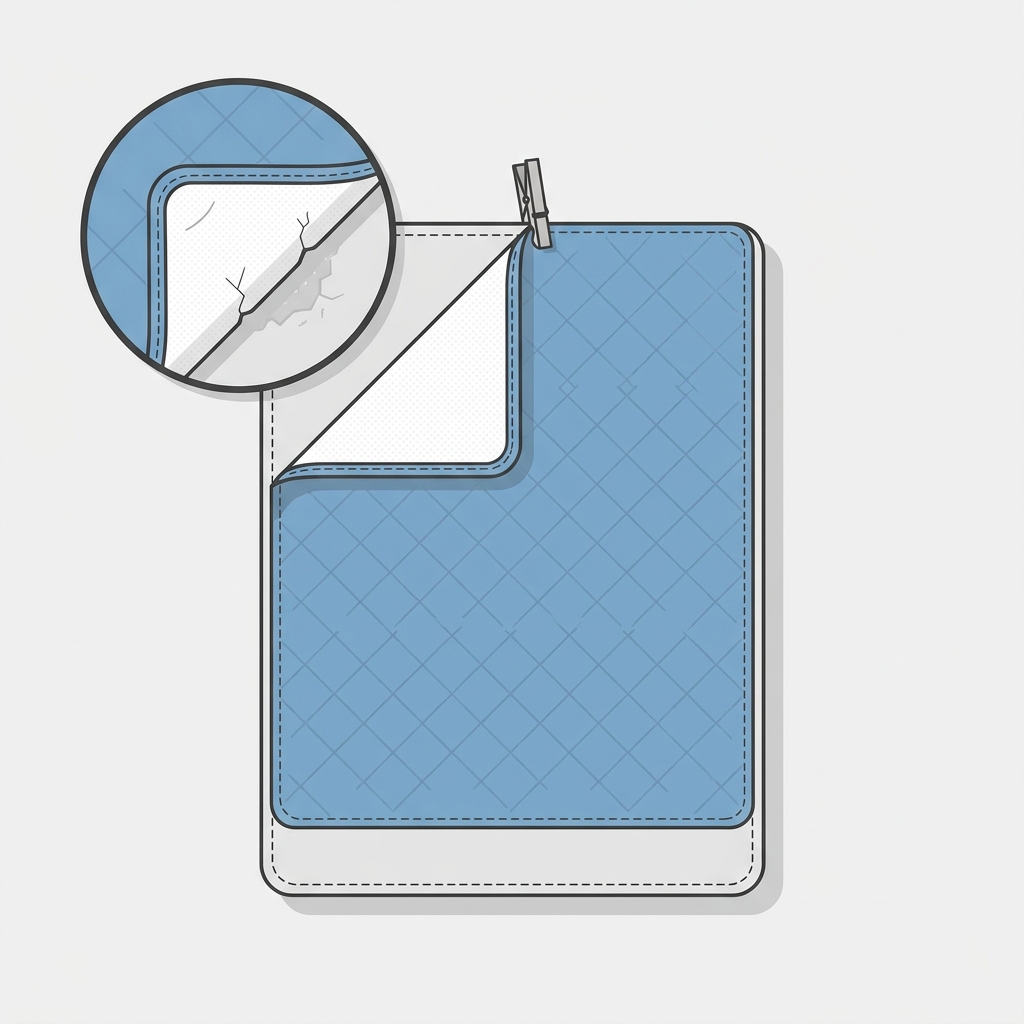
Checking the backing and seams: for protectors with a waterproof membrane, inspect seams and the backing for cracking, peeling, or discolored stains that show through. If you see damage along the backing or active leaks, that changes the repair versus replace decision because a compromised waterproof layer can continue to leak or trap moisture. For more on caring for protectors and backing checks see our page list site pages.
Washing a washable mattress protector: step-by-step care plan
Match your cleaning step to the likely soil: enzyme pretreaters for protein and urine, oxygen-based bleach for color-safe fabrics with persistent protein stains, and plain detergent plus thorough drying for routine laundry. For waterproof-backed protectors, keep cycles gentle and avoid fabric softener and chlorine bleach to protect the laminate.
Pre-treat: matching stain to product (enzymes, oxygen bleach), how to wash a mattress protector
Begin by identifying the stain type using the look, smell and rinse tests. For protein-based stains such as sweat or body oils, apply an enzyme-based pretreatment according to the product directions, let it sit, then launder. See the Sleep Foundation how-to guide for additional laundering tips How to Wash a Mattress Protector.
For fresh urine, blot to remove liquid, rinse with cold water if possible, then apply an enzymatic stain remover before washing; avoid applying heat before the stain and odor are gone because heat can set urine proteins and salts into the fabric American Cleaning Institute urine stain guidance.
What is the safest way to remove yellow stains from a mattress protector without damaging a waterproof backing?
Identify the stain type, pretreat protein or urine stains with an enzyme product, wash on a gentle cycle with mild detergent and an extra rinse, and air-dry or use low heat; avoid chlorine bleach and fabric softener on laminated backings and replace the protector if the backing peels or leaks.
Oxygen-based bleach can be added when care labels allow and a protein stain persists after enzyme pretreating; follow the oxygen bleach product instructions carefully and avoid chlorine bleach on laminated protectors to prevent backing damage.
Machine settings and detergent choices
Use a gentle or delicate cycle with warm or cool water rather than a hot wash when treating protein or urine soils, because high heat can set protein-based stains. Choose a mild liquid detergent and measure according to the detergent label to avoid residue build-up that can attract soil.
Avoid fabric softener and chlorine bleach for laminate-backed protectors because softeners leave films and bleach can damage waterproof membranes; Good Housekeeping testing and home-cleaning guidance advise mild detergent and gentle cycles to preserve the backing. Maytag also provides step-by-step washer advice for protectors and delicate loads Maytag how-to.
Drying, post-wash checks and odor control
Dry on a low-heat setting or air-dry when the care label recommends it to protect waterproof backings. Make sure protectors are completely dry before storing or remaking the bed, because trapped moisture encourages mold growth.
After washing, check for lingering stains or odors before applying any heat; if an odor or stain remains, re-treat with enzymes and repeat the wash rather than using heat, which can set remaining soils permanently.
Treating specific stains: urine, sweat/body oils, mold, and detergent residue
Each stain type responds best to a particular approach. Match the cleaning chemistry to the soil and always check the care label on your protector before trying stronger treatments.
Urine: immediate steps and enzyme strategies
Do this first: blot fresh urine with an absorbent cloth, then rinse from the back of the fabric with cold water if you can. Apply an enzymatic stain remover following the product directions, allow time to work, and then launder using a gentle cycle. Avoid heat until the odor and stain are gone to prevent setting American Cleaning Institute urine stain guidance.
Do not use chlorine bleach on laminate-backed protectors because bleach can damage waterproof membranes and shorten product life. If a stain persists after enzyme treatment and washing, repeat the enzyme step before considering stronger oxidizing agents and only if the care label permits oxygen bleach.
Perspiration and body oils: enzymes and oxygen bleach
For sweat and body-oil yellowing, start with an enzyme detergent or an enzyme pre-soak, because these products break down protein and oily residues. If the care label allows, an oxygen-based bleach can help lift persistent yellowing after enzyme treatment.
Use moderate water temperatures and avoid heat until the stain lifts; overheating protein soils can make them harder to remove. If yellowing is widespread rather than spotty, repeated enzyme washes combined with full drying often improve appearance.
Mold: cleaning guidance and discard criteria
Visible mold on washable textiles should be cleaned with detergent and water and dried thoroughly; public-health guidance from the EPA and CDC emphasizes complete removal and drying and recommends discarding porous items with extensive growth that cannot be fully cleaned and dried EPA mold cleanup guidance.
If mold growth is limited and the protector is clearly washable, launder using detergent on a gentle cycle, then dry completely in air or on low heat if the care label allows. If stains, odors or visible growth return after cleaning, replacement is the safer option to avoid exposure and repeated problems.
Detergent residue: prevention and corrective rinses
Overdosing detergent or using powders that do not fully dissolve can leave a residue that attracts more soil and gives fabrics a yellow or dingy cast. To prevent this, measure detergent by the label, avoid excessive use, and run an extra rinse when fabrics feel slick or look dull.
If residue is already present, rewash on a gentle cycle with no detergent or with a small amount of mild detergent and use an extra rinse, or try one wash with a half cup of white vinegar in the rinse cycle to remove soap films where the care label allows this approach. Additional stain-removal methods are discussed by cleaning specialists how to get stains out of a mattress.
When washing isn't enough: caring for waterproof membranes and deciding to replace
Waterproof backings are useful but they limit how aggressively you can launder a protector. High heat, chlorine bleach and strong agitation are common causes of laminate damage; keep cycles gentle and dry on low heat or air-dry to preserve the backing.
Inspect seams and edges after washing for peeling, cracking or areas that no longer repel water. If you find persistent leaks or odors or the backing flakes or separates, replacement is recommended rather than repair, because a compromised membrane can continue to leak and harbor mold after cleaning. See related posts in our feed post archive.
When to replace: peeling, visible cracking in the waterproof layer, persistent leaks after evidence-based cleaning, or mold and odor that do not respond to careful laundering are clear signs it is time to buy a new protector. Manufacturer care labels matter here; if they warn against machine washing a laminated product, follow those instructions to avoid early failure.
Common mistakes, quick scenarios and a printable checklist
Typical errors include using too much detergent, skipping an extra rinse, using heat too early after a stain treatment, and applying fabric softener to laminated protectors. These mistakes either leave residue or damage the waterproof backing and make yellowing or leaks more likely.
Below are three short scenarios with exact steps you can follow for common situations: baby urine, adult sweat yellowing, and routine weekly care.
Scenario 1: baby urine cleanup
Do this: blot fresh urine, rinse with cold water if possible, apply an enzyme pretreatment, launder on a gentle cycle with mild detergent, use an extra rinse, and air-dry or use a low-heat dryer setting if the care label allows. Avoid heat until the smell is gone.
Scenario 2: adult sweat yellowing recovery
Apply an enzyme detergent or soak according to product directions, wash on a gentle cycle with measured detergent, add oxygen-based bleach only if the care label allows and the enzyme wash did not fully lift the yellowing, then dry fully on low heat or air-dry.
Scenario 3: weekly care and storage checklist
Weekly routine: inspect the protector for spots, pre-treat visible soils, wash on a gentle cycle with measured detergent as needed, run an extra rinse if the fabric feels soapy, and ensure complete drying before storing or making the bed.
Track weekly protector care tasks
Common mistake do nots: do not use chlorine bleach on laminate-backed protectors, do not use fabric softener on waterproof layers, and do not dry a stained protector on high heat before the stain is fully removed.
Final notes on care, timing and safety
Timing matters: prompt action for urine and protein soils makes removal far easier. For mold, prioritize cleaning and full drying; if growth is extensive or odors persist after careful cleaning, discard the protector to avoid ongoing problems.
Match the chemistry to the soil, protect the waterproof backing by using gentle cycles and low heat, and replace protectors when the backing peels or leaks continue after proper cleaning. Those steps keep both your mattress and your sleep environment in better condition over time.

Frequently asked questions
Can I use chlorine bleach on a mattress protector?
Do not use chlorine bleach on laminate-backed protectors; bleach can damage waterproof membranes. Use oxygen-based bleach only if the care label allows and stains persist after enzyme treatment.
Will enzyme cleaners remove urine odor permanently?
Enzyme cleaners break down urine proteins and often remove odor if used promptly and followed by a full wash and drying; repeat treatment may be needed for older stains.
How do I know when to replace a mattress protector?
Replace when the waterproof backing peels or cracks, leaks persist after proper cleaning, or mold and odors do not disappear after evidence-based cleaning.
Care routines that match the stain to the cleaning chemistry, quick action on fresh soils, and complete drying are the best ways to prevent and remove yellow stains. When a waterproof backing is damaged or odors and mold persist, replacement avoids ongoing leaks and health risks. Use enzyme pretreatment for protein and urine soils, measure detergent correctly, run extra rinses when needed, and follow the protector's care label to protect the waterproof layer.
Product options for this topic
As an Amazon Associate I earn from qualifying purchases. These are researched options, not hands-on test results. Check the exact size or model, current price and availability on Amazon.
| Product option | Fit and limits to check | Retailer |
|---|---|---|
| SafeRest Waterproof Mattress Protector | A waterproof protector option. Match the mattress size and depth, and follow the care label for this exact model. This is not a recommendation to replace a protector that still works. | View on Amazon |
| SureGuard Waterproof Mattress Protector | Another waterproof protector option. Confirm the bed size, fitted depth and washing instructions before choosing. | View on Amazon |