
The journal
Mattress Pad vs. Mattress Protector: Choose by Cushioning, Spill Protection and Fit
A pad can add a little cushioning. A protector can provide a specified barrier. Read each product’s construction, coverage and care label before deciding.
 Talk About Sleep
At a glance
A mattress pad commonly adds light cushioning. A protector is designed primarily to shield the mattress. Verify whether the actual product adds cushioning, provides a waterproof layer or does both.
In this guide
A mattress pad usually adds a little cushioning. A mattress protector is mainly there to shield the bed. Some products do both. Before buying one, decide whether you want a slight change in feel, better spill protection or a layer you can remove and wash easily.
Decide which job the layer needs to do
If the mattress feels fine and the worry is a spill, start with protection. Look for a stated barrier and find which part of the product has it. A protector that fits like a sheet may have a different protective area from an encasement. Verify coverage instead of assuming the sides and underside have the same construction as the top.
For modest cushioning, check the pad’s fill and height. It may make the surface feel a little softer without doing the same job as a thicker topper. If you want one washable layer to do both jobs, look for an explicit description of the padding and the protective layer.
Start with the job
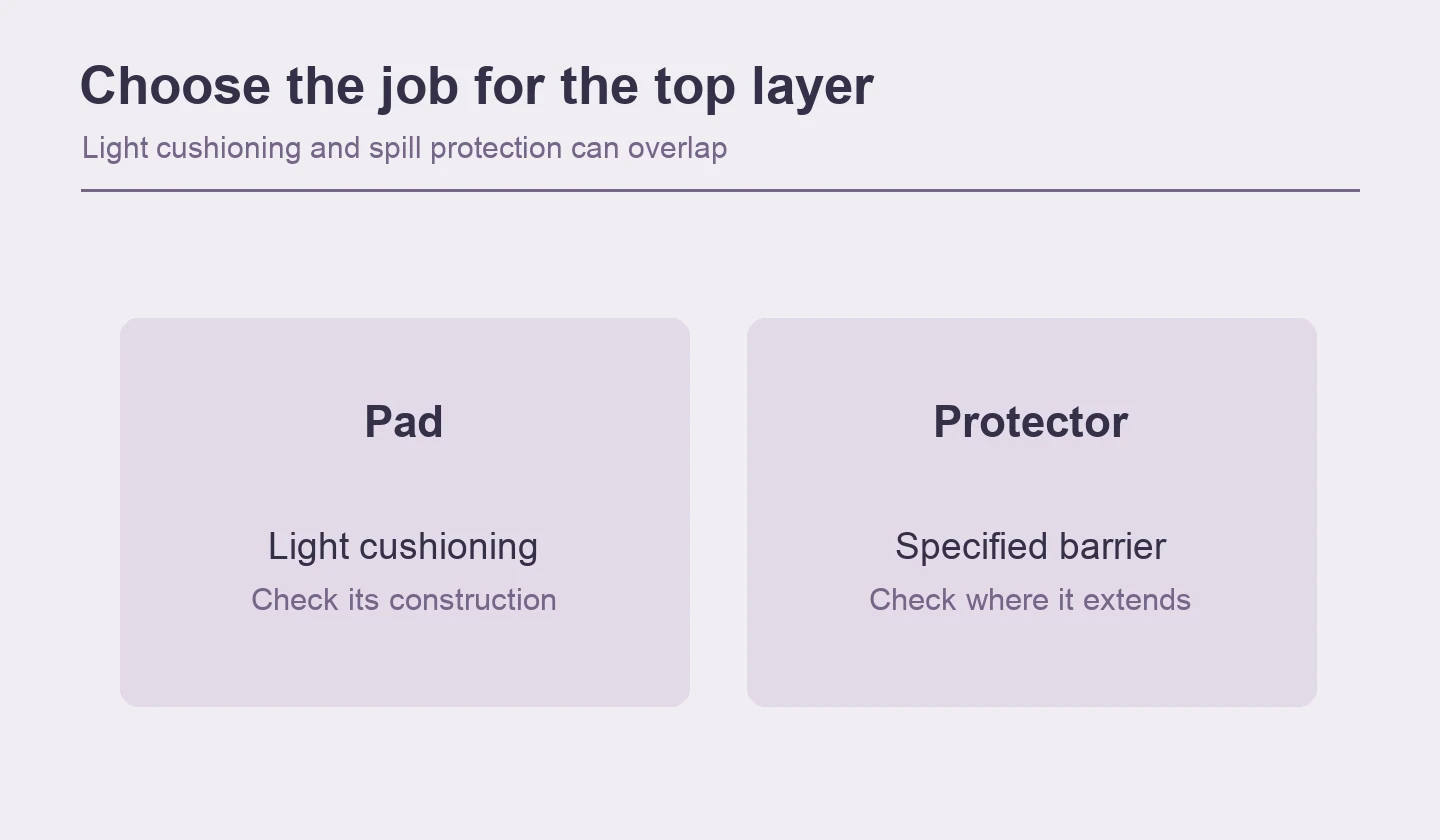
Pad
A quilted or lightly cushioned layer if you want a small change in surface feel.
Protector
A layer chosen for its protective features. Verify what it covers and how to wash it.
For the usual roles of pads and protectors, see Mattress pads, toppers and protectors compared.
Sources: Saatva
Check the product specification and coverage
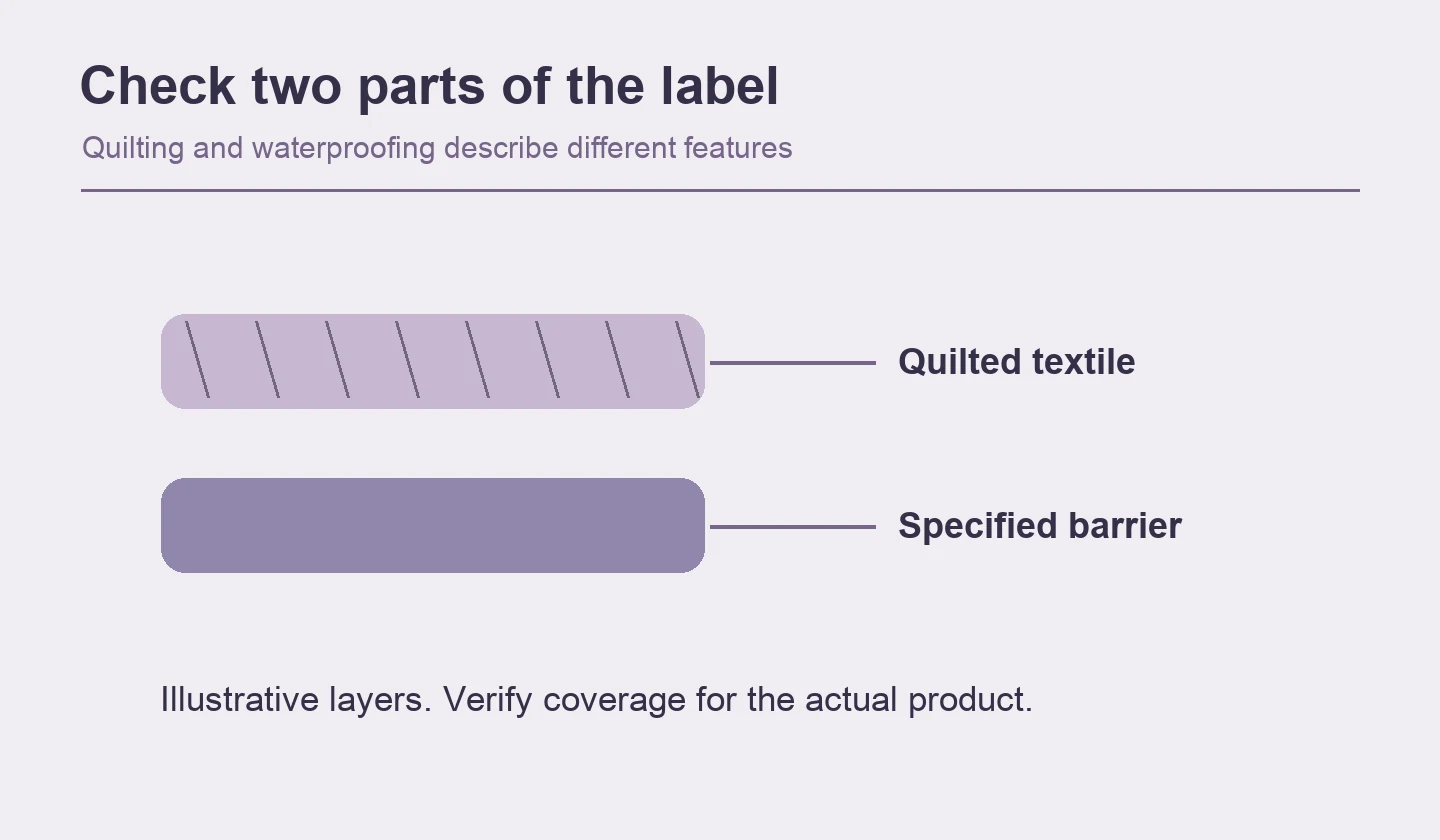
A quilted surface describes what the fabric looks like and how the layers are joined. It doesn’t tell you whether a liquid barrier sits beneath the quilting. IKEA’s thin GRUSNARV and the quilted SOTNÄTFJÄRIL are examples of different constructions that each list a waterproof feature. A product page should say what is covered and how to care for it.
If the product description simply says soft, plush or quilted, look for a separate protective claim before buying it for spills. Carry that distinction forward if you’re comparing more than one protector.
For a thin protector with an explicit barrier claim, see GRUSNARV waterproof mattress protector.
For a quilted example that separately specifies a waterproof layer, see SOTNÄTFJÄRIL waterproof mattress protector.
Sources: GRUSNARV waterproof mattress protector · SOTNÄTFJÄRIL waterproof mattress protector
Measure the whole stack and check care
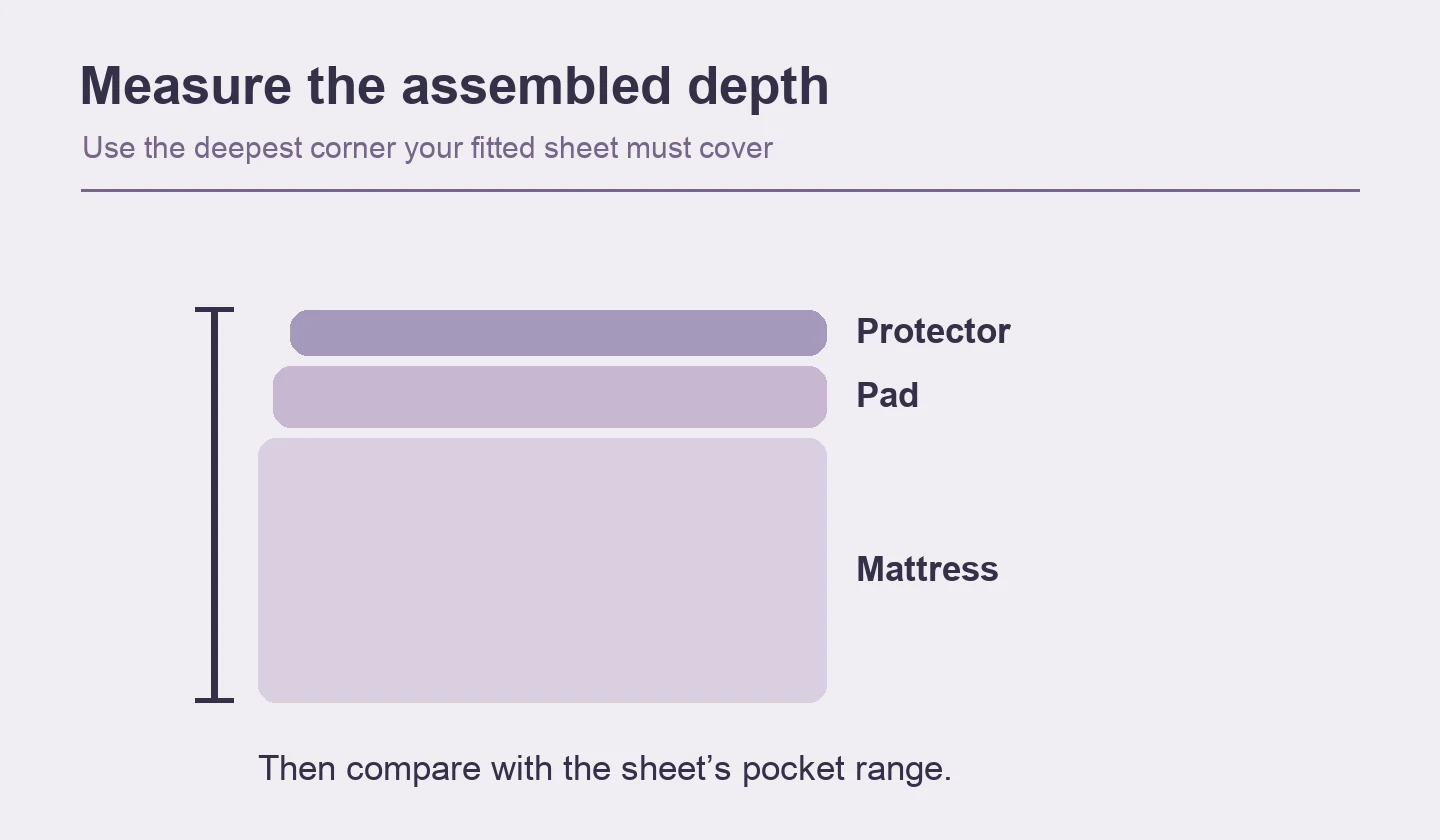
Set the layers you plan to keep on the mattress and measure the depth the fitted sheet has to reach. Check the deepest corner without flattening the pad with your hand. Compare that with the pocket range stated by the sheet maker. If you put a pad under a fitted protector, the protector has its own fit range to check too.
Read laundry directions for each layer before you use or wash it. Two white layers can look similar while having different wash and heat instructions. Keep a small note of the mattress size, total depth, protection area and care restrictions. That’s enough to compare labels and avoid buying a layer for a job it doesn’t do.
| Label says | What to verify | Likely job |
|---|---|---|
| Quilted pad | Fill thickness, fit and any stated barrier | Light cushioning |
| Thin waterproof protector | Where the barrier extends and how to wash it | Spill protection |
| Quilted protector with barrier | Padding, waterproof area and pocket range | Can combine both roles |
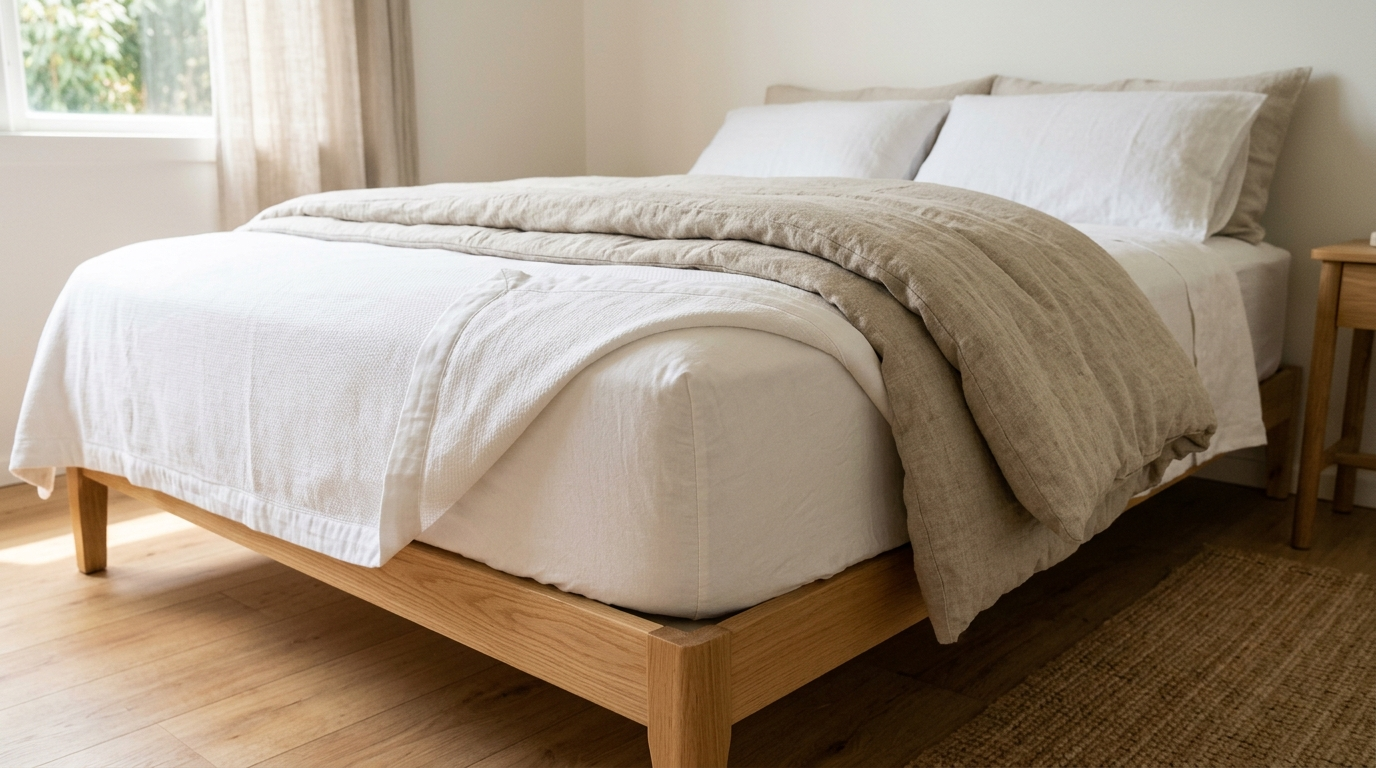
Make the fit and care check
- Identify the main reason you need a layer.
- Check barrier coverage and material from the actual listing.
- Measure the deepest point of the stack the sheet has to cover.
- Check the wash and dry instructions for each layer.
For the related task, see Check whether the fitted sheet can stay on the stack.
Frequently asked questions
Can one product be a pad and a protector?
Yes, a product may combine padding and a protective barrier. Check its specific construction.
Is water-resistant the same as waterproof?
Look for the exact protection claim and limitations. Fabric or padding alone cannot establish a waterproof barrier.
Will a protector cover all sides?
Check the style and protective area. A fitted design and a full encasement can cover different surfaces.
Do all protectors go in the dryer?
The manufacturer’s care instructions decide. Check the full label before washing or drying.
Talk About SleepCheck how a compatible topper and protector can fit together
Measure all layers covered by the fitted sheet.
Check which layers your existing sheet needs to coverContinue with a related guide
- Check how a compatible topper and protector can fit together
Measure all layers covered by the fitted sheet.
- Check whether the fitted sheet can stay on the stack
Compare the product pocket range and finished bed height.
- Read the protector’s laundry instructions
Treat the barrier’s care requirements individually.
References
Product options for this topic
As an Amazon Associate I earn from qualifying purchases. These are researched options, not hands-on test results. Check the exact size or model, current price and availability on Amazon.
| Product option | Fit and limits to check | Retailer |
|---|---|---|
| SafeRest Waterproof Mattress Protector | A waterproof protector option. Match the mattress size and depth, and follow the care label for this exact model. This is not a recommendation to replace a protector that still works. | View on Amazon |
| SureGuard Waterproof Mattress Protector | Another waterproof protector option. Confirm the bed size, fitted depth and washing instructions before choosing. | View on Amazon |